


Silver Decanter Stand Set
A silver decanter stand set brings together fitted glass vessels and polished metal frames for proper after-dinner hospitality.
Silver Decanter Stand Set
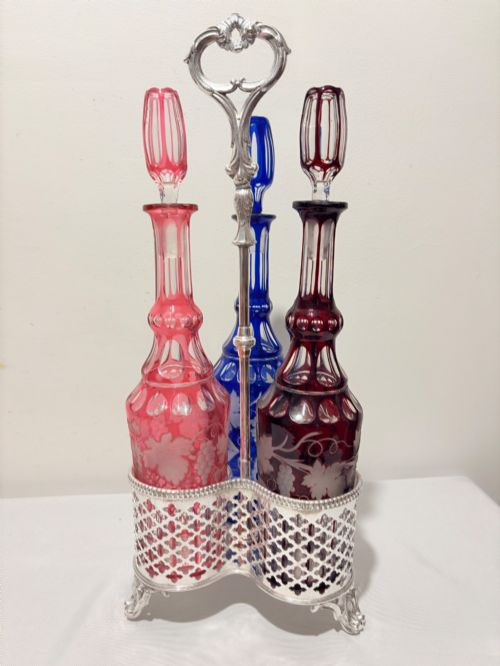
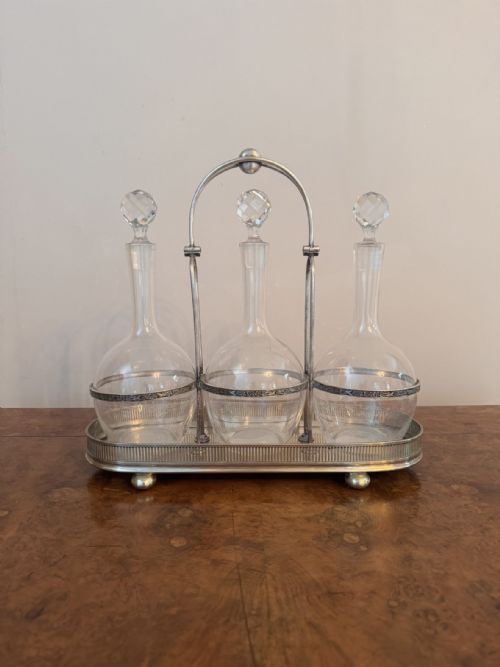
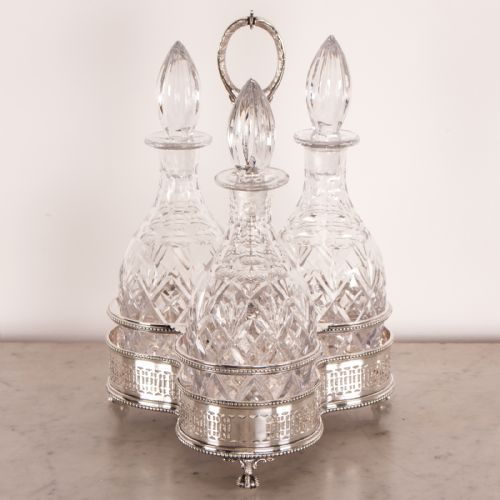
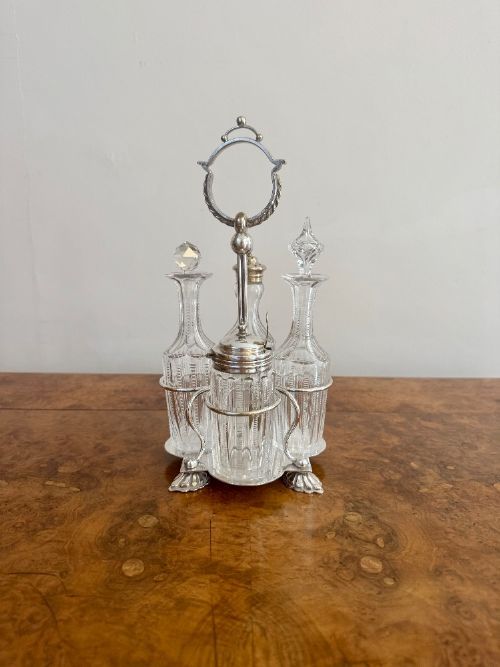
A silver decanter stand set combines cut glass bottles with metal frames, cruet frames, and lockingtantalus designs designed for serving spirits and condiments. These items appear primarily in Victorian, Edwardian, and Georgian periods, reflecting the dining and entertaining habits of past centuries.
Most examples found in these listings rely on silver plating over base metal, alongside solid silver productions from makers working in London and provincial centres. The configurations range from simple wine coasters and liqueur holders to multi-bottle tantalus frames incorporating games compendiums or locking mechanisms.
How they were made
Makers utilised heavy cut glass and crystal for the bottles, shaping them with flutes, hobnails, and geometric patterns before pairing them with matching stoppers. The accompanying frames combine cast and pierced silver plate, Old Sheffield Plate, or solid silver with timber carcases in oak, mahogany, and exotic coromandel.
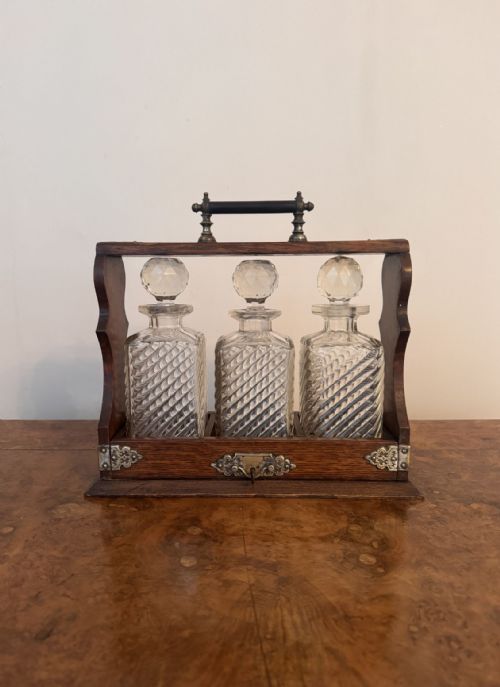
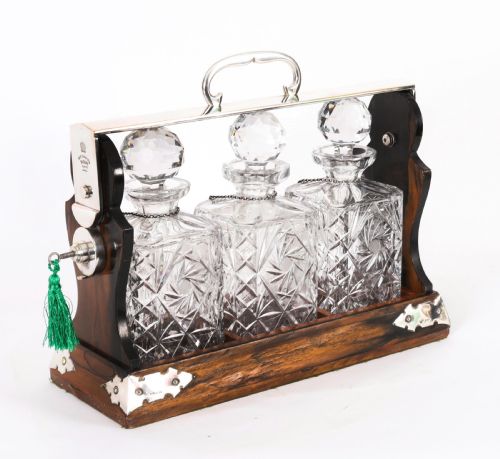
Locking mechanisms on tantalus sets required precise engineering, securing the decanter necks beneath metal bars operated by small keys. Silversmiths and electroplaters applied chased, engraved, and applied decorative mounts to the frames, integrating handles and feet into the structural design.
Listings span the Georgian, Victorian, and Edwardian periods, incorporating materials such as cut crystal, oak, mahogany, and silver plate.
What varies in quality
The standard of a silver decanter stand set rests upon the depth of the metal plating, the weight and clarity of the cut glass bottles, and the integrity of any locking mechanism. Complete sets retaining their original matching stoppers and unmarked glass bottles command higher regard than assembled groupings.
Carcases constructed from dense timbers like coromandel or solid mahogany demonstrate superior cabinetmaking compared to simpler pine or oak structures. Maker attribution, through clear hallmarks or stamped registry marks, distinguishes standard commercial production from bespoke retail items.
Walker & Hall·Charles Thomas Fox·Elkington·Hester Bateman·The Goldsmith Co.·Wade Wingfield Wilkins·Hukin and Heath·Philip Ashberry·Mappin Brothers·Henry Wilkinson & Co
The Silver Decanter Stand Set Glossary
- Tantalus
- A locking drink stand that holds decanters securely within a metal frame so the contents remain visible yet inaccessible without a key. The name derives from the mythological figure of Tantalus.
- Cruet set
- A fitted frame holding multiple bottles or cruets for condiments, oil, vinegar, and sauces at the dining table. These frames often feature central carrying rings.
- Old Sheffield Plate
- An early composite material made by fusing a thin sheet of silver to a thicker copper base before rolling and forming. This technique predates modern electroplating.
- Coromandel
- A dense, heavily figured dark timber with contrasting light streaks, imported from Asia and utilised for luxury Victorian games boxes and tantalus cases.
- Wine coaster
- A small circular tray with a raised rim, often lined with wood or felt and fitted with a silver or plated gallery. They allowed bottles to slide across mahogany dining tables without scratching the polish.
Silver Decanter Stand Set: Frequently Asked Questions
What is a tantalus?
A tantalus is a locking liquor cabinet or stand where decanters are held securely beneath a metal bar. The design prevents servants or guests from helping themselves to the spirits without permission.
Most examples date from the Victorian and Edwardian periods, constructed in oak or mahogany with silver-plated mounts.
How do I clean the glass?
Wash the glass decanters by hand in warm water using mild soap, avoiding harsh abrasives that might scratch the surface. Natural cork stoppers should be kept dry to prevent degradation.
Allow the bottles to dry completely upside down on a cloth before returning them to the silver frame.
Are all sets made of solid silver?
Most surviving decanter stands and frames utilise silver plate over a base metal, or Old Sheffield Plate rather than solid silver. Solid silver cruet frames and bottle stands do exist but were produced in smaller quantities for wealthy households.
Checking for hallmarks will reveal the metal standard and often indicate the maker and city of origin.
How do I date my set?
Dating relies upon a combination of silver hallmarks, patent dates, timber types, and the overall style of the glass cutting. Victorian and Edwardian pieces frequently display registry marks or manufacturer stamps on the metal frame.
Comparing the bottle shapes and stoppers to documented designs helps narrow the period of manufacture.