
Silver Curb Chain
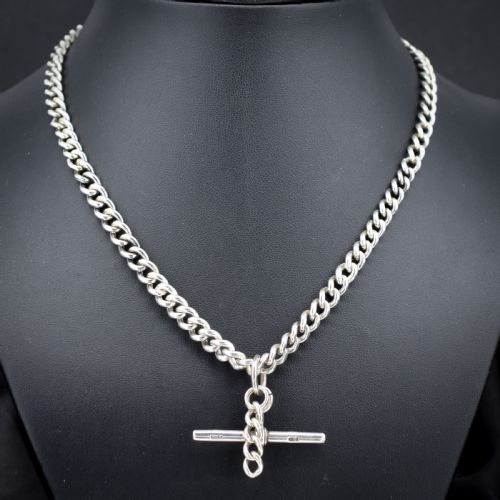
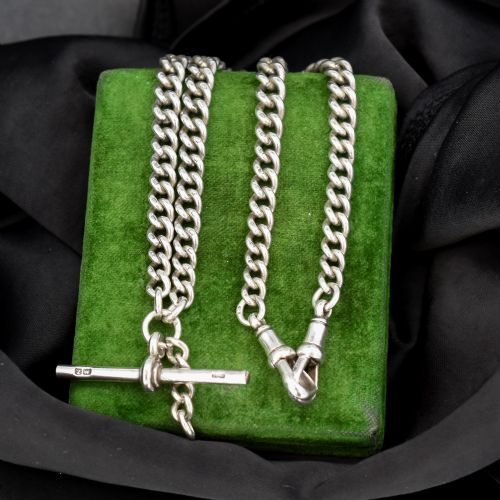
A silver curb chain offers a robust interlocking link structure, serving historically as a practical pocket watch attachment and presently as a substantial necklace.
Silver Curb Chain
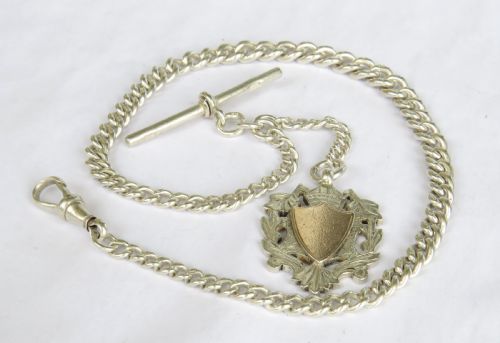
A silver curb chain represents a traditional link formation where flat, uniform links twist slightly to lie flush against the skin or clothing. Buyers searching for a silver curb chain encounter functional pieces originating from the Victorian, Edwardian, and Art Deco periods, alongside later twentieth-century iterations.
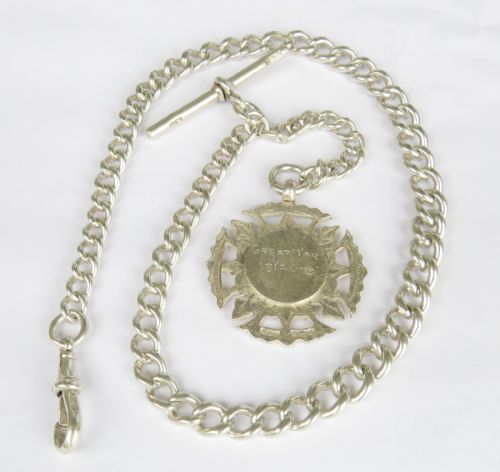
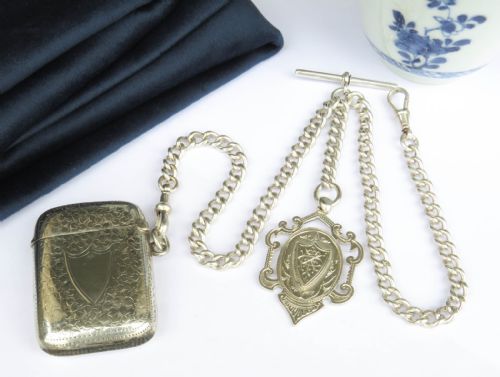
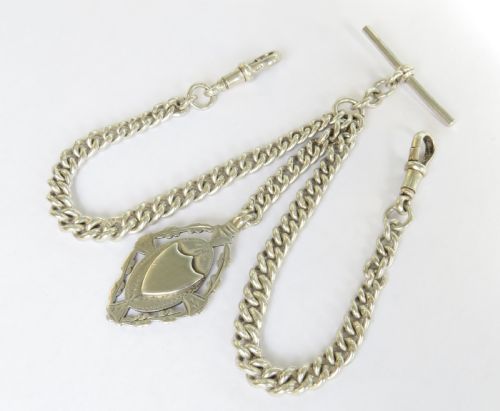
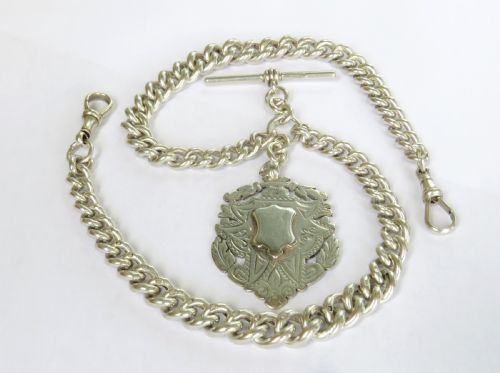
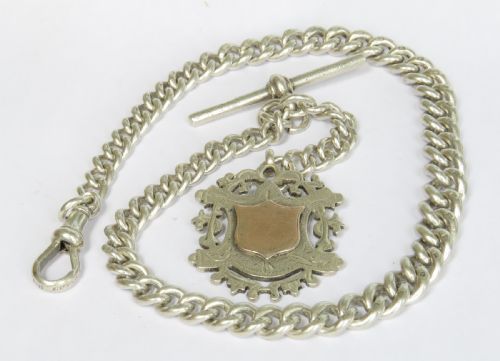
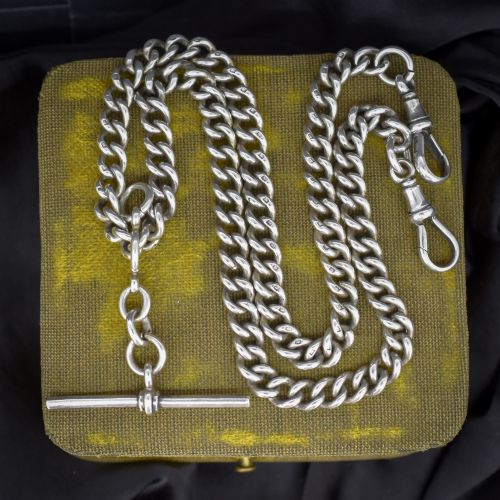
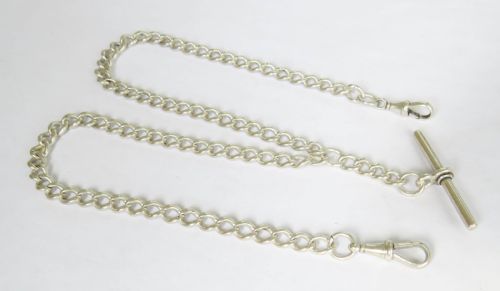
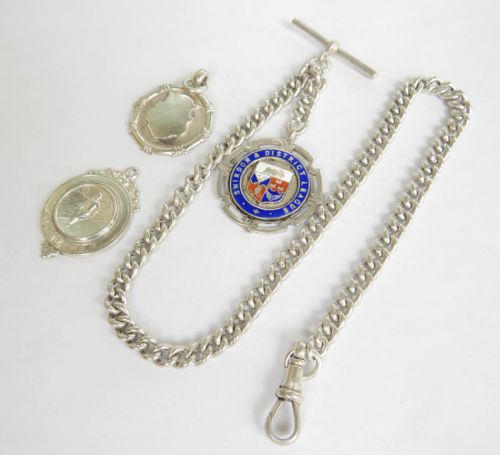
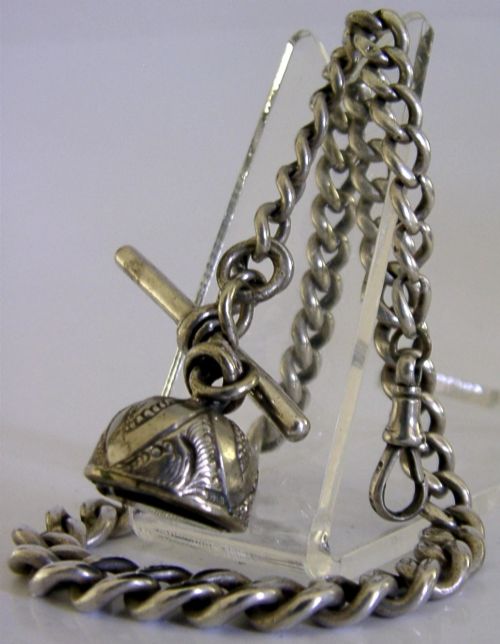
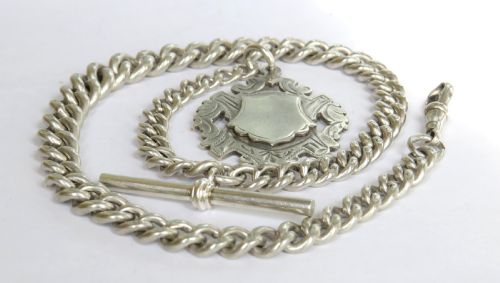
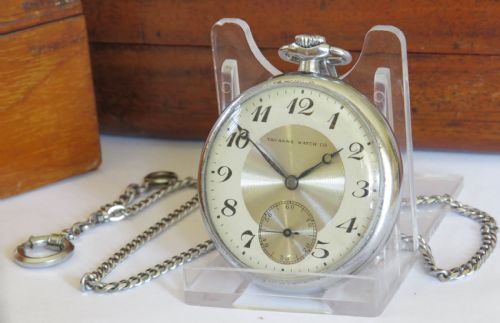
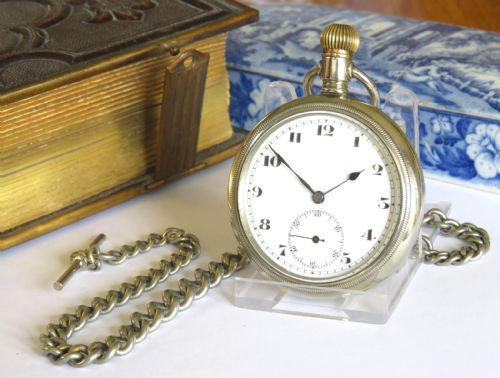
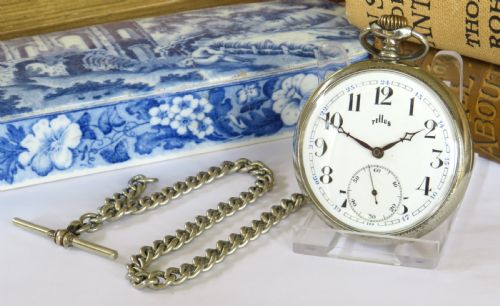
The most prevalent forms on this page include pocket watch albert chains, often complete with T-bars, dog clips, and commemorative fobs, which adapt readily into contemporary necklaces. Shorter bracelet variants featuring padlocks or charms also appear within the selection.
Origins span late nineteenth-century workshops through to the nineteen-thirties, reflecting diverse domestic uses from timekeeping security to personal adornment.
Materials and construction methods
Makers constructed these pieces predominantly using sterling silver and standard silver, frequently applying hallmarks to denote purity and date of manufacture. Supplementary components incorporate gold accents, enamel detailing, glass inserts, and base metal elements.
Individual links were meticulously formed, joined, and soldered to create a flexible, continuous strand capable of withstanding daily wear. Structural hardware such as swivel dog clips and T-bars were integrated to secure pocket watches and vestas securely.
Listings feature items spanning the Victorian era through the nineteen-thirties, incorporating sterling silver, enamel, and gold accent materials.
Factors determining overall standard
Physical weight and link gauge dictate the substantial feel of a piece, separating delicate decorative strands from heavy-duty utilitarian items. The presence of complete original components, including matching T-bars, dog clips, and associated fobs, elevates the integrity of the ensemble.
Clarity of hallmarks and the preservation of crisp edge definition on individual links indicate superior manufacturing execution and careful historical preservation.
The Silver Curb Chain Glossary
- Curb link
- A type of chain link that has been twisted and flattened so that the finished strand lies flat.
- Albert chain
- A pocket watch chain named after Prince Albert, typically featuring a T-bar at one end and a swivel clip at the other.
- T-bar
- A short transverse bar attached to a watch chain, designed to slip securely through a waistcoat buttonhole.
- Dog clip
- A spring-loaded swivel fastening used to attach pocket watches, fobs, or charms to a chain link.
- Vesta
- A small pocket container designed specifically for holding matches, often suspended directly from a watch chain.
Silver Curb Chain: Frequently Asked Questions
How do I wear a pocket watch chain as a necklace?
Many historical pocket watch chains feature dog clips and T-bars that allow them to be wrapped around the neck or fastened end-to-end. You can position the T-bar as a decorative toggle feature at the front or side.
Heavier examples provide a bold neckpiece appearance, while lighter variants offer subtle daily wear without requiring modification.
What is the difference between an albert chain and a standard chain?
An albert chain incorporates specific hardware designed for timekeeping garments, notably a T-bar for buttonhole attachment and a dog clip for the watch itself. Standard necklaces lack these functional appendages unless adapted from watch chains.
Single alberts have one primary drop strand, whereas double albert configurations feature two strands meeting at a central point.
How can I date a silver watch chain?
Dating relies primarily on official hallmarks stamped onto the links, T-bars, or dog clips, which indicate the assay office and year of assay. Stylistic cues such as Edwardian proportions or Art Deco geometric fob designs also help establish the era.
Associated commemorative fobs, referencing events like the Great War or football matches, provide additional chronological markers.
What materials were used alongside silver in these chains?
While solid sterling silver forms the structural foundation, makers frequently incorporated gold accents for contrast on links or fittings. Enamel work appears on specific prize or commemorative fobs attached to the chain.
Glass elements and bloodstone inserts also feature within rotating swivel fobs suspended from the main strand.