


Silver Collar Cane
These silver collar cane items combine practical support with decorative metalwork, offering collectors functional walking aids featuring distinct collar mounts.
What a silver collar cane is
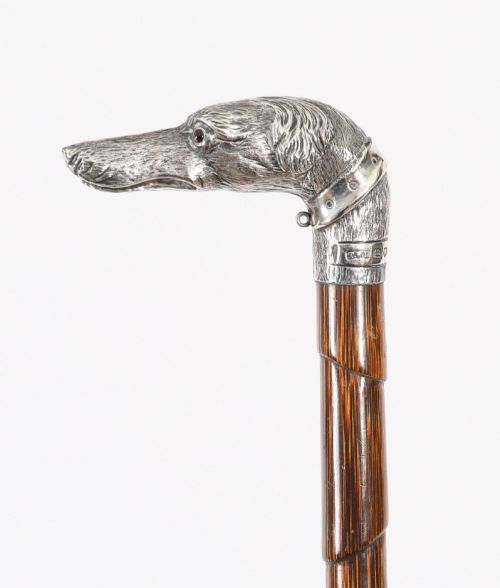
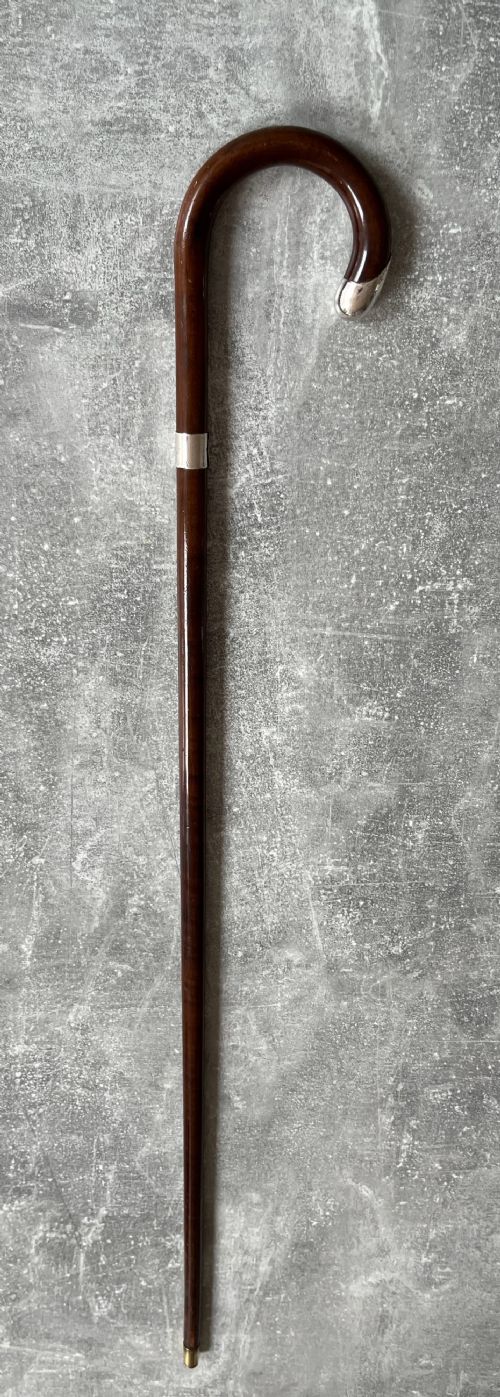
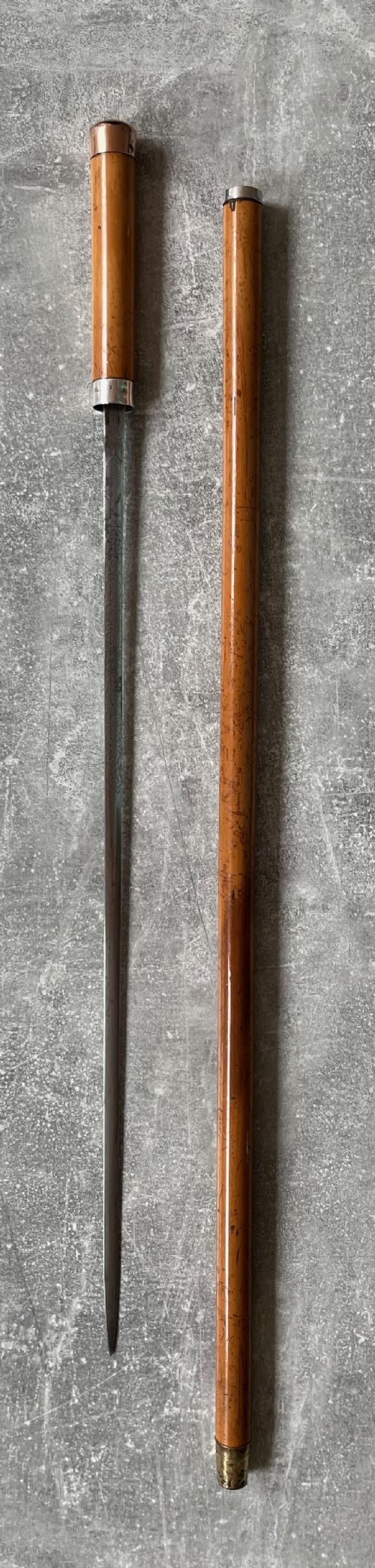
A silver collar cane is a traditional walking aid fitted with a decorative metal band just below the handle, combining utility with ornamental design. These pieces appear in forms ranging from standard walking sticks to specialised gadget sticks and sword sticks.
The examples found here draw on nineteenth-century and early twentieth-century origins, reflecting Victorian and Anglo-Indian styles. Common material combinations pair timber shafts with horn, carved wood, or malacca alongside the defining silver collar.
Buyers encountering this selection will frequently meet nineteenth-century pieces alongside specific regional designs and functional dual-purpose items. The grouping represents a distinct category of gentleman's accessories from the period.
Materials and construction
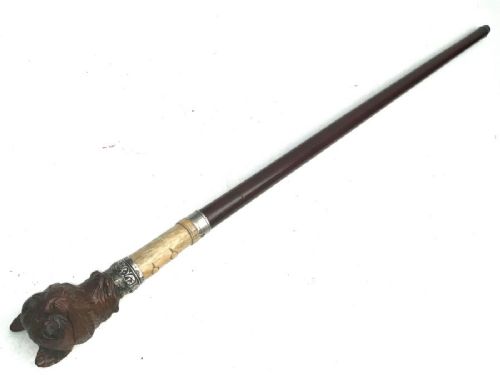
Shafts are constructed from durable natural materials including malacca, hardwood, and standard wood, sometimes incorporating steel components for internal blades or mechanisms. Handles utilise carved wood, horn, and stag horn, joined securely to the shaft.
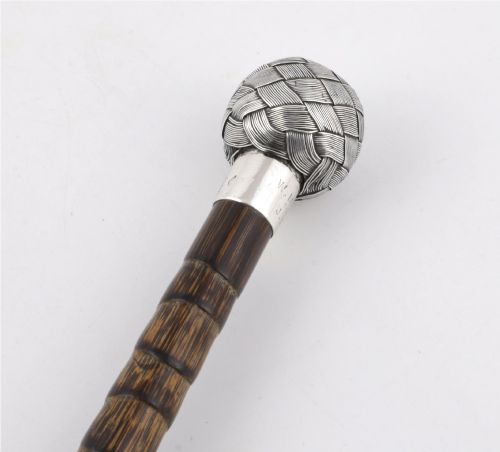
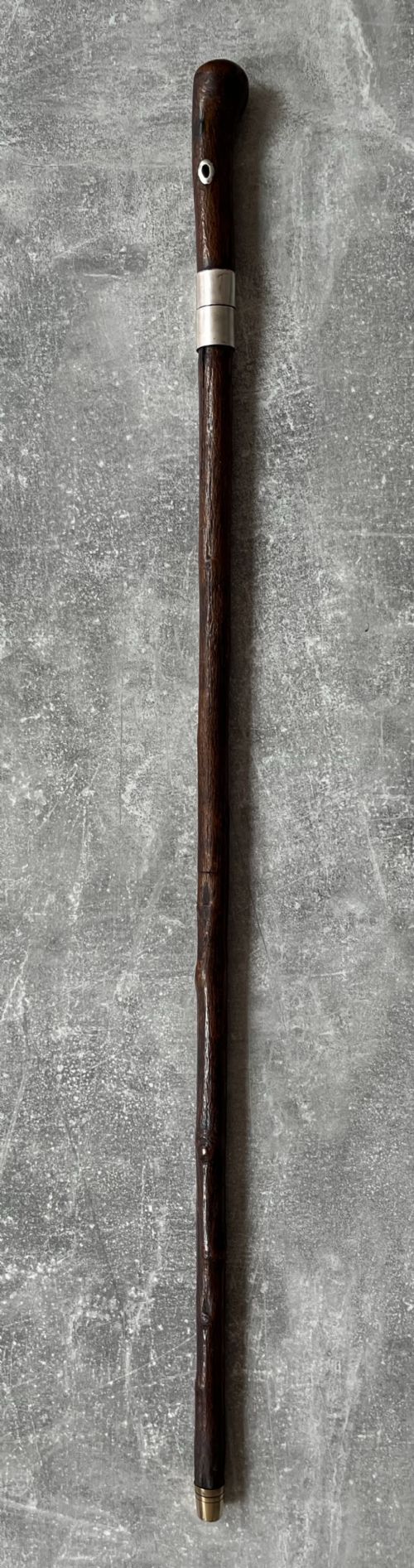
The metal mount is formed as a silver collar, occasionally silver-plated, fitted tightly around the upper shaft beneath the handle. Engraving frequently decorates these collars, displaying initials or dates.
Specialist variations incorporate hidden elements such as corkscrews, rabbit handles, and Toledo blades, demonstrating precise nineteenth-century mechanical assembly.
Retail Price Guide 2026
Typical UK retail prices for silver collar cane, calculated from the Sellingantiques database of over a million retail prices indexed since 2003. This retail price guide relies exclusively on Sellingantiques data; no external sources or auction records are used, so the figures do not describe the wider market.
Some nineteenth-century gentlemen walked out armed with rabbits, courtesy of quirky carved handles hiding unexpected corkscrews.
Assessing quality
Quality rests in the finesse of the handle carving and the integration of the metal mount to the timber shaft. Superior items exhibit detailed craftsmanship in animal heads and handles alongside crisp engraving on the collar.
The choice of shaft material influences desirability, with malacca and distinct hardwoods holding particular standing alongside robust horn handles. Complexity in functional variants, such as concealed mechanisms and blades, separates standard walking aids from specialised pieces.
Henry Borlase Stevens
The Silver Collar Cane Glossary
- Malacca
- A sturdy stem derived from a rattan palm native to Southeast Asia, highly prized for walking stick shafts due to its natural resilience and mottled brown finish.
- Gadget stick
- A walking cane containing a concealed utility or tool, such as a corkscrew, spyglass, or dual-purpose compartment, popular during the Victorian era.
- Sword stick
- A walking cane fitted with a concealed internal blade, typically secured with a locking mechanism near the collar.
- Stag horn
- The shed antler of a deer utilised for sturdy stick handles, valued for its textured surface and durability.
Frequently Asked Questions
What is a silver collar cane?
A silver collar cane is a walking stick featuring a decorative metal band positioned directly beneath the handle. This metallic accent often bears hallmarks, monograms, or engraved dates.
Such sticks served as everyday gentleman's accessories throughout the nineteenth and early twentieth centuries, balancing practical support with personal style.
How were sword sticks used?
Sword sticks functioned primarily as standard walking aids while housing a concealed blade within the wooden shaft for personal protection. The silver collar frequently served as part of the release mechanism or structural reinforcement.
Carried by travellers and gentlemen in urban and colonial settings, they offered discretion alongside utility.
How do I date a walking stick?
Dating relies on examining the style of the handle, the material of the shaft, and any hallmarks or inscriptions on the silver collar. Nineteenth-century examples often display specific regional characteristics and traditional craftsmanship.
Comparing the construction methods of the internal components and blade fixings provides further chronological context.
How should I display a cane?
Sticks can be displayed upright in traditional umbrella stands or mounted horizontally on wall racks designed for walking aids. Keeping them away from direct sunlight and excessive humidity preserves the timber shafts and horn handles.
Regular gentle cleaning maintains the condition of both the wooden body and the silver collar.