
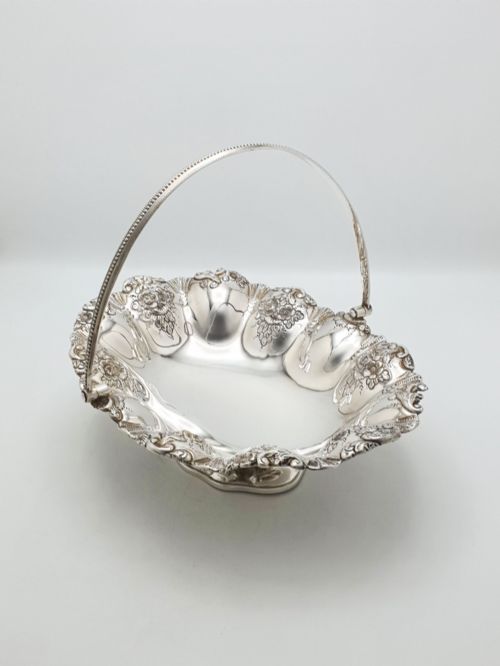


Silver Centre Bowl
A silver centre bowl anchors a formal table, offering substance and historical weight through chased decoration and substantial proportions.

Silver Centre Bowl
A silver centre bowl serves as a table focal point, originating in forms such as fruit baskets, presentation bowls, jardinieres, and epergnes. You encounter these primarily in solid sterling silver or silver plate dating from the nineteenth and twentieth centuries.
The objects span Victorian, Edwardian, and George V periods, occasionally incorporating cut glass liners or wooden components alongside the metalwork. Designs range from plain circular presentation vessels to heavily pierced and repoussé-rimmed baskets.
Makers utilised these large vessels for display, fruit holding, or floral arrangements during formal dining, reflecting the social rituals of their eras of manufacture.
Materials and construction
Silversmiths formed these vessels from sterling silver or applied silver plating over base metals, including Old Sheffield plate, nickel silver, and EPNS. Many examples integrate cut glass inserts or wooden elements to create contrast.
Techniques relied upon manual hammering, piercing, and repoussé work to raise floral motifs and classical friezes from the metal sheet. Makers assembled body sections, swing handles, and cast feet through soldering and riveting.
Some nineteenth-century makers doubled their formal fruit bowls as ice buckets, keeping dining rooms functional and cold.
Assessing craftsmanship
Quality rests upon the crispness of the repoussé work and the depth of the metal gauge, distinguishing hand-raised vessels from lighter stamped productions. Maker attribution and documented provenance elevate the standing of individual pieces.
The integrity of applied plating or the thickness of solid silver dictates longevity, while the quality of associated cut glass liners impacts overall composition.
Elkington·Martin Hall·Joseph Rodgers·S. Kirk & Son Company·Walker & Hall·Mappin & Webb·WMF·Henry Lewis·Emile Viner·James Dixon & Sons
The Silver Centre Bowl Glossary
- Repoussé
- Metalworking technique where the artisan hammers the design from the reverse side to form raised patterns on the front. This creates textured floral rims and figural scenes.
- EPNS
- Electroplated nickel silver, a common base material coated in a layer of silver through an electrical process. It provided an affordable alternative to solid sterling silver.
- Old Sheffield Plate
- An early fusing technique where a sheet of sterling silver is fused to a copper core before rolling. This method produces distinctive edges where the copper shows.
- Pierced
- Metalwork perforated with decorative patterns using saws or punches. It appears frequently on late nineteenth-century serving dishes and fruit baskets.
- Jardiniere
- An ornamental pot or bowl designed to hold plants or flowers as a table centrepiece. These large vessels often feature glass or metal liners.
Silver Centre Bowl: Frequently Asked Questions
How were silver centre bowls used?
Dining hosts utilised these large vessels to hold fruit, flowers, or iced water during formal meals, placing them directly in the middle of the table for visual impact.
Over time, their functions shifted toward presentation pieces for civic or domestic milestones, displayed on sideboards rather than dining tables.
What is the difference between sterling and silver plate?
Sterling silver denotes a high purity standard of silver content throughout the entire object, bearing official assay office hallmarks.
Silver plate consists of a base metal coated with a thin layer of silver, encompassing terms like EPNS and Old Sheffield Plate.
How do I care for a silver bowl?
Maintenance requires regular, gentle cleaning with appropriate silver polish and a soft cloth to remove tarnish without abrading the surface detail.
Avoiding harsh chemical dips preserves the original patination and protects any integrated cut glass liners or wooden components.
How can I tell the period of a bowl?
Assay hallmarks, stamped maker marks, and stylistic indicators such as Art Nouveau curves or Edwardian floral repoussé provide precise dating evidence.
Construction methods, including hand-beating versus machine stamping, further help distinguish nineteenth-century works from later productions.