


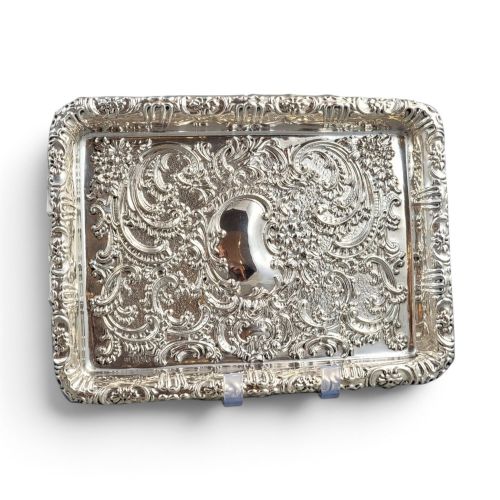
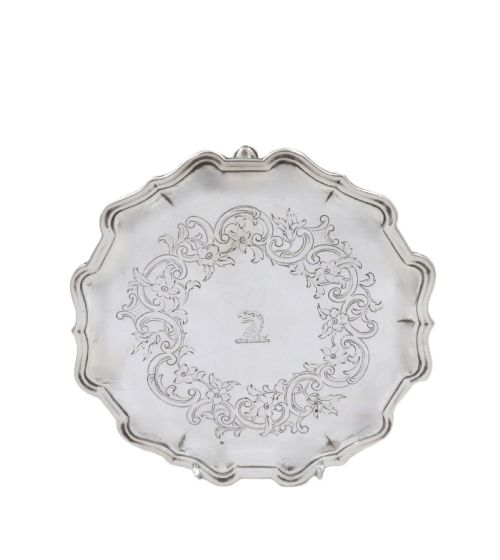


Silver Card Waiter
A silver card waiter is a small, versatile tray designed for presenting visiting cards, letters or drinks, combining practical utility with refined domestic display.
Silver Card Waiter
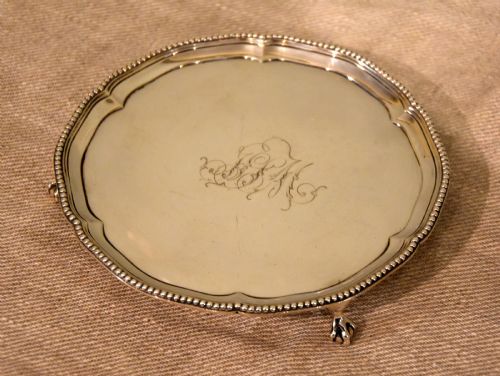
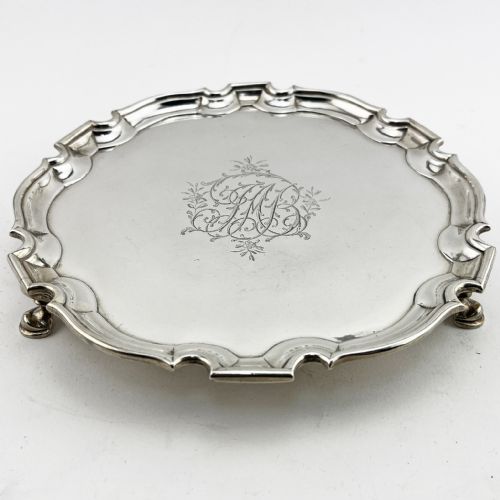
A silver card waiter is a small, portable tray designed to hold visiting cards, letters or small vessels, appearing frequently in domestic interiors from the early eighteenth century through the twentieth century. These pieces serve as intimate tabletop accessories, often resting on short feet or a small raised base to elevate them from the surface of a piece of furniture.
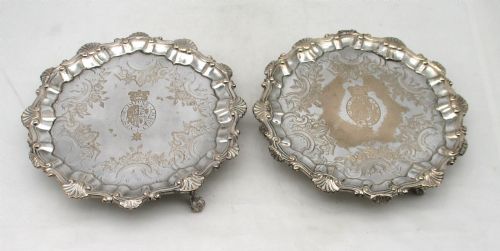
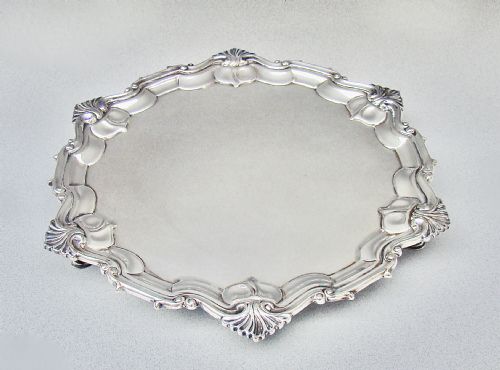
The versions most commonly met on this page span the Georgian, Victorian and Edwardian periods, alongside substantial representation from the eighteenth century. Makers utilised sterling silver, solid silver, Old Sheffield plate and later silver plate to produce these objects, ranging from plain circular forms to elaborate Rococo Revival designs with scrolled borders.
Materials and construction
Makers formed these items primarily from sterling silver, solid silver or copper fused with silver in Old Sheffield plate, alongside later electroplated nickel silver and silver plate. Early pieces often relied on hand-hammered sterling silver, whilst eighteenth-century production frequently employed the fusion technique of Old Sheffield plate to bond a thin layer of silver to a copper core.
Craftsmen shaped the metal through raising, casting and spinning, frequently applying chased, engraved or pierced decoration to the surface and borders. Feet and handles were often cast separately and soldered or riveted to the main body, ensuring structural stability for daily service.
A tiny silver waiter resting by the hallway door once quietly intercepted the social comings and goings of an entire Victorian household.
Distinctions in quality
The highest quality examples display crisp, hand-chased or engraved surface detail and substantial metal gauge, ensuring the tray resists bending under weight. Better pieces often feature well-defined cast feet securely attached to the underside, whereas lesser examples may show thin plating wear or poorly joined components.
Makers' marks and hallmarks provide a reliable indicator of origin and standard, with legible punches from established silversmiths elevating the desirability of a piece. The crispness of decorative borders, such as pie-crust or scrolled edges, distinguishes superior hand-finished work from mass-produced alternatives.
Robert Abercromby·Robert Pringle and Sons·Charles Boyton·John Collyer·William Hutton and Sons·John Robinson·Gabriel Sleath·John Tuite
The Silver Card Waiter Glossary
- Waiter
- A small tray used for serving food, drinks or carrying visiting cards. These pieces typically feature a flat surface surrounded by a raised rim and stand on three or four small feet.
- Old Sheffield plate
- A composite material made by fusing a thin sheet of silver to a thick copper base under high heat. This technique predates modern electroplating and leaves a characteristic copper seam visible on raw edges.
- Sterling silver
- An alloy consisting of ninety-two point five percent silver and seven point five percent other metals, usually copper. This standard ensures sufficient durability for domestic items whilst maintaining a bright metallic lustre.
- Salver
- A larger serving tray, closely related in form to the card waiter. While the terms often overlap in historic descriptions, waiters generally remain smaller and more intimate in scale.
- Rococo Revival
- A nineteenth-century decorative style inspired by the asymmetry, scrolling foliage and shell motifs of the mid-eighteenth century. Pieces in this style exhibit exuberant, highly ornamented borders and surface engraving.
Silver Card Waiter: Frequently Asked Questions
What is a silver card waiter?
A silver card waiter is a small ornamental tray historically used by household servants to receive visiting cards or deliver small letters upon a caller's arrival. They also functioned on tea tables and sideboards for holding small vessels.
Their compact size distinguishes them from larger serving trays, making them suitable for close inspection and intimate domestic use.
How do I clean a silver card waiter?
Cleaning requires a soft microfibre cloth and a reputable silver polish formulated to remove tarnish without abrading the metal surface. Care must be taken around engraved areas and hallmarks to avoid removing the remaining detail.
For plated items such as Old Sheffield plate, gentle cleaning prevents exposing the underlying copper base layer beneath the silver.
How can I tell the period of a piece?
The period is typically identified through a combination of hallmarks, assay office marks, maker's stamps and stylistic indicators. Georgian pieces often display simpler geometric or pie-crust borders, whilst Victorian examples frequently adopt heavier Rococo Revival ornamentation.
Physical construction methods, such as the presence of a visible copper seam on older plated items, also help establish the date of manufacture.
Were these items used for dining?
Whilst primarily associated with receiving calling cards in hallways and parlours, smaller waiters also served drinks, wine glasses or small sweetmeats in drawing rooms. Their portable scale made them practical for hand-to-hand service.
Today, collectors frequently utilise them on dressing tables or desks for holding small personal items.