
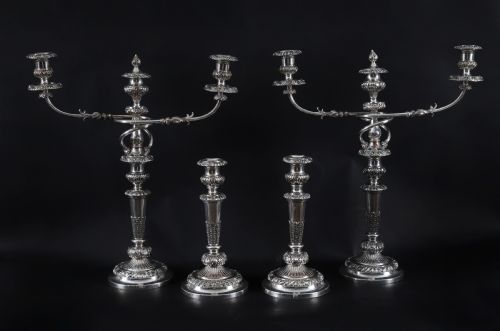
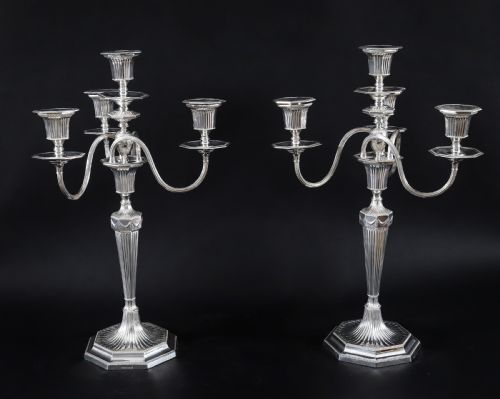
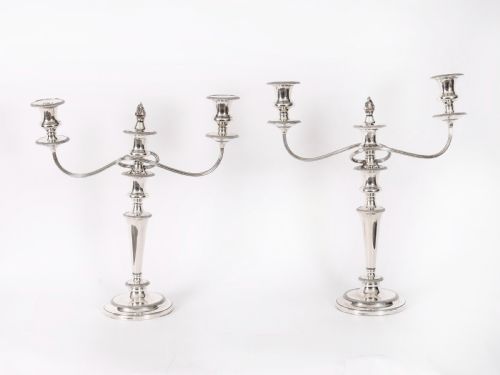
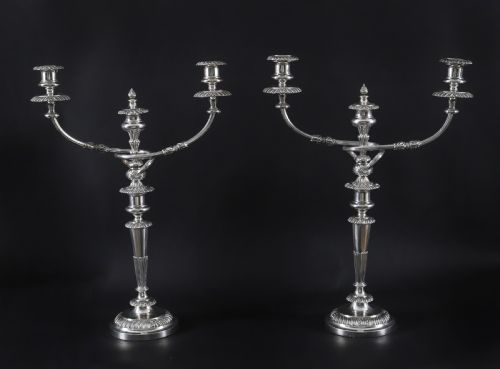



Silver Branched Candlestick
A silver branched candlestick provides multi-point illumination with considerable presence on any dining table.
Silver Branched Candlestick
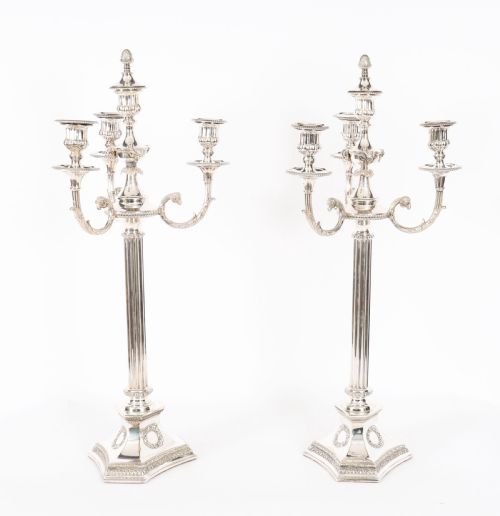
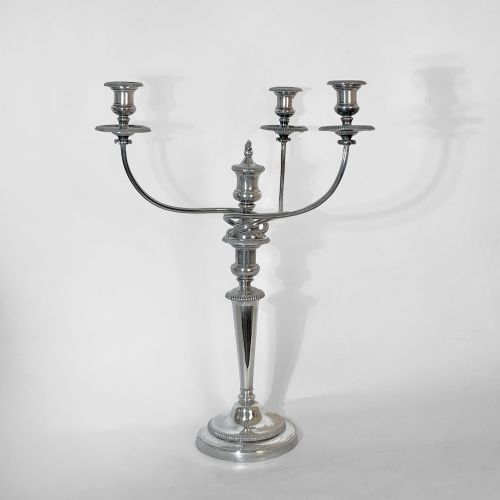
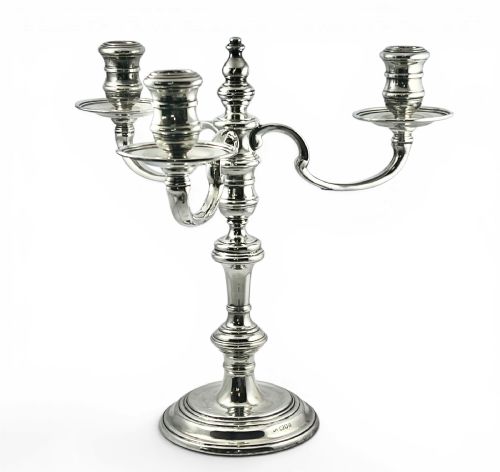
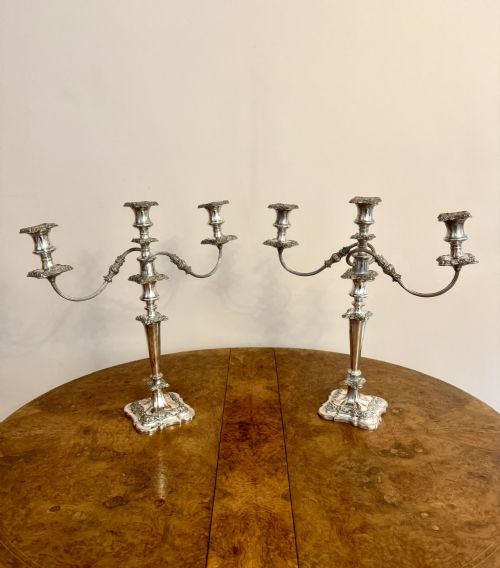
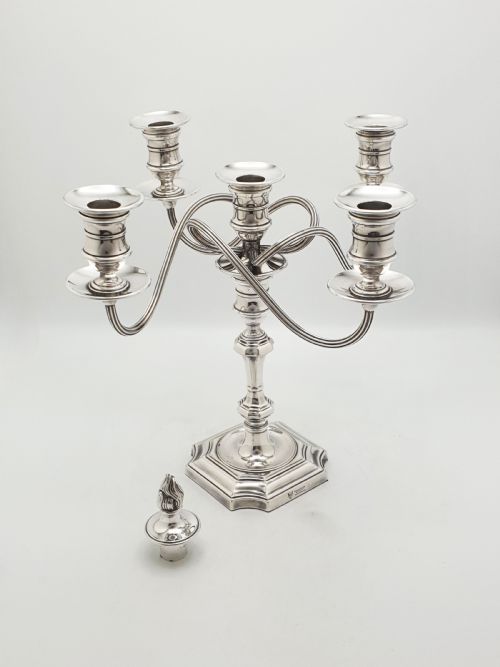
A silver branched candlestick takes the form of a candelabrum or multi-arm table light, designed to hold multiple candles from a single central shaft. Buyers encounter these pieces across periods ranging from the eighteenth century through to the mid-twentieth century, with Victorian and Edwardian examples appearing frequently.
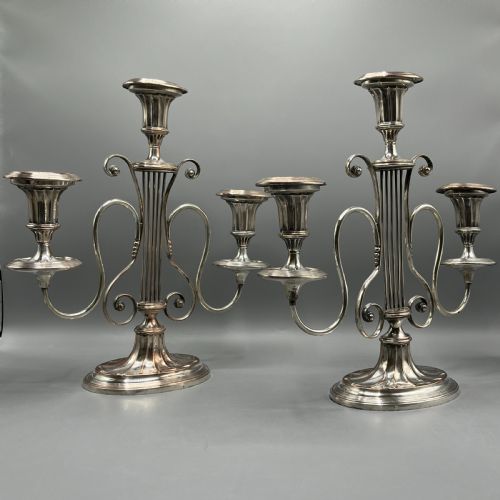
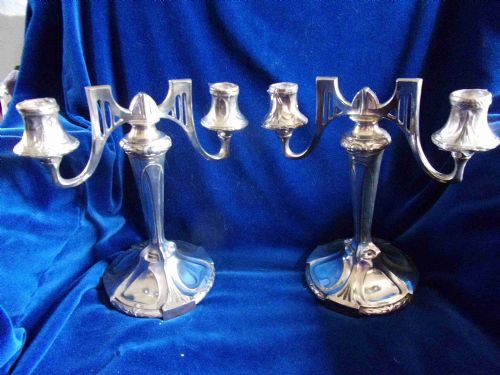
The configurations span from two-light table pieces up to substantial five-light dining room centrepieces. Forms include standard classical columns, lyre-shaped supports, and palm tree designs alongside ornate revival styles.
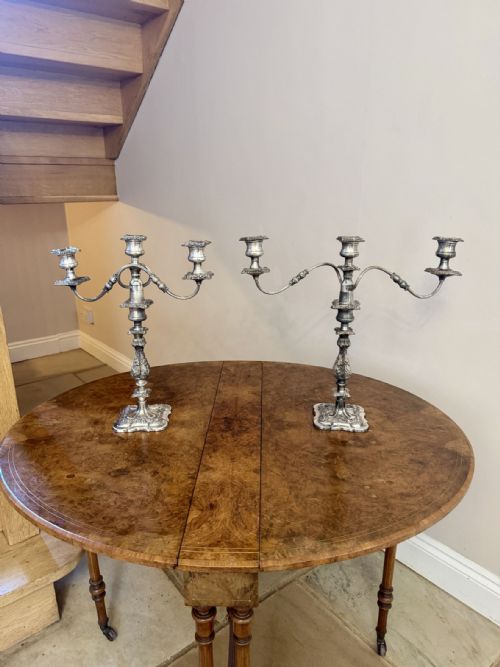
Origins stretch from English workshops in London and Sheffield to continental makers, utilising both sterling silver and plated metals. Pairs dominate the selection, offering symmetrical arrangement for formal settings.
Materials and Construction Methods
Makers utilised solid sterling silver alongside various plated techniques, notably Old Sheffield Plate and later electroplated nickel silver, known as EPNS. Copper and base metals like spelter or bronze also form the core of specific continental and art period pieces.
Branches and sconces were frequently cast separately before being soldered or fitted to the main column. Detachable sconces allowed easier cleaning of wax residue from the drip pans situated beneath each candle nozzle.
Some Victorian dining centrepieces incorporate functional palm tree dishes designed to hold sweetmeats alongside the candlelight.
Distinguishing Quality in Execution
Superior examples display crispness in cast ornamentation, particularly on floral scrolls, rococo flourishes, and classical motifs. Heavier gauge metal provides structural stability to the extended arms, preventing the lean that thinner construction develops over time.
The integrity of the plating reveals the standard of manufacture, where heavy silver layers resist wear down to the base copper. Maker marks stamped into the base or drip pans indicate workshop origin and reliable provenance.
Hawksworth Eyre·Garrard and Co·Matthew Boulton·Barker Ellis·Robert Edgar Stone·Blagden Hodgson and Co
The Silver Branched Candlestick Glossary
- Candelabrum
- A large branched candlestick holding multiple candles on separate arms. The term encompasses both two-light table pieces and heavy five-light dining centrepieces.
- Old Sheffield Plate
- A method of fusing a thin sheet of sterling silver onto a thick copper core before rolling and shaping. This technique produces characteristic subtle copper bleed along exposed edges.
- EPNS
- Electroplated nickel silver, introduced in the nineteenth century as a modern alternative to traditional plating methods. It provides a durable silver skin over a grey-white metal alloy base.
- Sconce
- The detachable cup or nozzle at the top of a branch that catches dripping wax and holds the candle firm. These components are frequently lost or mismatched on older examples.
- Lyre-shaped
- A form referencing the stringed musical instrument, often utilised in the central stem or frame of Georgian and Regency lighting.
Silver Branched Candlestick: Frequently Asked Questions
How do I clean a silver branched candlestick?
Use a soft cloth and a mild silver cream designed to protect delicate plating. Avoid abrasive pads that strip thin silver layers from older plated surfaces.
Take care around soldered joints on the branches to prevent loosening the structural components during polishing.
Are these pieces usually found in pairs?
Many listings feature matching pairs designed for symmetrical placement on dining tables or sideboards. Single pieces also appear, often representing survivors from larger sets.
Matching pairs command higher interest from collectors seeking balanced room presentation.
What is the difference between Old Sheffield Plate and EPNS?
Old Sheffield Plate involves physically fusing silver to copper through heat and pressure before rolling. This older method displays distinctive warm copper undertones where wear occurs.
EPNS relies on an electrical current to bond silver onto a nickel alloy base, creating a more uniform appearance introduced in the Victorian era.