

Silver Candelabra Centrepiece
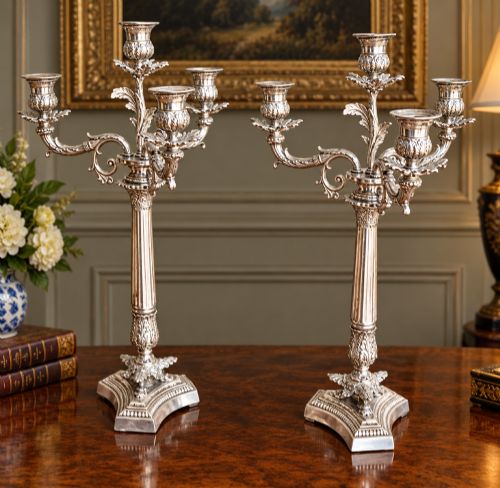
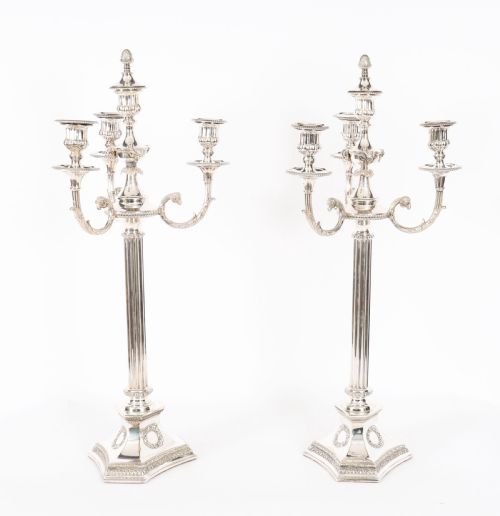
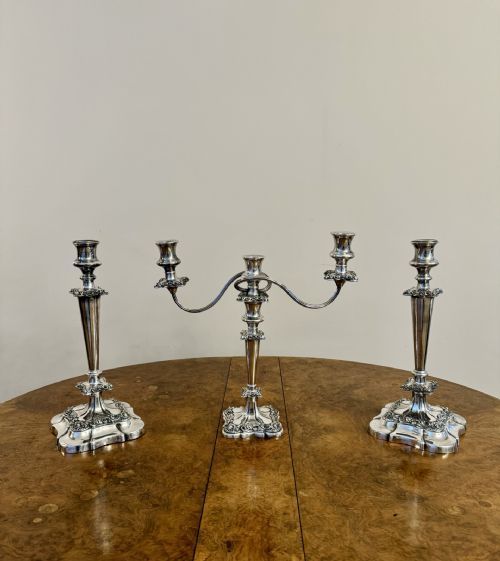
A silver candelabra centrepiece commands a dining table, holding multiple candles aloft above silver-plated or sterling bodies designed for grand entertaining.
Silver Candelabra Centrepiece
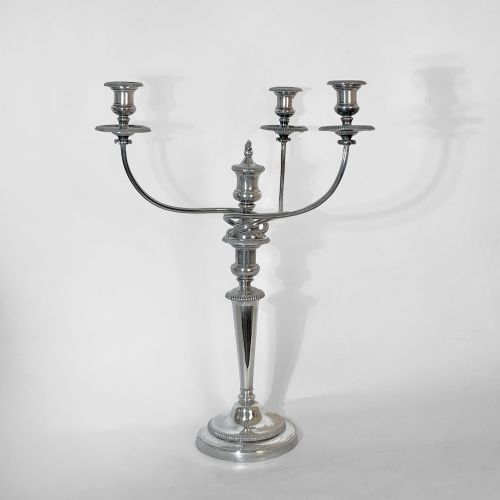
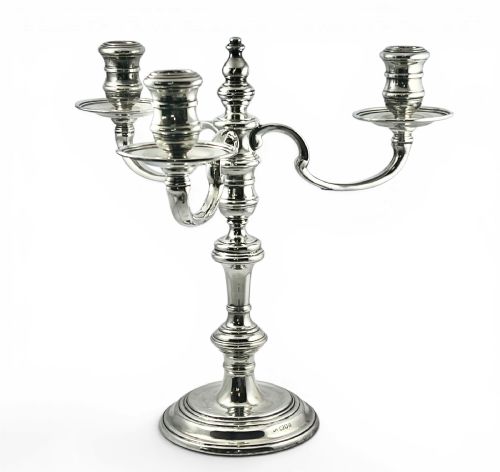
A silver candelabra centrepiece combines branched candleholders with a central stand or dish, serving as the focal point for a formal dining table. These items span periods from the eighteenth century through the Victorian era to the mid-twentieth century, capturing changing tastes in domestic lighting and display.
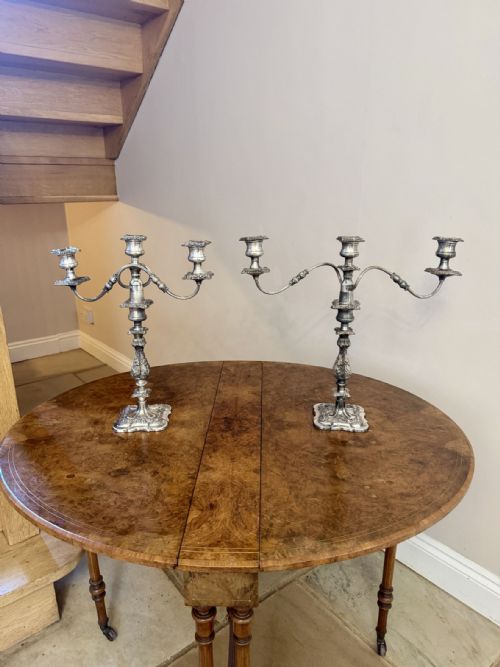
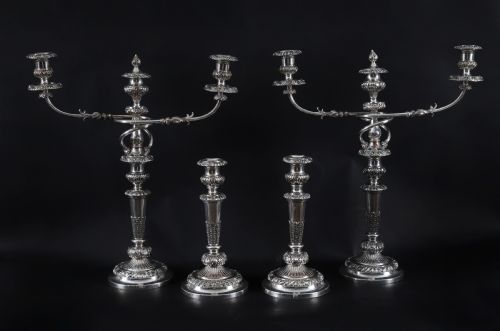
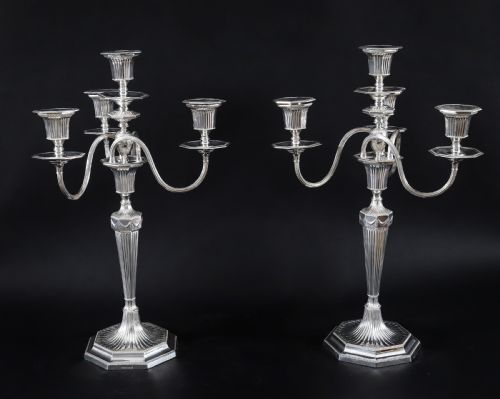
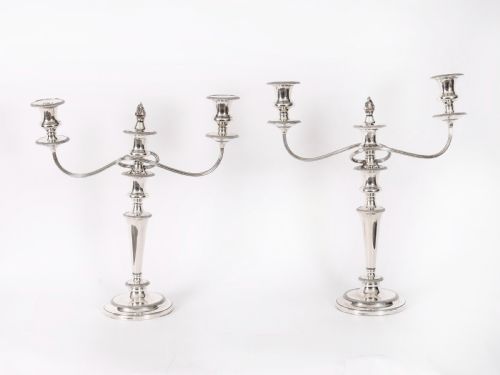
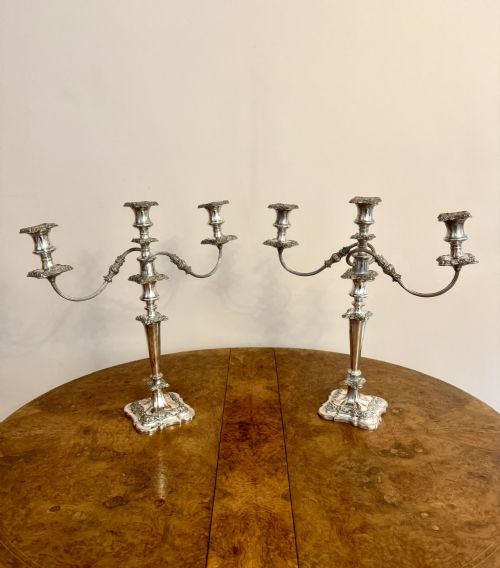
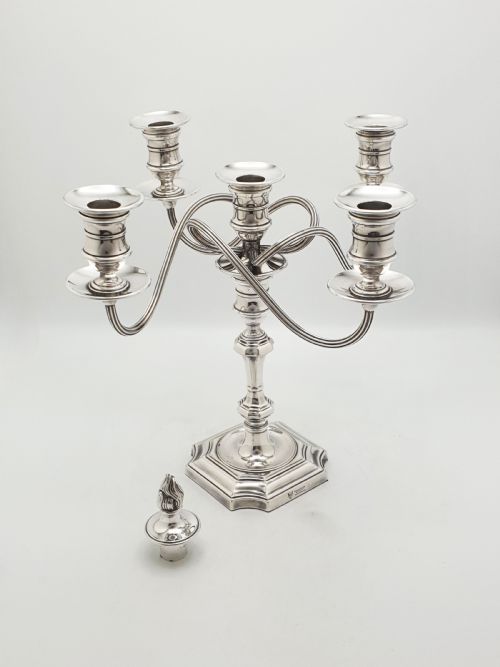
The most common versions encountered are Victorian and Edwardian silver-plated pieces featuring three to five branches, often with detachable sconces for easier cleaning. Buyers also find Georgian, Regency, and Old Sheffield Plate examples, alongside occasional sterling silver or Continental variations.
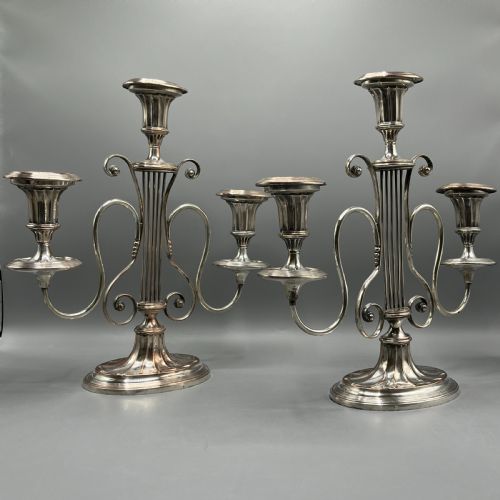
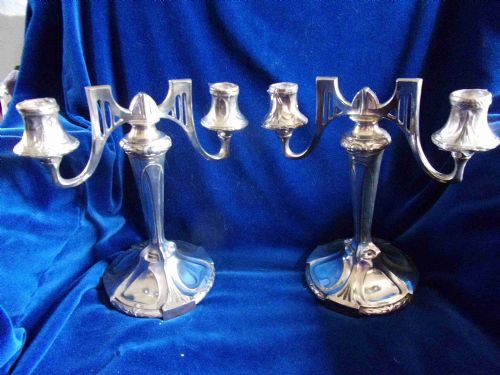
Forms range from simple low table candelabra to massive multi-branch suites complete with matching dishes or glass inserts. Makers utilised varied styles, incorporating classical revival motifs, rococo curves, and occasional arts and crafts or Jugendstil lines.
How they were made
Production methods rely heavily on silver plating over copper or base metals, including Old Sheffield Plate and later electroplated nickel silver or standard EPNS. Artisans also utilised solid sterling silver for higher-end commissions, casting and soldering intricate arms, stems, and drip pans.
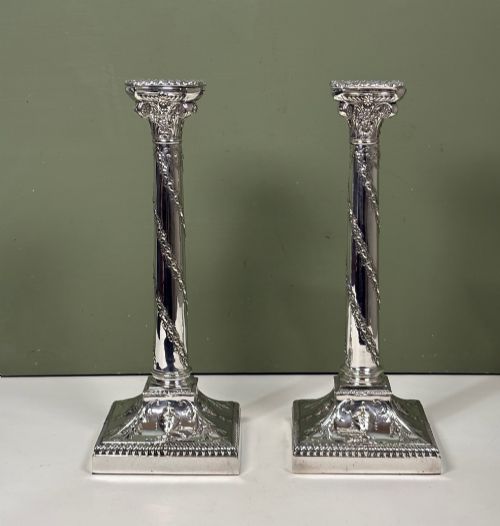
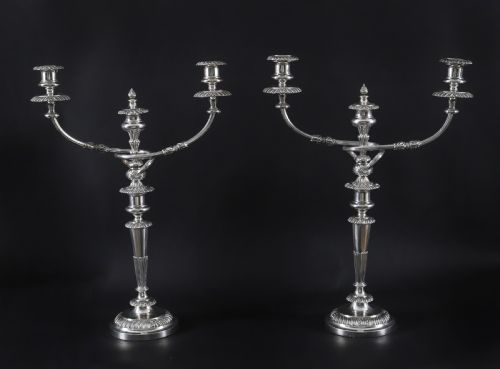
Decoration involved hand-chasing, applied cast borders, and ornamental details like cherubs, lyres, or palm trees soldered onto the main structure. Detachable components allowed makers to convert standard candlesticks into multi-light candelabra using slip-in branches.
Some Victorian dining tables played host to cherub figural candelabra, watching over the roast with innocent expressions.
What varies in quality
The weight and gauge of the metal determine the rigidity of the branches and the overall balance of the piece when loaded with candles. Thicker plating resists wear through decades of polishing, whereas thin electroplate reveals the base metal beneath.
Design integrity and crispness of cast ornament separate mass-produced items from master workshops. Finer pieces exhibit precise chasing on acanthus leaves, crisp figural work, and securely fitted joints that keep the branches aligned.
Hawksworth Eyre·Garrard and Co·Matthew Boulton·Barker Ellis·Elkington·Blagden Hodgson and Co
The Silver Candelabra Centrepiece Glossary
- Old Sheffield Plate
- A method of fusing a thin sheet of sterling silver to a thicker copper core by heat and pressure. This technique produced durable wares before the invention of electroplating.
- Sconces
- The removable metal cups fitted into the nozzle of a candelabra to catch dripping wax. They lift out for cleaning and polishing.
- EPNS
- Electroplated nickel silver, a common base metal composition coated with a thin layer of silver through an electrical process. It became widespread from the mid-nineteenth century onward.
- Epergne
- An ornamental table centrepiece featuring a central bowl or basket combined with branching arms for fruit, sweetmeats, or candles. They dominate formal dining arrangements from the Georgian and Victorian periods.
- Chasing
- A metalsmithing technique where the artisan hammers the front of the metal to push out and define surface ornamentation. It creates low-relief patterns without removing material.
Silver Candelabra Centrepiece: Frequently Asked Questions
How do I clean my silver candelabra centrepiece?
Use a soft cloth and a gentle silver cream formulated to protect plated surfaces without stripping the remaining metal. Avoid harsh dips that can damage copper cores in older plated items.
Take care around soldered joints and cast ornamentation where polish can accumulate. Wash away residue with warm soapy water and dry thoroughly with a flannel cloth.
How do I date an unmarked silver plated candelabra?
Examine the weight, construction methods, and stylistic cues such as neoclassical urns or heavy Victorian scrolling. Old Sheffield plate usually points to the eighteenth or early nineteenth century.
Look for registration marks, maker's initials, or stamping on the base rim or underside of the drip pans. These details often narrow down the decade of production.
What is the difference between Old Sheffield Plate and silver plate?
Old Sheffield Plate involves physically fusing a sheet of silver to a copper ingot before rolling them into sheets together. This creates a distinct edge where copper may show through with wear.
Standard silver plate utilises electricity to bond a thin layer of silver onto a nickel silver or base metal blank. This later technique produced more uniform surfaces and became standard after the mid-nineteenth century.