

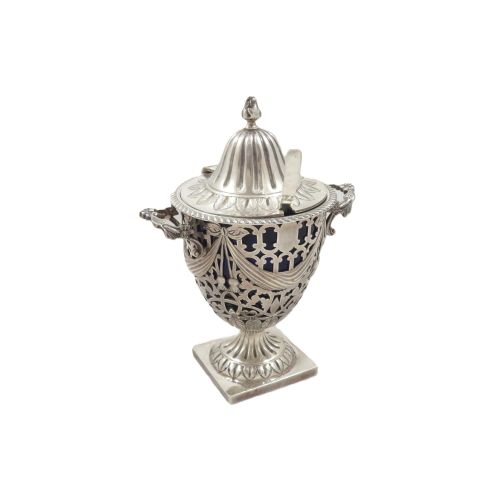

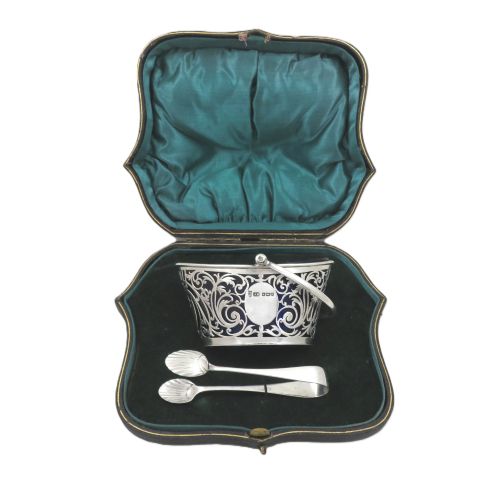
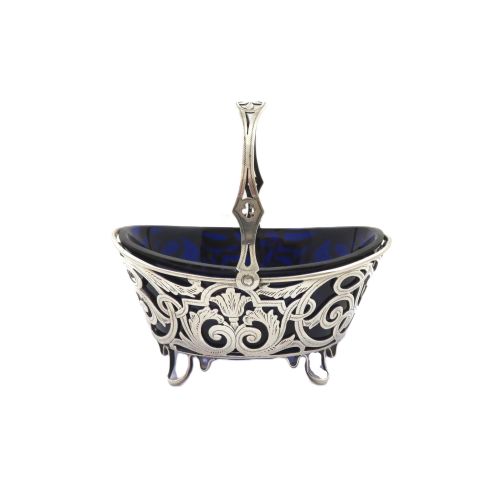

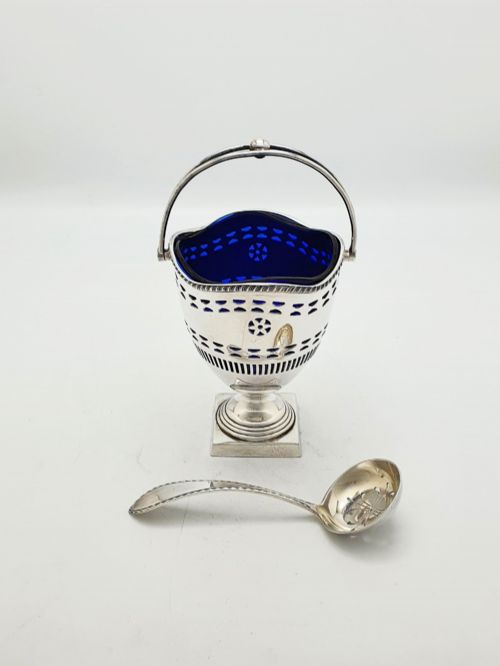


Silver Bowl with Liner
A silver bowl with liner brings together metalwork and glass or ceramic insert, offering a functional table centrepiece.
Silver Bowl with Liner
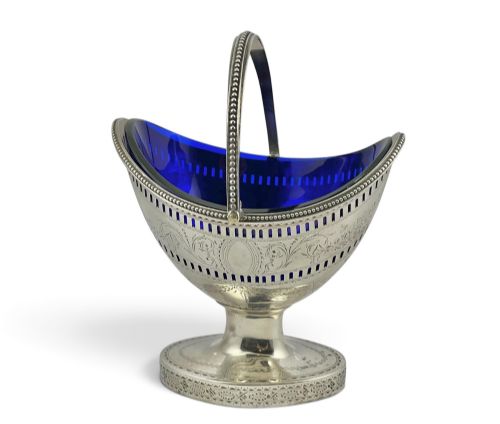
A silver bowl with liner typically takes the form of a sugar basket, sugar bowl, fruit dish, or salad bowl intended for formal dining. These pieces combine an outer framework of sterling silver, silver plate, or polished oak with an inner vessel made from cobalt glass, cranberry glass, ruby glass, or ceramic.
The objects span the Victorian and Edwardian periods, alongside a small number of Art Deco items, reflecting shifting domestic tastes for brightly coloured glassware housed within decorative metal mounts. Forms range from pierced baskets and covered urns to heavy presentation prize bowls and pedestal tazas.
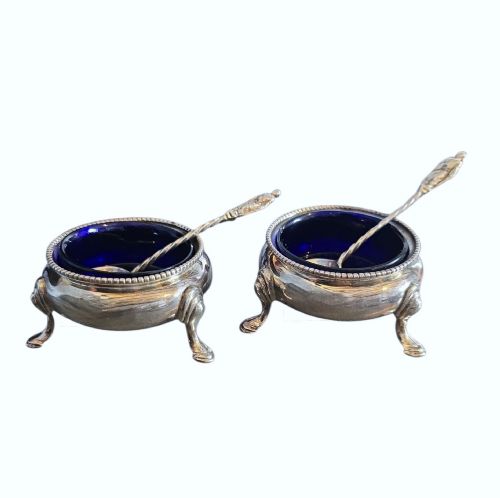
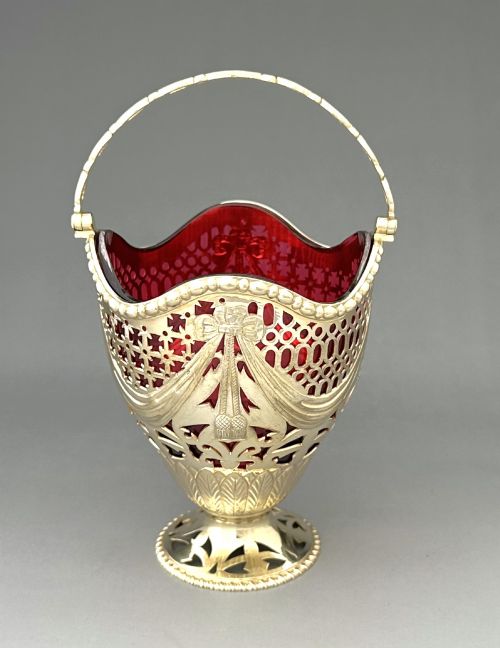
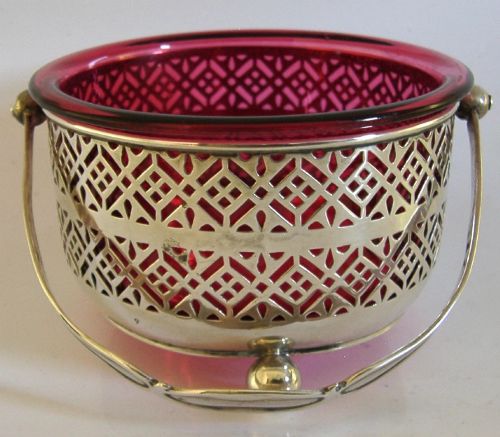
On this page, buyers frequently encounter Edwardian and Victorian sterling silver or silver plated sugar baskets featuring pierced decoration designed to reveal the coloured glass liner within. Larger salad bowls pair silver plate mounts with polished oak and matching servers, while smaller examples include salt cellars.
Materials and construction
Construction relies on combining structural metalwork or timber with blown or moulded glass inserts. Outer frames utilise sterling silver, silver plate, silver-gilt, or polished oak, shaped through piercing, casting, or turning to support the fragile inner vessel.
Liners are produced from cobalt glass, cranberry glass, ruby glass, or glazed ceramic, often shaped specifically to fit the contours of the basket or bowl. Cast floral handles and fitted lids complete the assembly, securing the liner within the outer metal framework.
Silver Bowl with Liner Retail Price Guide 2026
Typical asking prices for silver bowl with liner among the pieces listed under this phrase on Sellingantiques today, from the lower quarter to the upper quarter. They describe what is for sale here now, not the wider market.
Listings span the Victorian and Edwardian periods alongside Art Deco items, incorporating sterling silver, silver plate, cobalt glass, cranberry glass, and oak.
Evaluating quality and craftsmanship
Quality rests upon the crispness of the metalwork, whether through finely cast floral handles or intricate piercing on silver and silver plated frames. Heavier gauge metal and retained original glass liners indicate superior execution.
The integration between the outer basket and the inner liner marks the standard of the piece, where precise fitting and original matching elements demonstrate higher workshop execution.
W M F
The Silver Bowl with Liner Glossary
- Sterling silver
- A silver alloy containing 92.5 percent pure silver by mass, widely utilised for domestic tableware across the Victorian and Edwardian eras.
- Silver plate
- A base metal substrate coated with a thin layer of silver, frequently employed for large baskets and salad bowls during the nineteenth and twentieth centuries.
- Silver-gilt
- Silver that has been coated with a thin layer of gold on its surface, creating a rich golden interior finish often seen on basket interiors.
- Cobalt glass
- A deep blue coloured glass produced by adding cobalt oxide to the molten batch, popular for decorative liners.
- Cranberry glass
- A translucent pinkish-red glass created through the addition of gold chloride, commonly used for sugar bowl inserts.
Silver Bowl with Liner: Frequently Asked Questions
What is a silver bowl with liner?
A silver bowl with liner is a piece of tableware featuring an outer metal or wooden container and a removable glass or ceramic interior vessel.
These items were designed for serving sugar, fruit, or salads while protecting the outer metal from acidic foods.
How were these bowls used?
They served functional roles on dining tables for sugar, fruit, condiments, or salads during formal meals.
The removable liner allowed the vessel to be easily emptied and cleaned after dining.
How do I care for my bowl?
Care involves gentle cleaning of the metal frame with appropriate polishes while washing the glass or ceramic liner separately by hand.
Avoiding harsh abrasives preserves both the silver surface and the coloured glass insert.
How do I date these pieces?
Dating relies on hallmarks stamped on sterling silver items, style characteristics, and manufacturing techniques recorded across the Victorian and Edwardian periods.
Design motifs such as pierced scrollwork or heavy cast handles offer clear stylistic indicators.