





Silver Art Deco Figurine
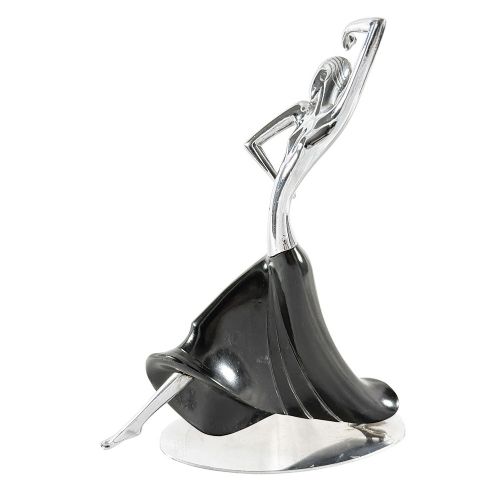
A silver art deco figurine brings the dynamic energy and sleek geometry of the interwar years straight into a room.
Silver Art Deco Figurine
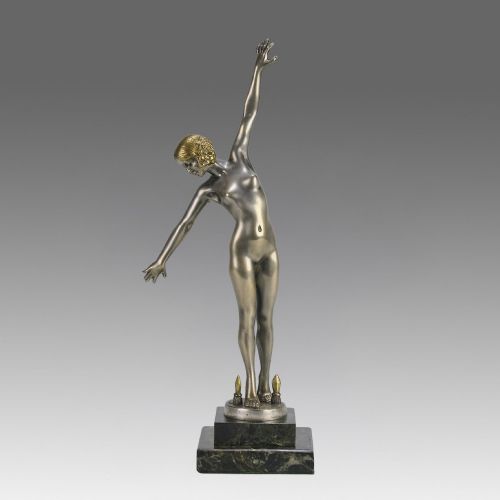
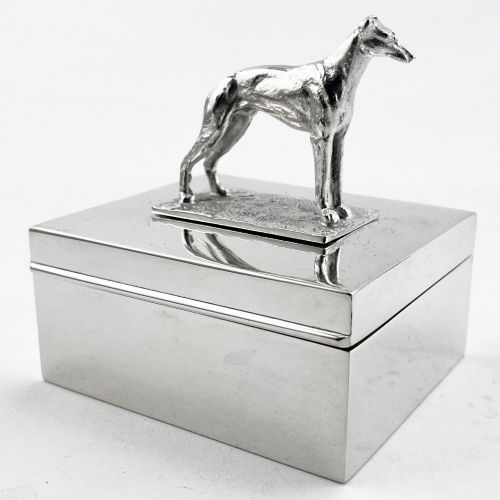
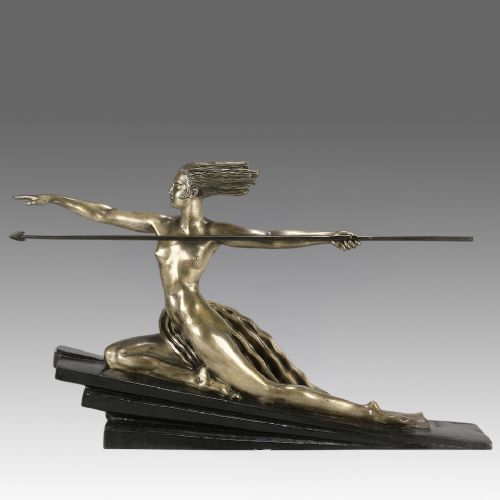
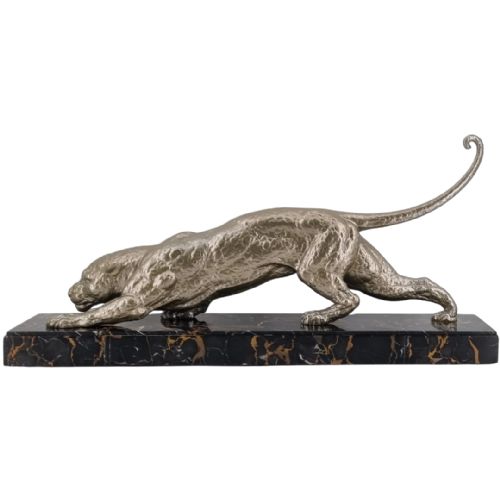
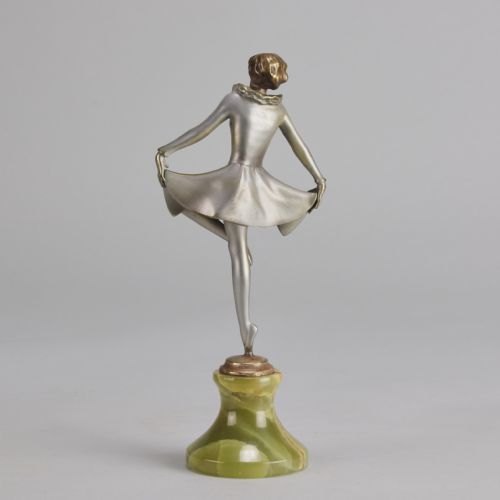
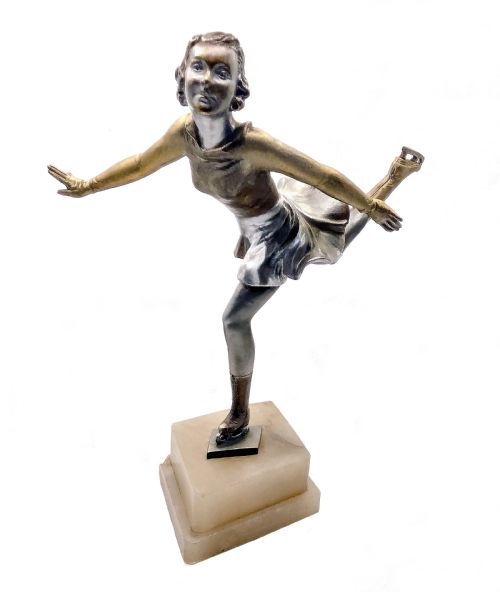
A silver art deco figurine most often takes the shape of a dancer, an athlete or an animal captured in mid-movement. These pieces emerge predominantly from the 1920s and 1930s, reflecting the modernist spirit of the period.
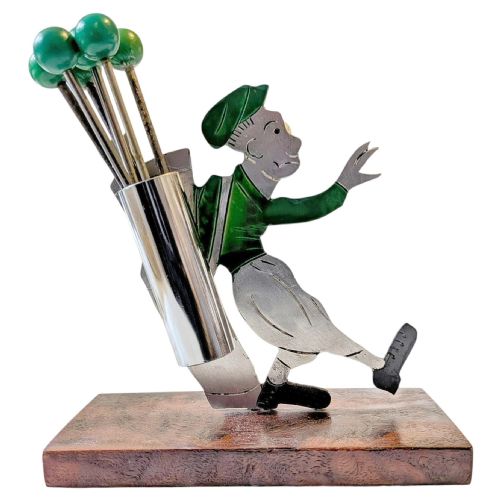
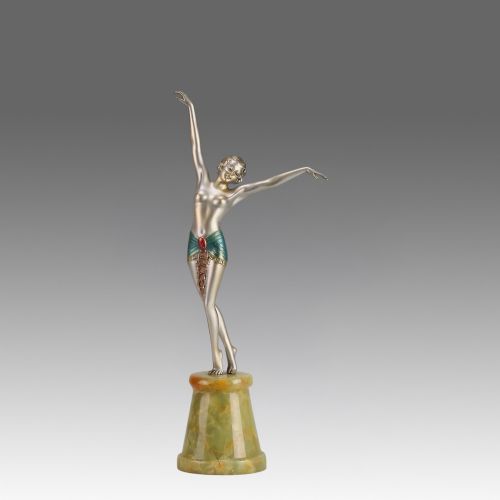
The objects function variously as standalone sculptures, novel desk accessories and even decorative barware with cocktail sticks. Dancers with outstretched arms or flowing scarves dominate the forms recorded here.
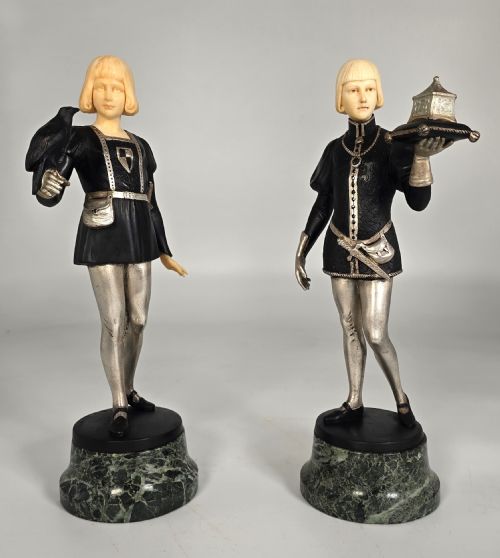
Makers set these figures upon substantial bases of marble or onyx to anchor the vertical energy of the design. The human and animal subjects embody the characteristic style of the era through simplified planes and stylised curves.
Materials and Construction
Foundries cast these figures in bronze, silvered bronze, nickel bronze, aluminium and spelter, often finishing the metal with cold paint, enamel or chrome plating. Many bronze and silvered bronze examples combine with carved ivory for facial details and hands.
Bases utilise contrasting materials like green or black marble and onyx to give the figures weight and presence. The application of cold paint brings subtle polychrome decoration to garments and hair, while silvering and chrome plating deliver the signature metallic sheen.
Silver Art Deco Figurine Retail Price Guide 2026
Typical asking prices for silver art deco figurine among the pieces listed under this phrase on Sellingantiques today, from the lower quarter to the upper quarter. They describe what is for sale here now, not the wider market.
Listings feature periods spanning from the nineteenth century into the 1920s and 1930s, using materials such as marble, onyx, bronze, spelter, wood, and enamel.
The Markers of Quality
The distinction between a standard cast and a superior piece lies in the crispness of the chasing and the retention of delicate surface detail. Master sculptors achieved fluid lines where fabric and hair appear to move naturally with the body.
The quality of the patination and the preservation of original cold paint or silvering dictate the visual impact of the work. Integral mounting to a heavy, polished marble or onyx base completes the structural integrity of the finer specimens.
Pierre le Faguays·Ferdinand Preiss·Josef Lorenzl·Claire Jeanne Roberte Colinet·Demetre Chiparus·Karl Hagenauer·Alexandre Kelety·Geo Maxim·Michel Decoux·Gotthilf Jaeger
The Silver Art Deco Figurine Glossary
- Cold-painted bronze
- Bronze that has been painted by hand with oil or enamel colours without subsequent firing. This technique allowed makers to imbue garments and skin with lifelike tones.
- Spelter
- A zinc-based alloy commonly utilised as a cost-effective alternative to bronze. It takes plating and paint readily to mimic more expensive metals.
- Patina
- The surface sheen or coloration developed through age or chemical treatment on metal. Collectors value original patination for confirming the age and authenticity of a piece.
- Chasing
- The manual refinement of a cast metal surface using hammers and punches. Skilled artisans used this process to sharpen details lost during the casting stage.
- Stylisation
- The artistic simplification of natural forms into geometric or decorative patterns. This approach defines the visual vocabulary of the period.
Silver Art Deco Figurine: Frequently Asked Questions
What materials make up these figurines?
Foundries cast these figures in bronze, silvered bronze, spelter, aluminum and nickel bronze. Artists frequently combined these metals with carved ivory, enamel, and cold-painted finishes.
Heavier elements like marble and onyx form the foundational bases for many of the sculptures and desk accessories.
How do I identify a spelter piece?
Spelter is a softer zinc alloy that feels lighter than bronze and often shows a distinct greyish metal beneath worn paint or plating. It lacks the dense, resonant quality of true cast bronze.
Makers utilised spelter widely during the interwar decades for accessible decorative figures.
Where were these figures placed originally?
Owners displayed these decorative sculptures on mantelpieces, desks, and side tables in domestic interiors. Specific iterations served functional roles as desk ornaments, paperweights, or cocktail stick holders.
Their compact scale suited the modern apartments and living spaces of the early twentieth century.
How do I care for cold-painted surfaces?
Cold-painted bronze requires gentle dusting with a soft, dry brush to protect the fragile enamel or oil pigments. Moisture and chemical cleaners can lift the delicate paint layers from the metal underneath.
Keep these pieces out of direct sunlight to prevent the colours from fading over time.