
Silver and Glass Flask
A silver and glass flask brings together precious metal and heavy vessel glass for portable spirits, perfumes, and medicine.
Silver and Glass Flask
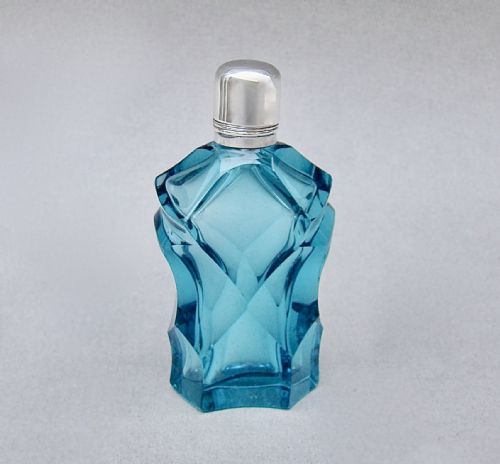
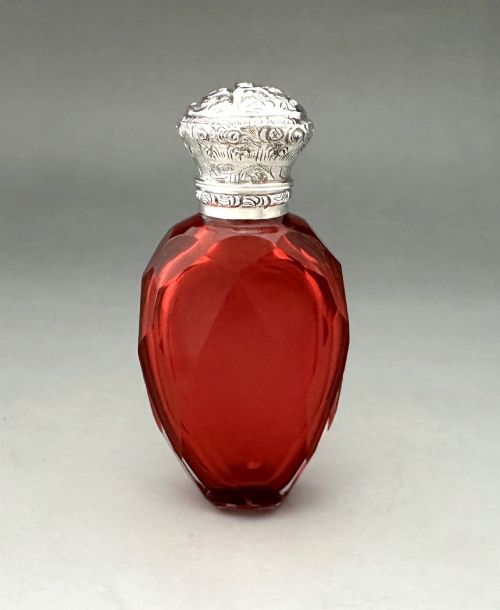
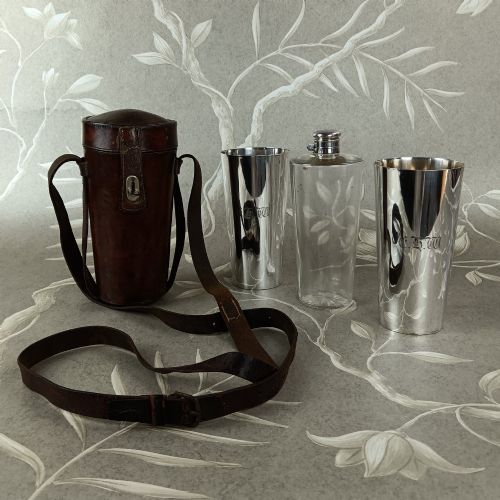
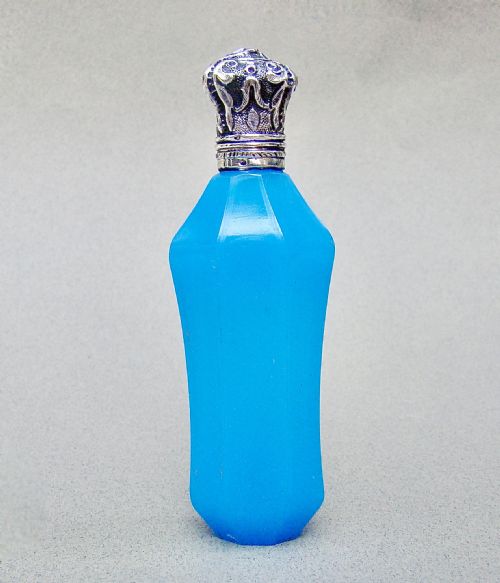
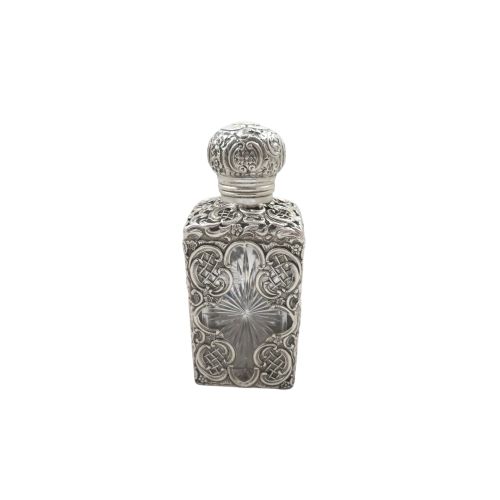
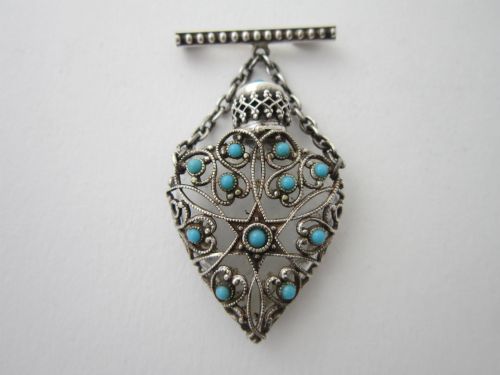
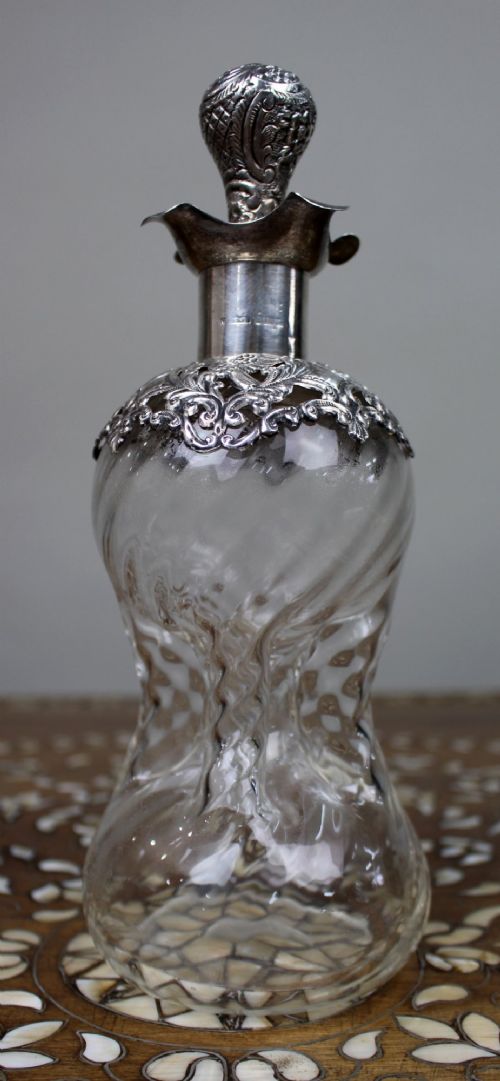
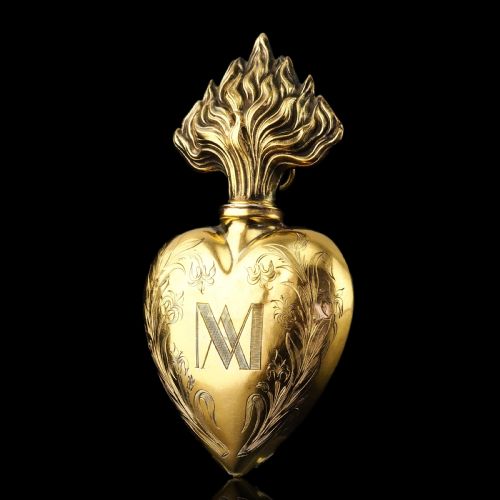
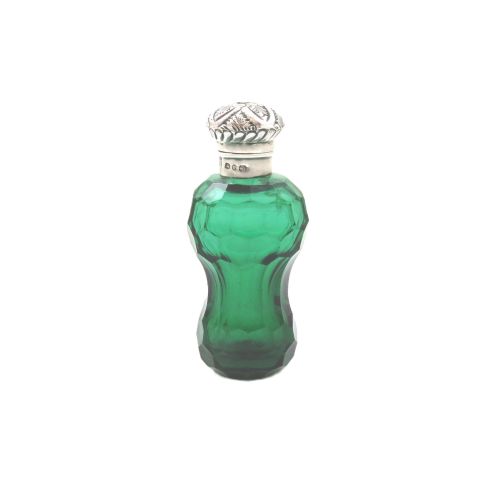
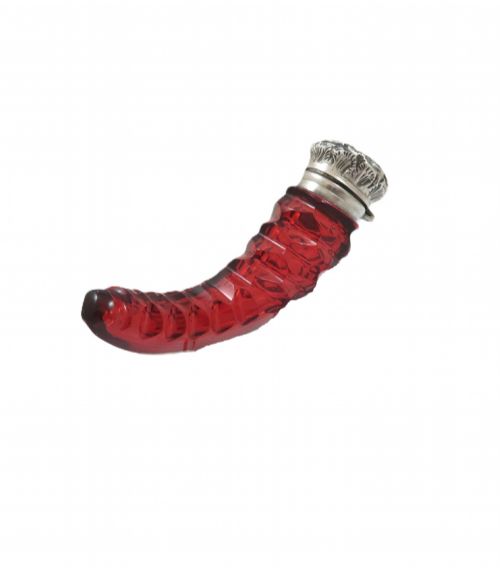
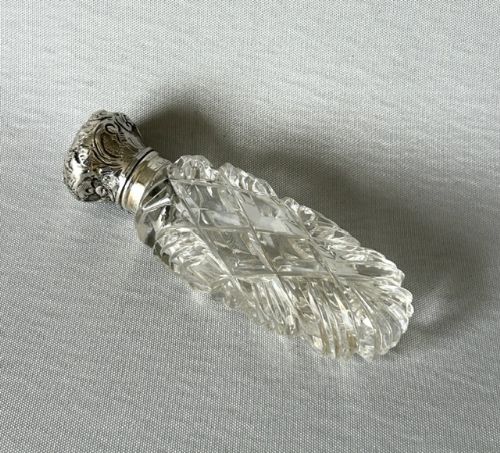
A silver and glass flask serves primarily as a portable container for personal fragrance or spirits, combining a glass body with protective metal mounts. You will most frequently encounter Victorian and Edwardian examples on this page, ranging from pocket-sized scent bottles to substantial leather-cased hunting flasks.
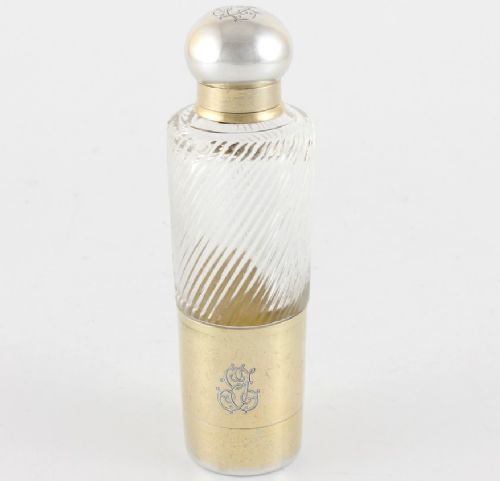
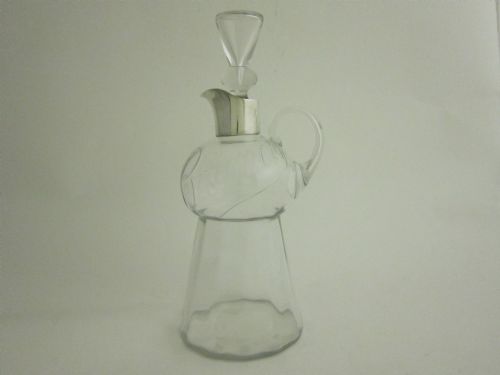
The selection encompasses diverse forms including hip flasks with removable cups, vanity bottles, and spirit decanters produced across the nineteenth and early twentieth centuries. Continental and English makers feature prominently, utilising coloured, cut, or clear vessel glass alongside sterling silver and silver plate.
How they were made
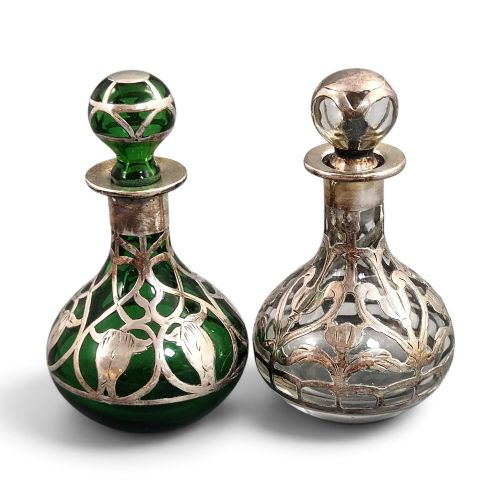
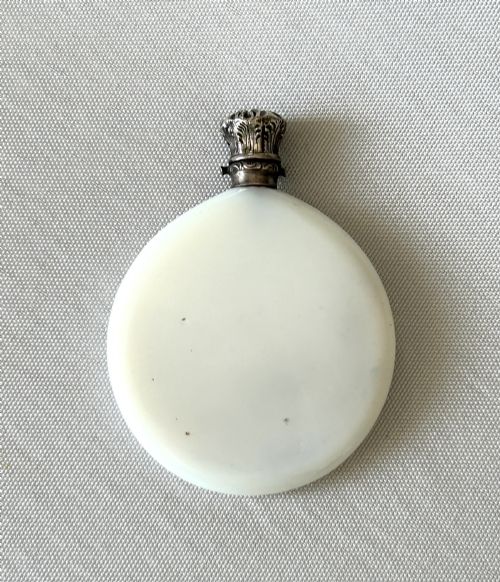
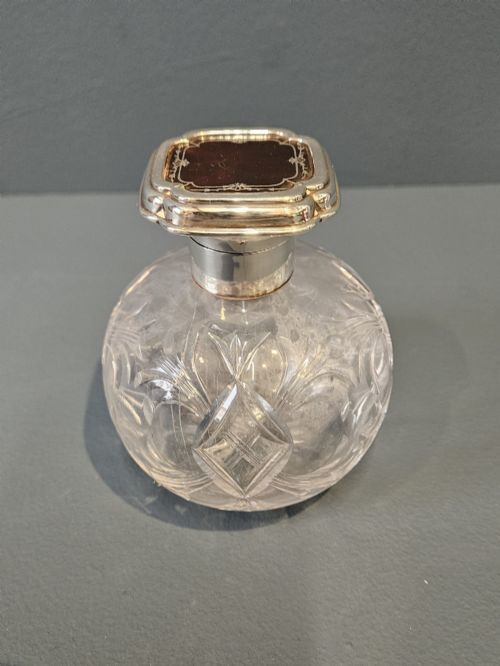
Makers formed the glass bodies using techniques such as mold-blowing, hand-cutting, and overlay methods, producing both clear crystal and vibrant coloured glass including cranberry, ruby, and opaline. Molten glass was shaped into bottles, decanters, and flasks before receiving decorative wheel-cutting or casing.
Silversmiths then fashioned matching mounts, screw caps, hinged lids, and removable cups from sterling silver, silver gilt, or silver plate. These metal components were often secured to the glass neck with cork liners to ensure a liquid-tight seal for spirits or perfume.
Additional ornamentation involved hand-hammered finishes, chased floral motifs, or applied silver overlay in Art Nouveau and Art Deco styles. Some pieces incorporated supplementary materials like leather sleeves, tortoiseshell panels, or guilloche enamel lids.
Materials recorded across the archive include sterling silver, silver plate, ruby glass, opaline glass, leather, and tortoiseshell.
What varies in quality
Quality depends upon the weight and clarity of the glass vessel, where deep hand-cutting and rich coloured glass distinguish finer productions from standard moulded wares. The thickness of the silver mounts and the crispness of any chased or overlaid decoration further separate high-tier examples from ordinary items.
The presence of fully matching hallmarks across caps, collars, and removable cups indicates superior original manufacture and assembly by recognised makers. Finer flasks also retain integral details such as original glass inner stoppers, cork seals, and fitted leather or velvet-lined cases.
James Dixon And Sons·Gorham·Harold Bushell And Co·Karl Palda·Sampson Mordan·Mosley Flowers And Co
The Silver and Glass Flask Glossary
- Hallmark
- Official stamps struck into precious metal indicating the assay office, purity standard, and year of manufacture. These marks provide definitive dating for the silver mounts of the flask.
- Scent bottle
- A small container designed to hold liquid perfume, typically fitted with a tight stopper and a hinged or screw cap. Many examples feature decorative glass bodies encased in silver.
- Hip flask
- A curved container shaped to fit against the body, utilised for carrying potable spirits during travel or outdoor pursuits. They frequently include a detachable cup at the base.
- Guilloche enamel
- Decorative mechanical engraving beneath a translucent layer of coloured enamel, commonly found on Edwardian and Art Deco caps and lids.
- Silver overlay
- Silver metal applied directly onto the exterior surface of the glass vessel, often worked into flowing floral or geometric patterns characteristic of the Art Nouveau period.
Silver and Glass Flask: Frequently Asked Questions
What is a silver and glass flask?
A silver and glass flask is a portable container featuring a glass body encased or mounted in silver, used historically for carrying perfume or spirits.
These pieces combine functional vessel glass with decorative metalwork, ranging from pocket scent bottles to larger hunting flasks.
How do you use a vintage flask?
Vintage flasks were originally designed to carry personal fragrance or alcoholic spirits while travelling, hunting, or attending social events.
Today, collectors primarily display these objects as decorative vanity items or barware, though functional use remains possible with proper care of the seals.
How do I date my flask?
Dating is achieved primarily by examining the silver hallmarks stamped onto the mounts, caps, or collars, which record the assay office and year of manufacture.
Stylistic indicators such as cut glass patterns, enamel work, and overall form also help assign pieces to specific periods like the Victorian or Edwardian eras.
What are the common glass colors?
Common glass colours seen in these pieces include clear crystal, cranberry, ruby, opaline, green, and amethyst.
Some flasks also feature sliced-cut decoration or layered glass overlays that expose the contrasting colour beneath.