
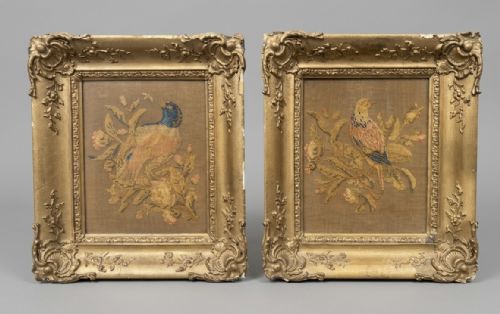


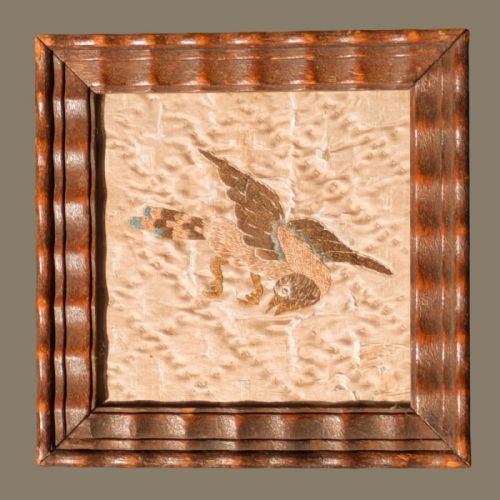
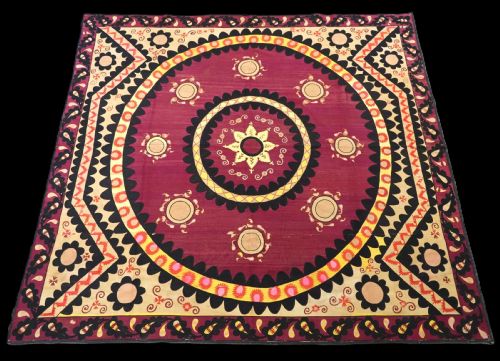
Silk Thread Embroidered Tapestry
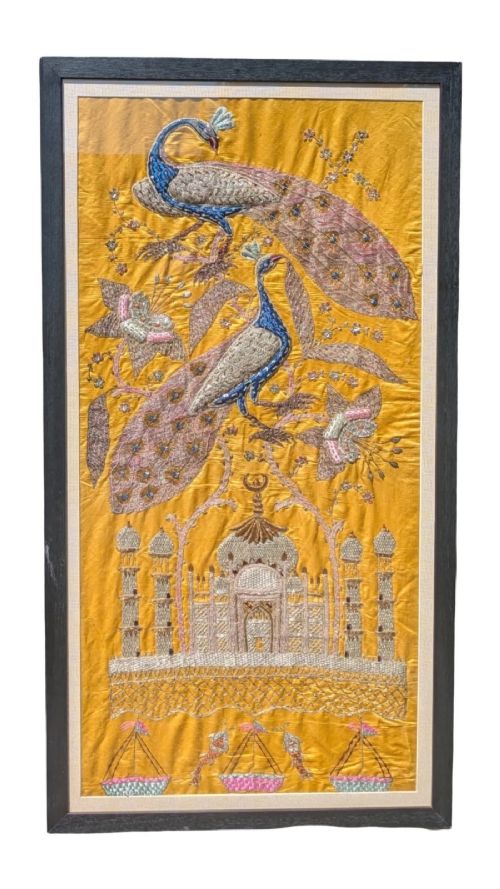
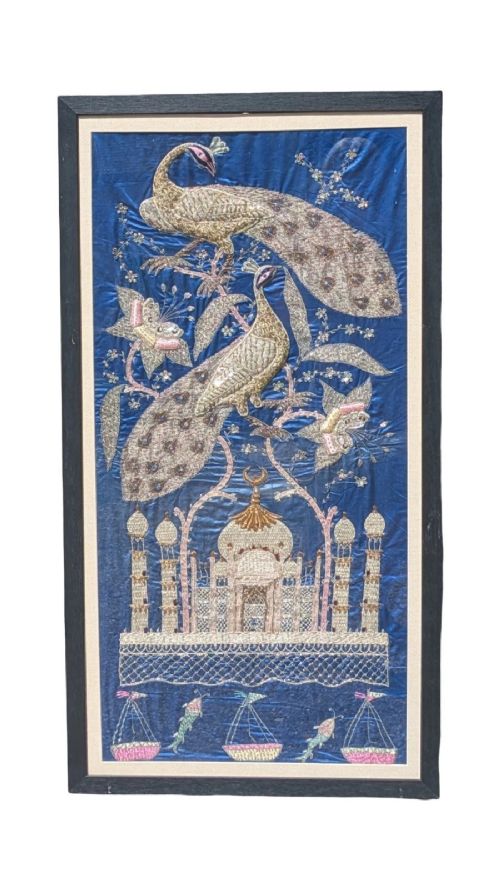
These silk thread embroidered tapestry works span Central Asian suzanis, Indian depictions and British needlework pictures, offering rich texture for your walls.
Silk Thread Embroidered Tapestry
A silk thread embroidered tapestry encompasses diverse textile works ranging from Central Asian suzanis to Indian pictorial hangings and British needlework pictures. When browsing this selection, you are most likely to encounter nineteenth and early twentieth century examples framed for display.
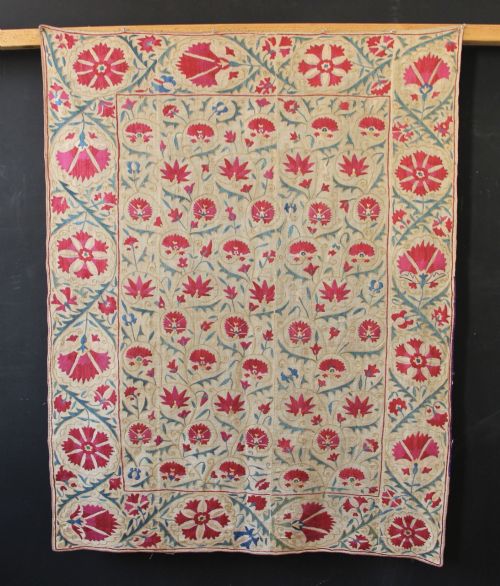
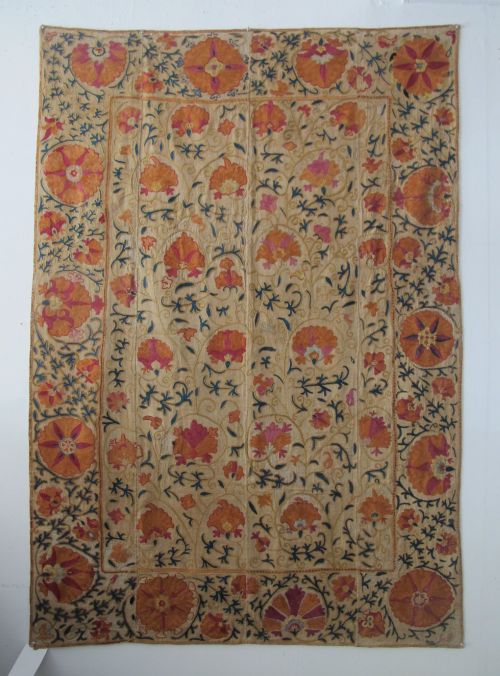
The regional origins vary widely across the inventory, including Uzbek suzanis on cotton grounds alongside Anglo-Indian and Victorian pieces. These wall art formats serve as focal points in a room, bringing historical textiles into contemporary interiors.
Materials and construction
The primary construction relies on silk threads worked onto grounds of cotton or wool, occasionally supplemented by metallic thread. Many of these textile art pieces are mounted within wood or giltwood frames to protect the fabric.
Techniques range from fine long stitch and needlework samplers to dense suzani embroidery covering the entire ground. Stitch density and material combination define the physical structure of each hanging.
Materials recorded across the inventory span silk, cotton, wool, metallic thread, glass and giltwood.
What separates the finest examples
Quality rests primarily on the density of the needlework and the complexity of the design layout. Full work suzanis and detailed pictorial scenes demonstrate superior craftsmanship compared to simpler compositions.
The condition of the silk threads and the integrity of the ground fabric dictate the longevity of the piece. Vibrant colour retention and well-preserved framing further elevate the standing of an antique textile.
The Silk Thread Embroidered Tapestry Glossary
- Suzani
- A type of embroidered tribal textile originating from Central Asia, traditionally worked in silk on a cotton or linen ground.
- Long stitch
- An embroidery technique where long vertical or diagonal stitches cover the canvas, creating smooth pictorial surfaces.
- Giltwood
- Wood that has been treated with a thin layer of gold leaf or gilt, commonly found on antique picture frames.
- Needlework sampler
- A piece of fabric embroidered to demonstrate various stitches and patterns, often bearing a maker's name and date.
- Palak
- A designation for heavily embroidered suzanis where the background fabric is almost entirely covered by silk thread.
Silk Thread Embroidered Tapestry: Frequently Asked Questions
How do I hang a textile safely?
Mount the textile on a padded board covered in conservation-grade fabric to distribute weight evenly across the piece. Avoid direct sunlight to protect the silk threads from fading.
Keep the hanging away from high-moisture areas such as kitchens or bathrooms to prevent fibre degradation over time.
What is an Uzbek suzani?
An Uzbek suzani is a decorative wall hanging or bed cover hand-embroidered by women in Central Asia, typically featuring bold floral motifs. These pieces were traditionally created as part of a bride's dowry.
The ground material is usually cotton, worked with vibrant silk threads in various stitch types including chain stitch and couching.
Are these textiles framed?
Many pieces in this category arrive in period wood or gilt frames designed to protect the fragile needlework from handling. Framing also allows the textile to be hung securely on a wall like a traditional painting.
Unframed textiles require specialist mounting before display to ensure the fabric does not stretch or tear under its own weight.