





Silk on Cotton Textile
A silk on cotton textile brings warmth and intricate narrative to a wall, combining luminous needlework with a durable woven foundation.
Silk on Cotton Textile
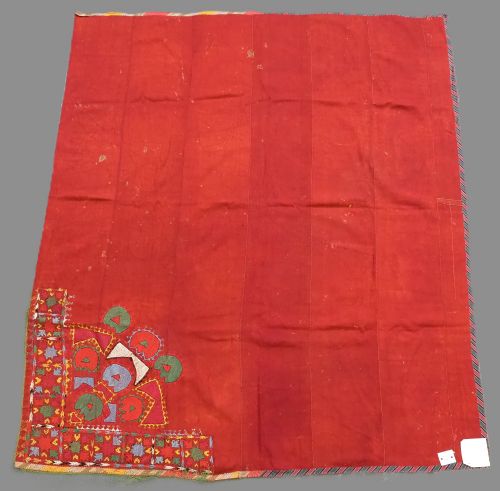
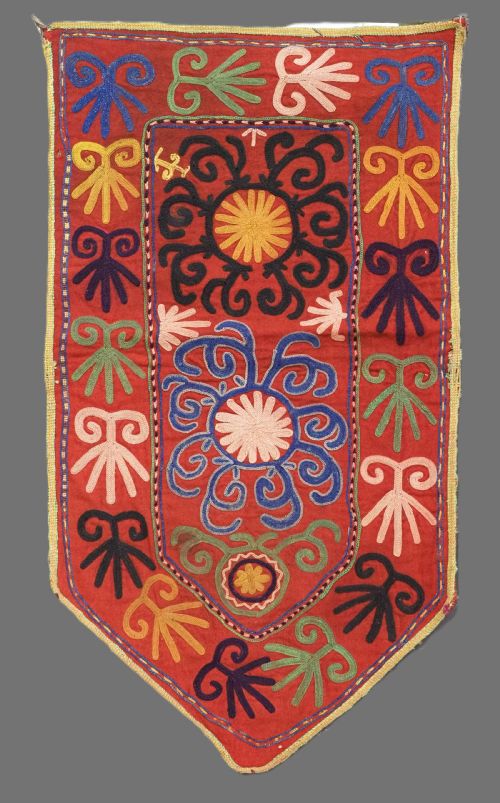
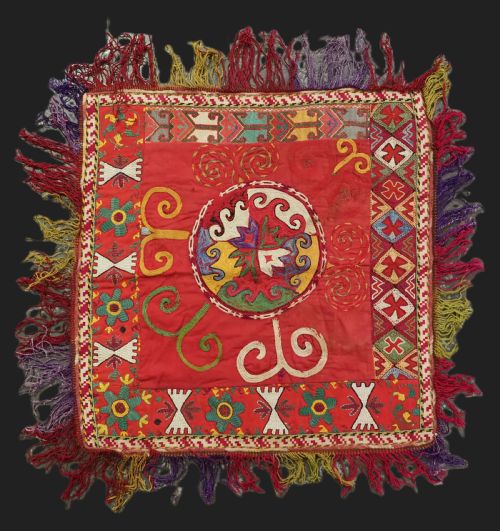
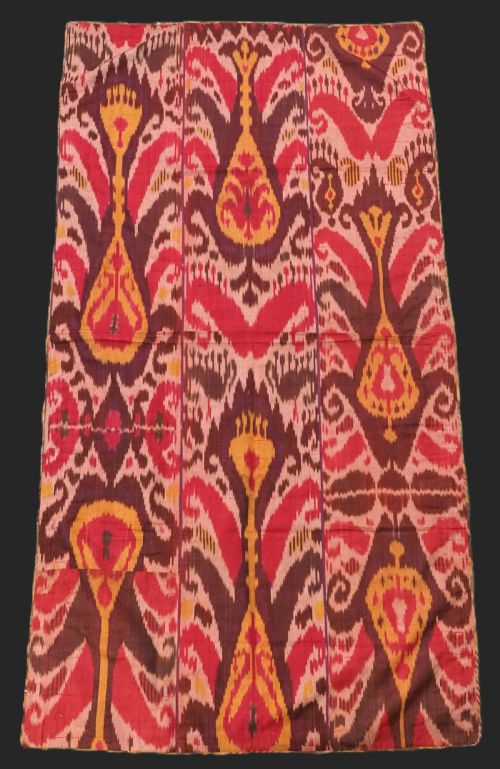
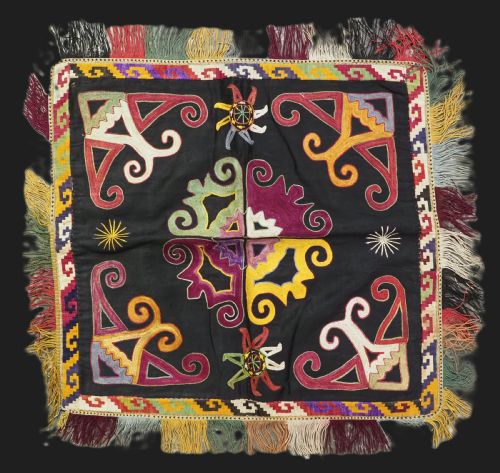
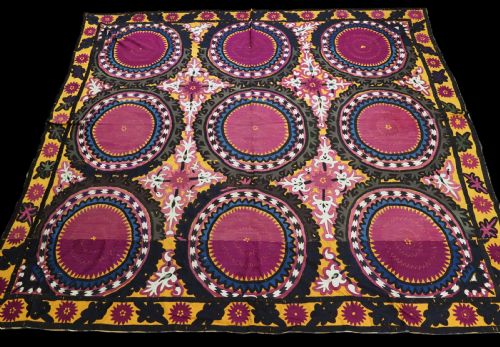
A silk on cotton textile represents the rich needlework traditions of Central Asia, most notably the embroidered suzanis and tribal wall hangings created across Uzbekistan. These pieces take the form of large decorative hangings, smaller dowry embroideries, and woven fabric panels intended to adorn domestic interiors.
Buyers searching for a silk on cotton textile will frequently encounter traditional suzanis from regions such as Bukhara, Samarkand, and Tashkent, alongside distinctive tribal work by the Lakai. The surviving examples span the nineteenth and early twentieth centuries, showcasing regional styles that range from bold floral medallions to intricate prayer formats.
The practical function of these textiles historically included domestic wall decoration, covers, and ceremonial dowry items. Today, collectors utilise them primarily as wall art or textile panels that introduce vibrant colour and texture to contemporary spaces.
Evaluating Quality
The distinction between tiers of a silk on cotton textile rests heavily on the density of the embroidery and the complexity of the design layout. Fully embroidered examples, often referred to as full work, demonstrate a higher degree of artisan commitment than sparser compositions.
Colour saturation and the integrity of the surviving silk thread further differentiate standard examples from exceptional ones. The balance of the regional design, whether a central star or a traditional floral arrangement, dictates the visual harmony of the finished piece.
Silk on Cotton Textile Retail Price Guide 2026
Typical asking prices for silk on cotton textile among the pieces listed under this phrase on Sellingantiques today, from the lower quarter to the upper quarter. They describe what is for sale here now, not the wider market.
Current listings feature pieces dated from the mid-nineteenth century through to the 1930s, utilising cotton, wool, and silk thread.
The Silk on Cotton Textile Glossary
- Suzani
- A large embroidered tribal wall hanging originating from Central Asia, traditionally worked in silk thread on a cotton foundation. These panels frequently feature bold floral and medallion motifs.
- Adras
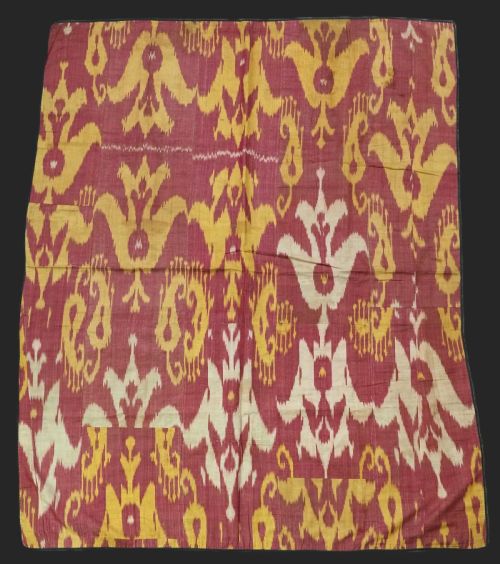
- A traditional woven fabric composed of a mixture of silk and cotton yarns. It serves as a supple and luminous ground for embroidery.
- Igich
- A specific form of tribal embroidery or dowry hanging associated with the Lakai people. These pieces often display distinct geometric patterns.
- Nim
- A term designating a half-size or smaller format suzani. They were often utilised for specific domestic spaces or as intimate wall hangings.
- Palak
- A grand style of suzani characterised by a fully embroidered ground dominated by a central star motif. This layout represents a monumental achievement in needlework.
Silk on Cotton Textile: Frequently Asked Questions
How were these textiles used originally?
These textiles served primarily as ceremonial dowry items, wall hangings, and decorative domestic furnishings within Central Asian homes. Families displayed them proudly on special occasions and during weddings.
Over time, they transitioned from functional domestic objects to cherished collectors' items and striking wall art for modern interiors.
What is the difference between a suzani and an ilgich?
A suzani is a large embroidered wall hanging or cover, typically featuring expansive floral and botanical designs arranged across a cotton ground. These monumental pieces form the core of Central Asian textile art.
An ilgich is a specific tribal embroidery, often associated with the Lakai people, created as a dowry piece with distinct geometric and amuletic patterns.
How do I care for an antique textile?
Protect antique textiles from direct sunlight to prevent the natural silk threads and dyed cotton grounds from fading over time. Professional mounting using conservation methods helps distribute the weight evenly.
Avoid folding antique pieces for long periods, as creasing can weaken the historical cotton foundation and the surrounding silk embroidery.
How can I tell regional styles apart?
Regional variations appear in the choice of motif, colour palette, and density of the embroidery work across different towns. Tashkent and Samarkand pieces often exhibit distinct medallion structures and open layouts.
In contrast, work attributed to the Lakai tribe tends to feature more idiosyncratic geometric forms and smaller formats like the nim suzani.