







Silk and Cotton Suzani
When searching for silk and cotton suzani, collectors find embroidered Central Asian textiles worked in vibrant threads on natural grounds.
Silk and Cotton Suzani
A silk and cotton suzani represents traditional Central Asian embroidery, predominantly originating from Uzbekistan and surrounding regions during the nineteenth and early twentieth centuries. These large textiles served functional and ceremonial purposes within domestic interiors as wall hangings, covers, and tapestries.
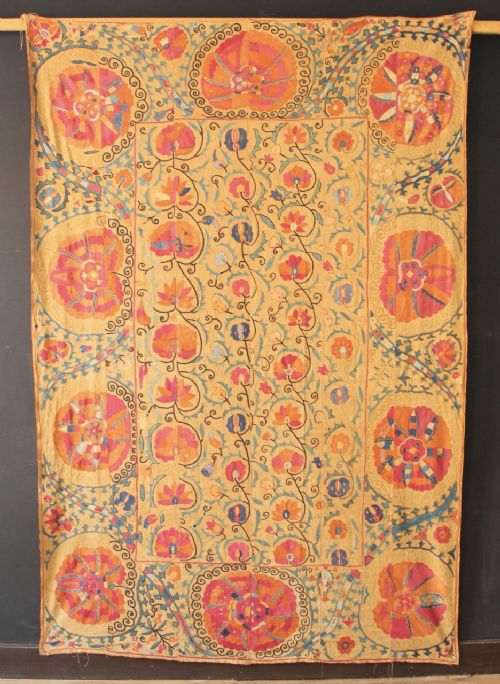
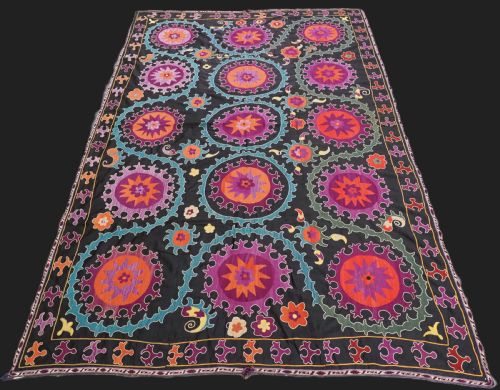
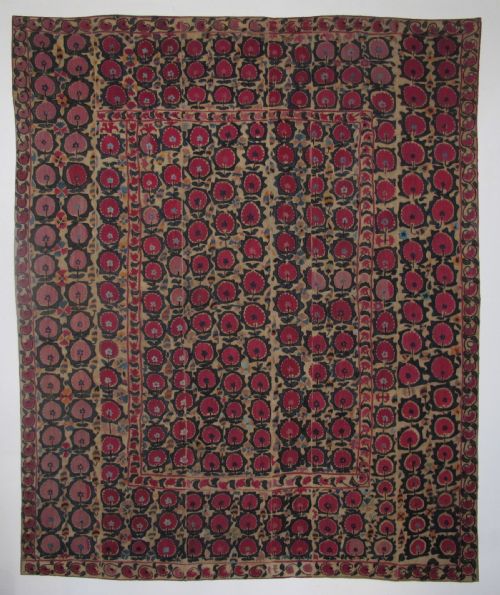
The common form on this page is the antique Uzbek suzani, worked in silk thread upon a woven cotton, red cotton, or adras ground. Pieces span formats from large medallion variants and prayer designs to smaller nim suzanis attributed to regional groups such as Lakai, Tashkent, Shahrisabz, and Samarkand.
Materials and construction
Makers embroidered fine silk thread onto woven grounds of plain cotton, yellow or red cotton, black cotton, and adras, which is a hybrid of silk and cotton yarns. The stitching covers the foundation densely in regional patterns that define specific workshops and tribal groups.
Needlework techniques vary between full work covering the entire ground and lighter floral layouts on neutral or dyed fabric. Natural dyes provide the palette for grounds and motifs across nineteenth and twentieth century pieces.
Silk and Cotton Suzani Retail Price Guide 2026
Typical asking prices for silk and cotton suzani among the pieces listed under this phrase on Sellingantiques today, from the lower quarter to the upper quarter. They describe what is for sale here now, not the wider market.
Listings span periods from eighteen hundred through to nineteen thirty, showing examples from nineteenth century workshops up to vintage twentieth century pieces.
Judging quality in embroidery
Quality rests in the density of the silk thread embroidery and the precision of the needlework across the textile ground. Full work examples and pieces with intricate central stars or medallions demonstrate superior workshop output compared to sparse compositions.
The vibrancy of the dye work and the condition of the silk and cotton foundation determine the visual strength of an antique suzani. Regional attribution and formatting also influence the standing of individual items.
The Silk and Cotton Suzani Glossary
- Suzani
- An embroidered textile from Central Asia. The word derives from the Persian term for needle.
- Adras
- A traditional fabric woven from a mixture of silk and cotton yarns. This material frequently serves as the foundation ground for embroidery.
- Nim suzani
- A smaller format embroidered textile. These half-size covers typically measure smaller than full scale wall hangings.
- Palak
- A fully embroidered suzani design type. These pieces feature dense needlework covering the entire surface, often centred around a large star motif.
Silk and Cotton Suzani: Frequently Asked Questions
Where do these pieces originate?
The pieces originate primarily from historical centres in Uzbekistan, including Bukhara, Samarkand, Tashkent, and Shahrisabz. Specific styles also connect to regional traditions such as Lakai work.
Production spans communities across Central Asia, incorporating distinct motifs and colour palettes associated with particular towns and tribes.
How should I display a suzani?
Collectors typically hang these textiles on walls to protect the delicate silk embroidery and cotton foundations from heavy wear. Proper mounting distributes the weight evenly across the fabric.
Display areas should avoid direct sunlight to preserve the natural dyed silk threads and prevent fading of the red, yellow, or black grounds.
How are different periods identified?
Dating relies on stylistic analysis of the embroidery patterns, the composition of the motifs, and the characteristics of the ground fabrics. Earlier nineteenth century examples often feature distinct medallion layouts and specific dye qualities.
Twentieth century pieces, including those from the circa nineteen twenties and thirties, show shifts in palette and regional design variations that separate them from older works.