



Signed Portrait Miniature
These signed portrait miniature pieces capture intimate likenesses in small compass, drawing collectors to their meticulous detail and personal histories.
Signed Portrait Miniature
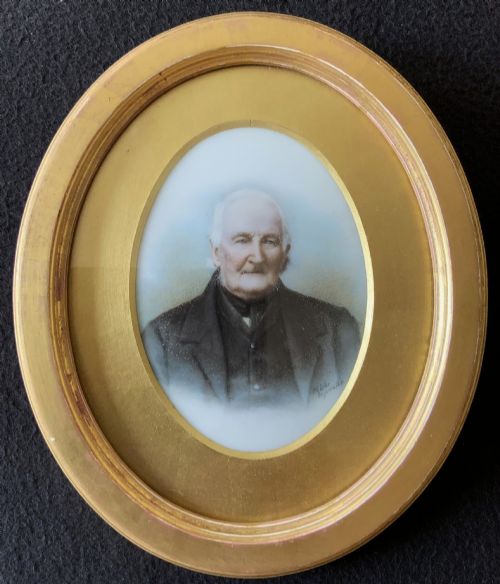
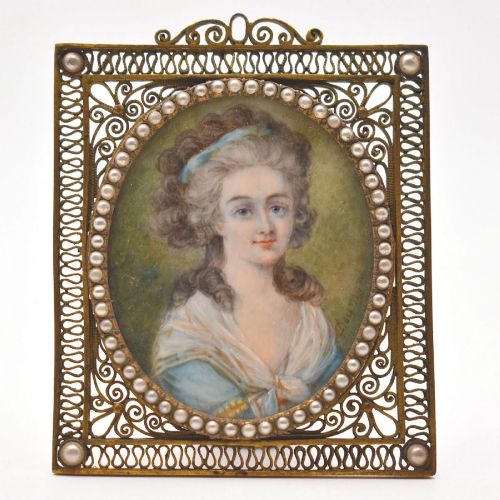
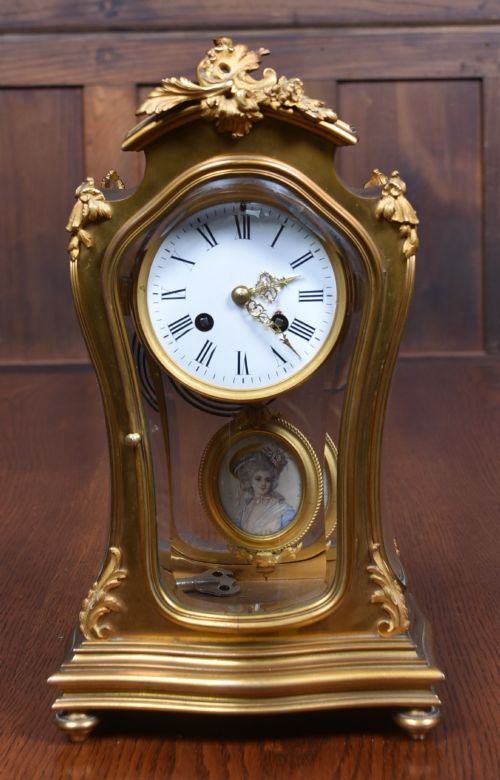
A signed portrait miniature presents a small-scale likeness executed with microscopic precision, often housed in a pendant, frame, or integrated into decorative objects such as mantel clocks.
The versions most commonly met on this page range from Georgian and Victorian watercolours on paper, glass, or card to early twentieth-century examples rendered during the Art Deco period.
Makers recorded in the evidence span centuries, producing silhouettes, oil paintings on copper, and delicate watercolours bearing the individual signatures of artists who specialised in this intimate scale.
Materials and Technique
Artists painted these works using watercolour, gouache, ink, or oil directly onto supports such as paper, glass, copper, and porcelain, often sealed beneath protective glass within brass, gilt metal, or carved wooden frames.
Silhouettes utilised cut paper and ink, while later works incorporated painted porcelain plaques and detailed brushwork that required steady hands and magnifying lenses to achieve such minute precision.
Signed Portrait Miniature Retail Price Guide 2026
Typical asking prices for signed portrait miniature among the pieces listed under this phrase on Sellingantiques today, from the lower quarter to the upper quarter. They describe what is for sale here now, not the wider market.
The listings span from the seventeenth century through the Georgian and Victorian eras into the twentieth century, utilising oil, watercolour, and ink.
Evaluating Quality
Quality rests upon the delicacy of the brushwork and the precision with which the artist captures the sitter's expression, bone structure, and textiles on such a tiny scale.
The fidelity of the signature, the originality of the period frame, and the condition of the delicate glass or painted surface further distinguish the finest examples from standard work.
Bateman·Dumont·Rodier·John Miers·J Bizo·Susie Lassam·Thomas Woolnoth·Del Buono·Sir Peter Lely·John Scougall·Cornelius Bevis Durham·Samuel Shelley·Edward Burch·J.C.D. Engleheart·Samuel Collins·Smart·Horace Hone·Amalie Von Peter·Rene
The Signed Portrait Miniature Glossary
- Silhouette
- A profile portrait filled in with a solid dark colour, typically cut from black paper or painted in ink on a pale ground.
- Gilt Metal
- A metal base treated with a thin layer of gold or gold-coloured wash to give the appearance of solid gold.
- RMS
- Royal Miniature Society, an association of professional painters dedicated to the art of miniature painting.
- Provenance
- The documented history of ownership that traces the origin and journey of a piece through time.
- Pendant
- A small framed portrait designed to be worn suspended from a ribbon or chain around the neck.
Signed Portrait Miniature: Frequently Asked Questions
How were portrait miniatures worn?
Many of these pieces were set into pendants, lockets, or brooches so the owner could keep the likeness of a loved one close to their heart.
Others remained displayed in domestic settings within small easel frames or mounted on salon walls.
Why are some signed on the reverse?
Artists occasionally inscribed their names, the date, or the sitter's identity on the back of the copper plate, card, or paper backing to preserve information without disrupting the painted composition.
This practice helps modern collectors verify attribution and provenance.
What materials did artists paint on?
Watercolour was frequently applied to delicate paper, vellum, or glass, while oil painters favoured prepared copper panels or board.
Later works also turned to porcelain plaques and specialised card substrates.
How do I care for a miniature?
Keep these sensitive works away from direct sunlight to prevent the watercolour pigments and delicate papers from fading over time.
Maintain stable indoor humidity to protect the original frames and organic materials from warping.