




Signed Original Ink Drawing
A signed original ink drawing captures the immediate hand of the artist on paper through direct, uncorrected lines.
Signed Original Ink Drawing
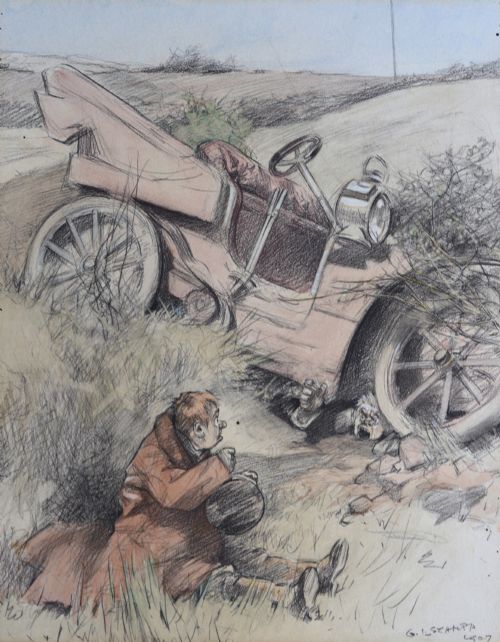
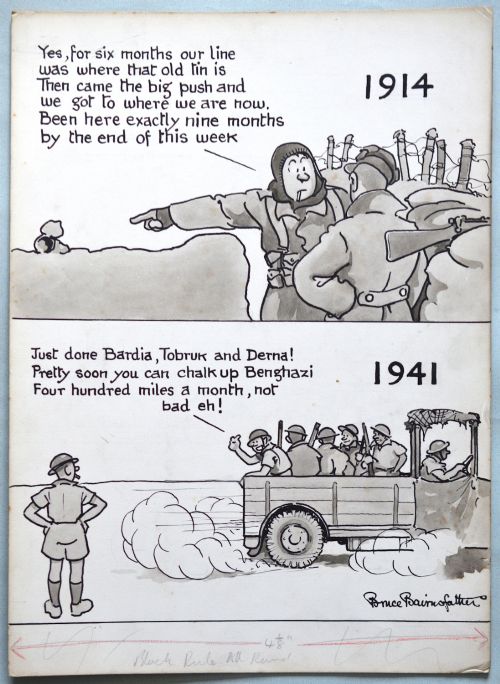
When you search for a signed original ink drawing, you encounter works on paper spanning from the nineteenth century through the mid-twentieth century. The selection encompasses rapid journalistic sketches, finished book illustrations, and political cartoons created by named British artists.
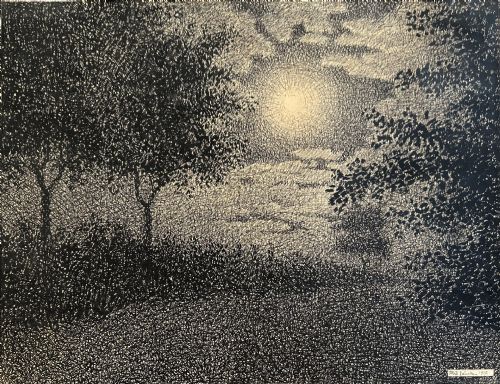
You meet Edwardian landscapes, wartime character studies, and modernist abstract compositions executed in pen, sepia ink, and wash. These pieces range from preparatory notebook pages to fully framed artworks intended for exhibition.
The material surface usually consists of toned or white paper housed behind glass in wooden frames. Many examples combine ink line work with watercolour or pencil highlights to build tone and depth.
How they were made
Artists apply fluid ink to paper using steel nibs, quill pens, or fine brushes to establish permanent dark lines. This primary linework is frequently augmented with dilute ink washes or watercolour to create shadow and atmosphere.
The physical support relies on various grades of paper, sometimes reinforced with pencil underdrawing or mounted with typed correspondence and personal stationery. Frames are typically constructed from wood and glazed with protective glass.
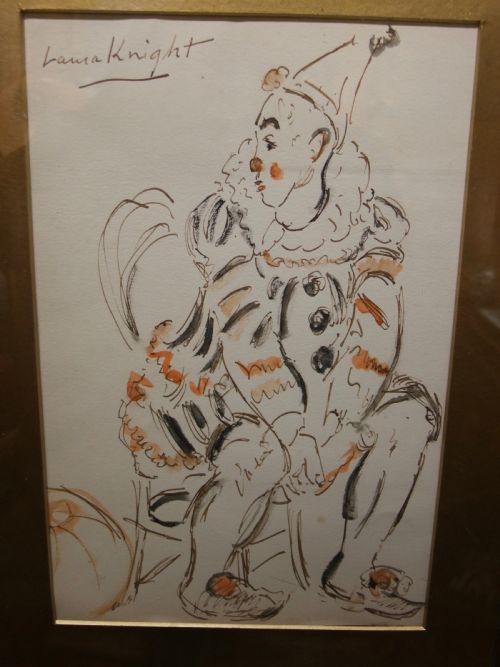
Several drawings preserve the hurried observations of soldiers, boxers, and clowns caught mid-movement.
What varies in quality
The distinction between standard examples and exceptional works rests on the confidence and economy of the artist's line. Superior execution demonstrates deliberate economy where every stroke defines form without hesitation or correction.
Context and provenance elevate certain pieces above routine sketches, particularly when drawings relate directly to published books, political magazines, or documented artist exhibitions. The presence of informative accompanying material, such as personal headed letters, deepens the historical value of the work.
George Lorain Stampa·Bruce Bairnsfather·Stanley Orchart·Lucien Freud·Lawrence Stephen Lowry·Dame Laura Knight·Fred Lawson·Owen Bowen·Harry Epworth Allen·Bert Thomas·Alfred Wainwright·Donald Curley·John Everett Millais·J S Elgood·J S Fletcher·William Paton Burton·Hugh Cameron·E W Cook·Mark Fisher·A Hofmann·John Stanton Ward
The Signed Original Ink Drawing Glossary
- Wash
- A technique involving diluted ink or watercolour applied with a brush to create translucent areas of tone behind pen lines. It provides subtle tonal graduation in landscape and architectural studies.
- Sepia ink
- A brown pigment traditionally derived from the cuttlefish, widely utilised in nineteenth-century and early twentieth-century works on paper. It yields a warm, distinctively aged monochromatic hue.
- Monogram
- A cipher or combined set of initials used by an artist to sign a work instead of a full signature. These marks often require comparative study to attribute correctly.
- Book illustration
- A finished drawing specifically commissioned and executed for reproduction within a published volume. These works frequently depict specific literary scenes or historical local buildings.
Signed Original Ink Drawing: Frequently Asked Questions
What is a signed original ink drawing?
A signed original ink drawing is a unique work on paper created directly by an artist's hand using pen and ink, bearing their authentic signature or monogram.
Unlike printed reproductions, these pieces display the physical texture of dried ink and individual nib strokes upon the paper surface.
How should I frame and display my drawing?
Works on paper require professional framing behind glass with acid-free mounts to prevent direct contact between the paper surface and the glazing.
Keep framed drawings away from direct sunlight and high humidity to protect both the ink and the paper support from fading and deterioration.
How do I identify the period of a drawing?
Dating relies upon stylistic markers, artist biographical dates, framing materials, and accompanying documentation such as publication records or letters.
Paper stock and ink characteristics also offer clues, though physical examination of the backing board often reveals the most reliable chronological evidence.
Were these drawings meant for exhibition?
Many drawings served distinct practical functions as preliminary studies, book illustrations, or political cartoons for magazines before entering collections.
Others were executed as finished independent artworks intended specifically for gallery display and public exhibition.