
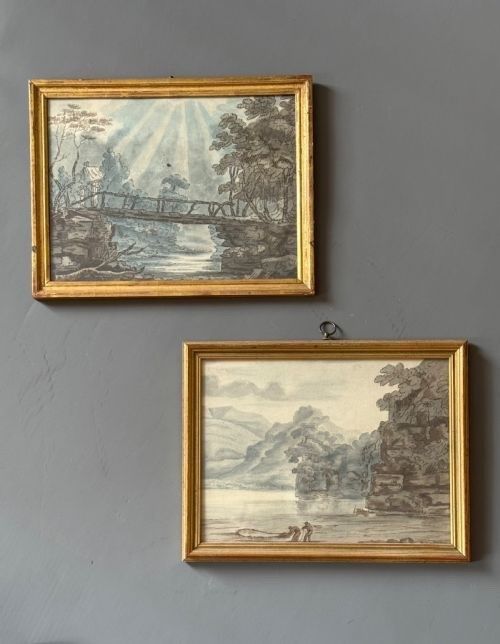
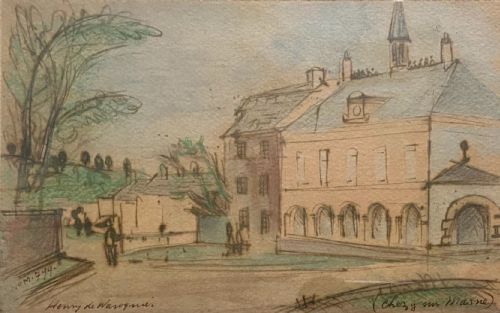


Ink Landscape Artwork
These ink landscape artwork selections bring together expressive monochrome views and tinted topographical sketches drawn across centuries.
Ink Landscape Artwork
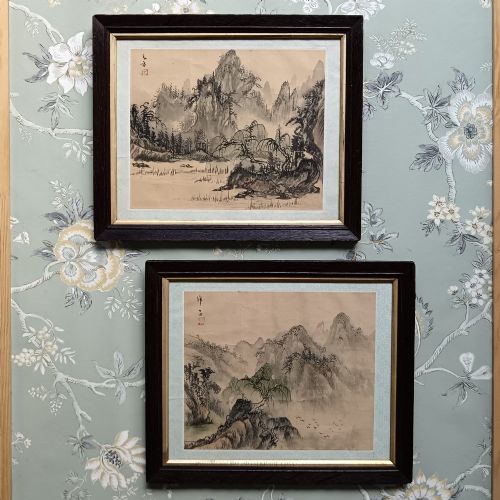
When you search for ink landscape artwork, you find works on paper that capture scenery through fluid line and tonal wash. These pieces range from eighteenth-century topographical sketches to mid-twentieth-century British watercolours and traditional Chinese silk paintings.
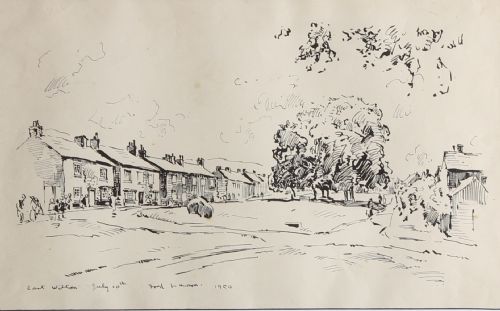
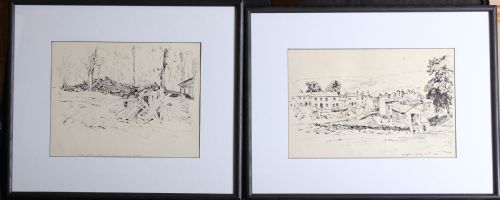
The selection leans heavily toward British and European watercolours, drawings, and pen-and-ink studies alongside Asian scroll and album traditions. You encounter framed wall art, sketchbook leaves, and individual sheet drawings recording rural views, coastal scenes, and historic buildings.
Dated examples span the Georgian era through the modernist movements of the twentieth century, showing how artists used ink to define architecture, foliage, and water. These works function primarily as graphic studies, finished cabinet pictures, or intimate records of travel.
Materials and execution
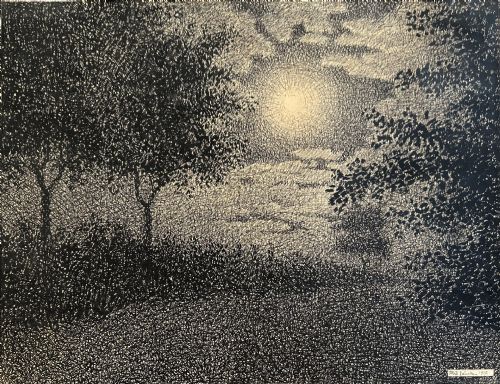
Artists create these works primarily on paper, parchment, wood panels, or silk using liquid ink applied with pens, brushes, or reeds. Iron gall, carbon black, and sepia inks form the foundation of the line work, establishing the core composition and perspective.
Wash and watercolour pigments are frequently layered over or beneath the ink lines to build atmospheric depth, sky tones, and shadows. Pencil, pastel, and bodycolour occasionally supplement the primary ink medium, while wood frames and glass preserve the delicate surfaces.
Several artists preferred recording rural farmyards, muddy lanes, and timber carts over grand palaces.
Assessing quality in ink landscape artwork
Quality rests on the sureness of the draughtsmanship and the artist's economy of line in capturing light and terrain. A superior sheet demonstrates confident handling where every stroke defines form without hesitation or unnecessary correction.
Condition and preservation heavily influence value, particularly the stability of the paper support and the retention of original ink density. Works retaining strong contrast, minimal foxing, and contemporary framing sit at the upper end of the range.
Fred Lawson·Henry de Waroquier·Stanley Orchart·Edward Dayes·Richard Leech·Ya Ming·Markey Robinson·Peter Tillemans·Thomas Rowlandson·John Thurtle·Thomas Monro·Thomas Lound
The Ink Landscape Artwork Glossary
- Wash
- A thin, transparent layer of diluted ink or watercolour applied with a brush to create tonal shadow and depth. It defines the atmospheric qualities in topographical and romantic landscape drawings.
- Shan Shui
- A traditional Chinese painting style depicting scenery using brush and ink. These works focus on natural landforms such as mountains, rivers, and waterfalls.
- Topographical
- Art that accurately records specific geographical locations, buildings, or scenes. Georgian and Victorian ink drawings frequently served this documentary purpose before photography.
- Mixed media
- An artwork combining two or more distinct materials, such as ink, watercolour, and pencil on the same support. This technique allows artists to exploit the textures of different drawing tools.
Ink Landscape Artwork: Frequently Asked Questions
What is an ink landscape artwork?
An ink landscape artwork is a drawing or painting that uses ink lines, often combined with watercolour wash, to depict natural scenery, countryside views, or townscapes.
These pieces capture topographical views and artistic impressions on paper, silk, or wood panels across various historic periods.
How should I frame and display these works?
Works on paper require conservation mounting behind glass to protect the delicate ink and watercolour pigments from ultraviolet light and humidity.
Keep them away from direct sunlight to prevent the paper from yellowing and the ink from fading over time.
How do I date an ink drawing?
Dating relies on stylistic markers, paper watermarks, artist signatures, and framing techniques characteristic of periods like the Georgian era or the mid-twentieth century.
Inscribed dates, artist inscriptions on the reverse, and historical subject matter also help establish the precise timeline.
What is the difference between ink and watercolour?
Ink provides the sharp, linear framework and dark tones of a drawing, while watercolour adds transparent colour washes and soft atmospheric fills.
Many historic landscape pieces combine both methods, using pen and ink for initial outlines before applying tinted washes.