


Historical Architectural Artwork
Historical architectural artwork encompasses centuries of detailed drawings, paintings and engravings capturing classical buildings, ancient ruins and bustling cityscapes.
Historical Architectural Artwork
Historical architectural artwork brings together a diverse selection of historical depictions focusing on buildings, landscapes and townscapes. When exploring historical architectural artwork, a buyer encounters everything from fine oil paintings and watercolours to detailed engravings.
The pieces span multiple centuries, ranging from the seventeenth century through the eighteenth and nineteenth centuries into the nineteen-twenties and thirties. Works depict notable locations such as London Bridge, Hever Castle, the Grand Canal in Venice and the Antiquities of Athens.
The selection includes original artworks, framed prints and drawings executed by various British and European artists. Buyers frequently find framed examples housed in period surrounds like original Hogarth frames.
How they were made
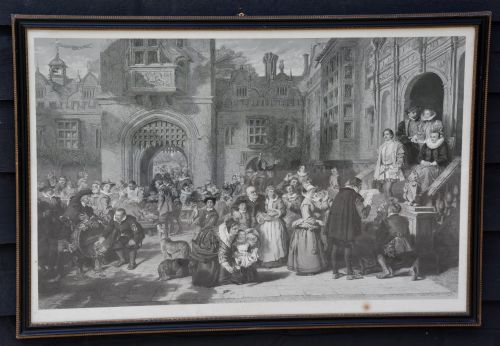
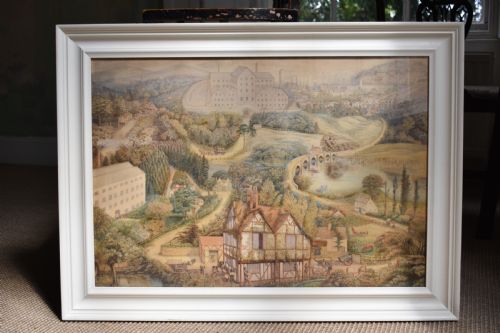
Artists and makers utilised traditional media including oil on canvas, oil on oak panel, watercolour pigment, ink and gold leaf on paper. Engravings and etchings were carefully printed to reproduce fine architectural details of ancient structures and urban scenes.
Framing played an integral part in the presentation of these works, with makers employing period wooden surrounds such as original Hogarth frames to house the paintings and prints. The combination of durable panels, canvas supports and heavy paper stock ensured the survival of these intricate compositions across the centuries.
Listings feature works spanning the seventeenth to the twentieth century, utilising paper, wood, glass, oil, watercolour pigment and gold leaf.
What varies in quality
The calibre of a piece rests in the precision of the draughtsmanship and the skill with which the architectural perspective and surrounding landscape are rendered. Works displaying meticulous detail in stonework, masonry and human figures demonstrate a higher tier of execution.
Condition and originality also set examples apart, particularly the preservation of the paper, canvas or oak panel, alongside the integrity of the original framing. Pieces attributed to recognised hands or well-documented topographical subjects carry distinct artistic merit.
George Lambert·Alfred Pollentine·Fred Lawson·Edward Rooker·James Basire·Joseph Murray Ince
The Historical Architectural Artwork Glossary
- Engraving
- A printmaking technique where an artist cuts an image into a metal plate to hold ink. This method allows for exceptional clarity in reproducing complex architectural lines.
- Etching
- A process using acid to cut into the unProtected parts of a metal surface to create a design in intaglio. It produces fine, fluid lines well suited to topographical views.
- Oil on oak panel
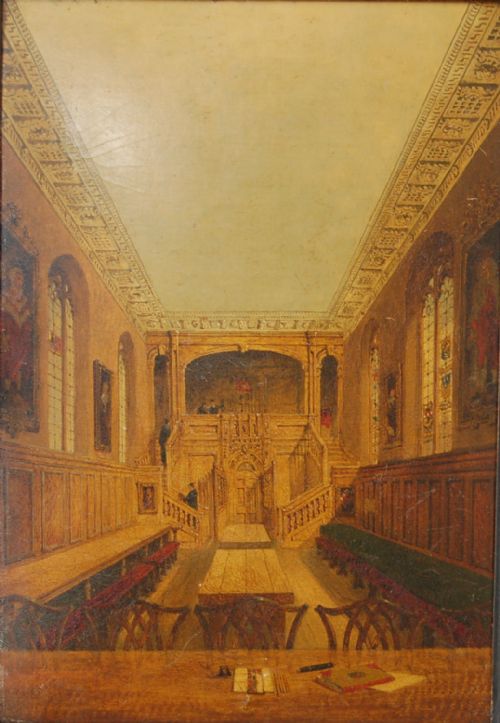
- A traditional painting support where pigments bound in oil are applied directly to prepared wood. This substrate provides a rigid and durable base found in earlier centuries.
- Watercolour pigment
- Finely ground colour suspended in a water-soluble binder applied to paper. It achieves translucent washes ideal for atmospheric townscapes and landscapes.
Historical Architectural Artwork: Frequently Asked Questions
What periods do these artworks cover?
The selection spans from the seventeenth century through the eighteenth and nineteenth centuries, extending into the twentieth century with works dated to nineteen-twenty and nineteen-thirty.
Buyers encounter a wide chronological range reflecting shifting artistic styles from the classical landscape tradition to nineteenth-century realism.
How were these architectural works displayed?
These pieces were typically framed for interior display in domestic or institutional settings, often utilising period surrounds such as original Hogarth frames.
Framed art, prints and drawings served to decorate walls while documenting historical buildings, antiquities and civic spaces of the era.
What mediums are used in historical architectural art?
Artists employed a variety of materials including oil on canvas, oil on oak panel, watercolour pigment, ink and gold leaf on paper.
Printmakers also utilised engraving and etching techniques on paper to capture precise architectural details of bridges, colleges and ruins.
How do I identify different print techniques?
Engravings and etchings can be distinguished by the character of their lines, with etchings often showing more fluid strokes created by acid biting into the metal plate.
Examining the paper stock and plate marks helps determine the method of reproduction used for historical topographical prints.