



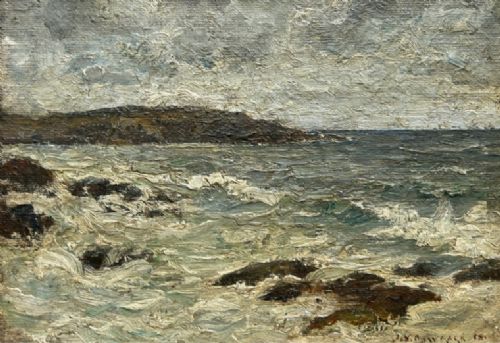
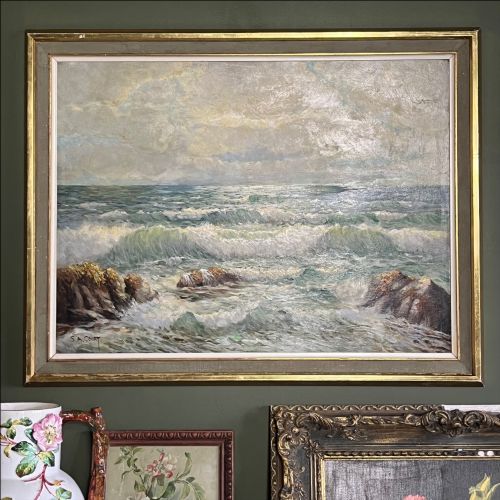
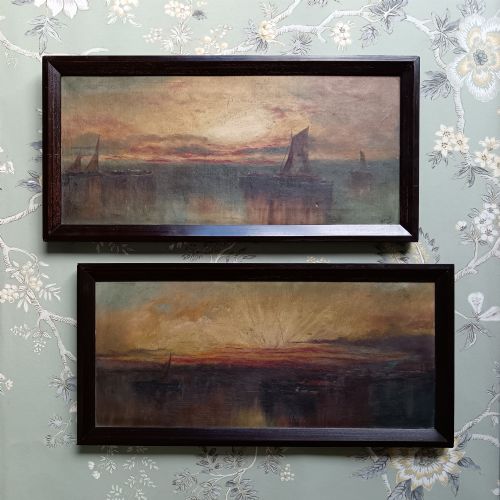

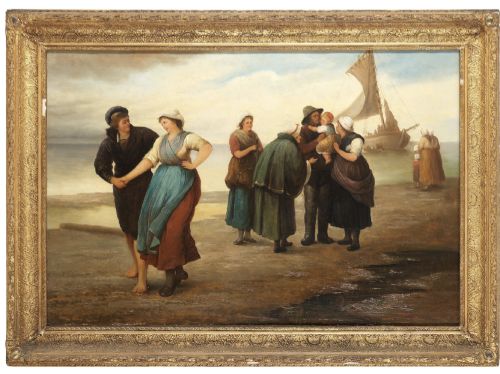

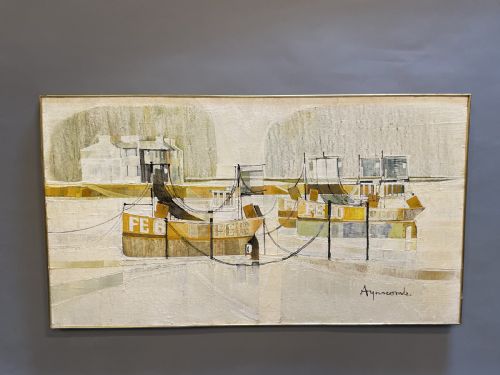


Signed Marine Artwork
Signed marine artwork brings coastal life, shipping vessels and harbours into view through period paintings and watercolours bearing the creator's hand.
Signed Marine Artwork
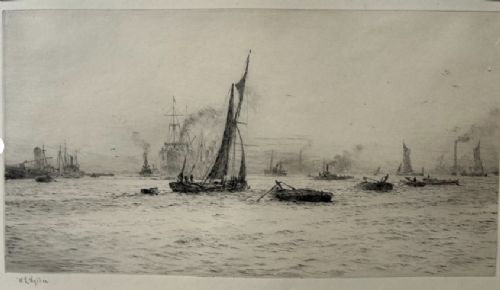
Signed marine artwork encompasses paintings, watercolours, sketches and etchings depicting coastal views, harbour scenes, fishing boats and ships at sea. These works span from the nineteenth century through the Edwardian period and into the mid-twentieth century, capturing maritime life across British, French and international locations.
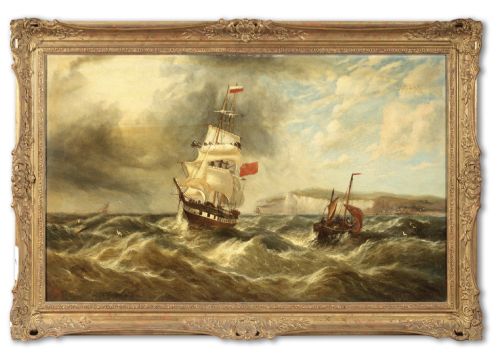
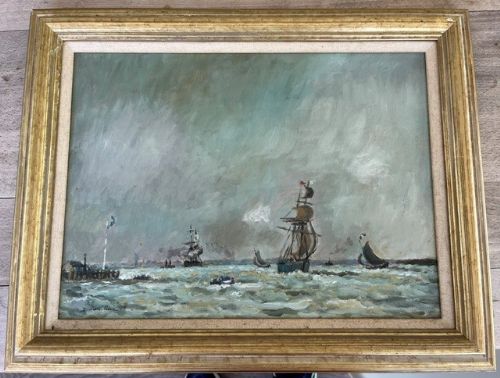
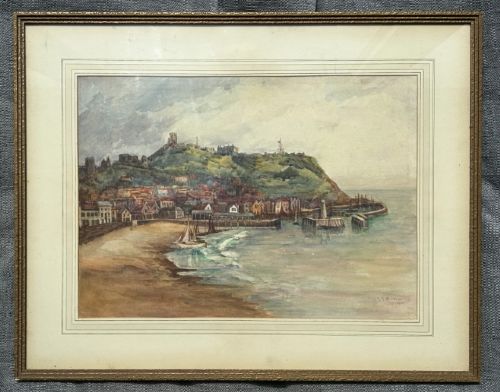
The most common examples on this page are watercolours on paper and oil paintings on canvas, board or wood panel, created by named Victorian and twentieth-century artists. Subjects range from busy Yorkshire docks and Venetian canals to dramatic open seascapes and quiet coastal inlets.
Materials and construction
Artists painted these marine scenes using oil paint or watercolour applied to paper, canvas, prepared wooden panels or board. Oil mediums allowed for textured impasto effects and rich layering to portray rough seas and dramatic skies, while watercolour provided transparent washes for light on water.
Many works incorporate protective framing, glass coverings for works on paper, and occasional gilt detailing. Support materials such as wood panels and stretched canvas reflect the standard studio practices of the nineteenth and early twentieth centuries.
Listings feature works across paper, canvas, wood and glass, spanning periods from the mid-nineteenth century through the 1960s.
Elements of quality
Quality in these maritime works rests upon the confidence of the brushwork and the artist's command of light, atmosphere and marine architecture. Strong compositions that accurately render rigging, hull forms and coastal topography elevate a piece well above routine topographical illustration.
The distinction also lies in the preservation of the medium, whether the oil surface remains stable without excessive cracking or the watercolour retains its original pigment saturation beneath glass. Signed pieces with clear attribution to established hands carry stronger documentary and aesthetic weight.
James Orrock·William Lionel Wyllie·Thomas Bush Hardy·Sam Bough·S. J. Lamorna Birch
The Signed Marine Artwork Glossary
- Impasto
- Paint applied thickly to a canvas or board, leaving visible brush or palette knife marks. This technique adds tactile dimension and helps capture the turbulent texture of choppy seas.
- Watercolour
- A paint consisting of pigment suspended in a water-soluble binder, traditionally applied to paper. It relies on the white of the paper showing through transparent washes to create luminous effects of light on water.
- Etching
- A printmaking process where lines are incised into a metal plate with acid before ink is applied and transferred to paper. Pencil signed impressions indicate the artist approved the pulled print directly.
- En plein air
- Painting outdoors in natural light to capture immediate atmospheric conditions. This method was widely practiced by nineteenth and twentieth-century artists recording coastal weather.
- Seascape
- A work of art depicting the sea, coastal views, ships or maritime activity. It forms the primary subject category for these paintings and watercolours.
Signed Marine Artwork: Frequently Asked Questions
How do I care for antique watercolours?
Works on paper require protection from direct sunlight to prevent fading of pigments and discoloration of the paper support. Maintaining stable indoor humidity levels also protects the paper and framing materials over time.
Display these pieces away from damp areas like kitchens or uninsulated exterior walls. Professional framing with acid-free mounts ensures long-term preservation.
What subjects are typical in marine art?
Common subjects include bustling fishing harbours, merchant ships in rough seas, quiet coastal inlets and sailing vessels navigating rivers or canals. Scenes often record specific locations such as Whitby, St Ives, Venice or the River Thames.
Artists frequently documented working vessels, lighthouses and coastal communities engaged in daily maritime trades. These depictions serve as both artistic expressions and historical records of port life.
How can I tell the period of a painting?
Dating relies on stylistic clues, framing materials, artist signatures and any accompanying dates inscribed on the front or reverse. Victorian works often feature detailed narrative realism, while twentieth-century examples may display impressionistic or mid-century modernist tendencies.
The choice of support, such as nineteenth-century millboards or early twentieth-century canvas boards, also helps narrow the date of production.
Are all these works original?
The selection consists of original hand-painted watercolours and oil paintings, alongside original signed etchings and sketches. Each piece represents a unique creation or a limited pulled print bearing the artist's actual signature.
Signatures appear either within the painted composition or alongside the work in pencil, confirming the creator's direct involvement in producing the piece.