





Signed Marble Figure
A signed marble figure brings classical presence or decorative vigour into a room through carved stone and a maker's hand.
Signed Marble Figure
A signed marble figure combines the sculptor's carved stone work with the permanence of a signature, spanning periods from the early 19th century through the Victorian era into Art Deco and twentieth century design.
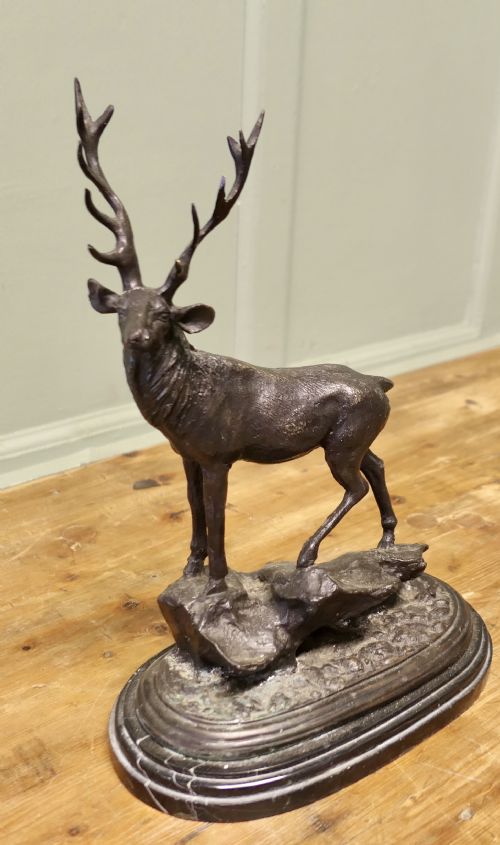
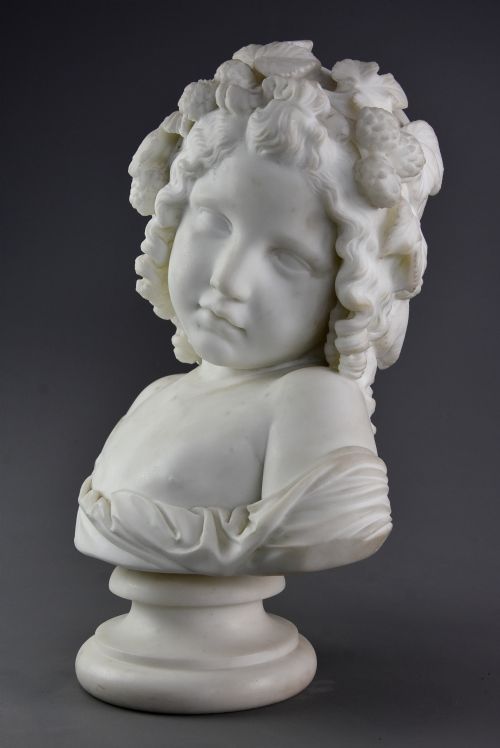
Buyers encounter subjects ranging from Neoclassical and Animalier bronzes set on marble plinths to pure Carrara marble busts and alabaster dancer figures.
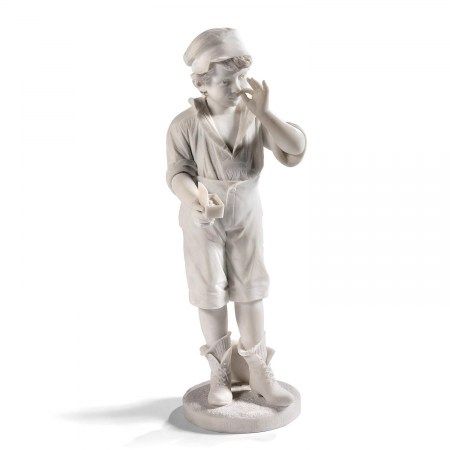
The selections on this page draw together Italian realism, French 19th-century foundry work, and Grand Tour subjects.
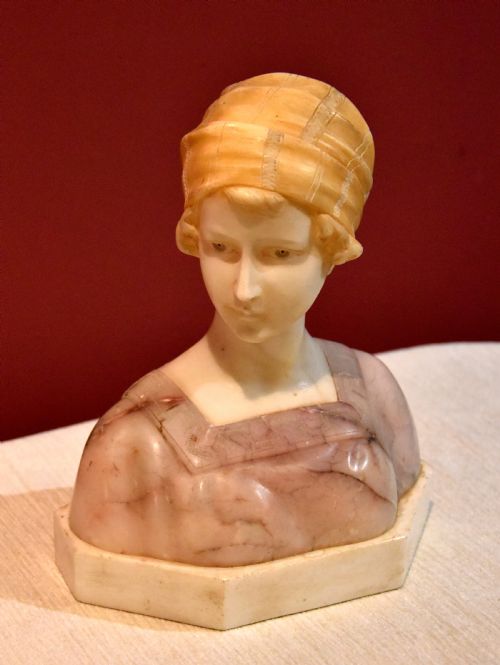
Most pieces pair carved white marble, alabaster, or onyx with bronze or spelter elements, uniting stone carving with metal casting.
Quality factors in carved and cast figures
Quality rests upon the crispness of the carving in the marble or alabaster, where facial expressions, drapery folds, and hair retain sharp definition rather than soft edges.
In mixed-material pieces, the integration between the bronze or spelter casting and the underlying marble or onyx plinth reveals the standard of assembly.
The prominence of the signature and the reputation of the atelier or sculptor elevate the standing of an individual work.
Among the children depicted with animals, one signed pair pairs a child holding cats with another holding dogs.
Houdon·Auguste Henri Carli·Messina Roma·Louis Auguste Moreau·Dumond·H. Bal·Eduardo Giolli·P. Della Vedova·Ferdinando Vichi·R Henn·Andrey·E. Laurent·I. Rochard·Denise Delavigne·E. Drouot·Clodion·R. Lusili·Feridah Francis Forbes Taylor·Gory Paris·Falconet·B. Grundmann·Thiebaut Freres Fondeurs Paris
The Signed Marble Figure Glossary
- Carrara marble
- A type of white or blue-grey marble quarried in the city of Carrara in Tuscany, prized by sculptors for its fine grain and uniform appearance.
- Alabaster
- A fine-grained, translucent stone softer than marble, often utilised for carved figures and lamp bases during the Art Deco period.
- Animalier
- A nineteenth-century artistic style and genre focusing on the realistic depiction of animals, frequently cast in bronze and mounted on marble bases.
- Grand Tour
- A traditional trip of Europe undertaken by upper-class European young men of the 18th and 19th centuries, resulting in the acquisition of small-scale bronzes and marbles.
- Spelter
- An alloy of zinc and other metals utilised as a cheaper alternative to bronze for sculptural figures, often patinated or silvered.
Signed Marble Figure: Frequently Asked Questions
How do I clean a marble figure?
Dust the surface regularly with a soft, dry cloth to prevent dirt accumulation in the carved crevices. Avoid chemical cleaners and water, which can damage unsealed stone or alter the patina on adjacent bronze elements.
For stubborn grime, consult a professional conservator rather than attempting wet cleaning at home. Protecting the sculpture from direct sunlight and sudden temperature changes preserves both stone and metal components.
What is the difference between marble and alabaster?
Marble is a metamorphic rock formed from limestone, offering high hardness and durability. Alabaster is a softer stone composed of gypsum or calcite, prized for its natural translucency.
Because alabaster is softer, pieces carved from it scratch more easily and are typically displayed indoors away from moisture.
Where should I display a heavy marble sculpture?
Place heavy stone and bronze pieces on sturdy furniture or dedicated pedestals capable of supporting significant weight without tipping. Ensure the placement surface is completely level to distribute the load evenly across the base.
Keep figures away from high-traffic household areas where accidental bumps could cause damage to protruding carved elements like fingers or instruments.
How do I spot a signature on a stone figure?
Signatures on marble and alabaster are usually incised directly into the lower edge, back, or top of the stone base. In mixed-material pieces, signatures may appear on the bronze casting rather than the stone.
Examine the area under raking light with a torch to reveal faint or shallow inscriptions that are difficult to see in normal illumination.