



Child Portrait Sculpture
These child portrait sculpture pieces capture the delicate likenesses of youth in marble, bronze, and terracotta, offering collectors enduring studies of innocence.
Child Portrait Sculpture
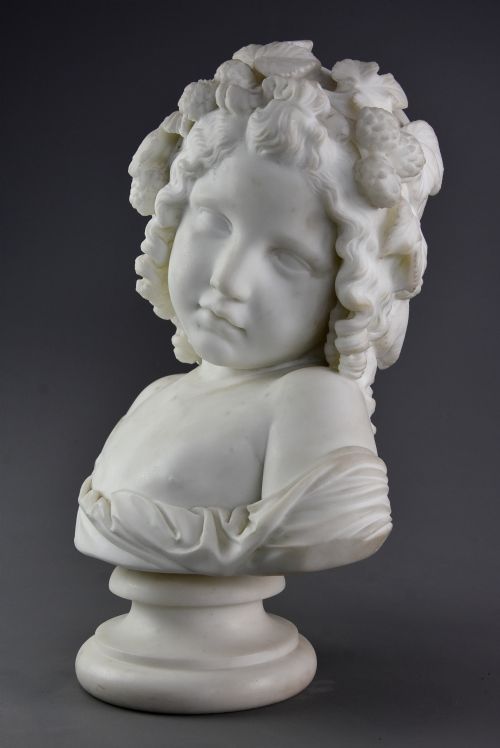
A child portrait sculpture captures the likeness of a young subject through three-dimensional form, ranging from intimate cabinet pieces to life-size library busts. These works frequently emerge from the nineteenth and early twentieth centuries, reflecting changing domestic tastes and a distinct focus on familial sentiment.
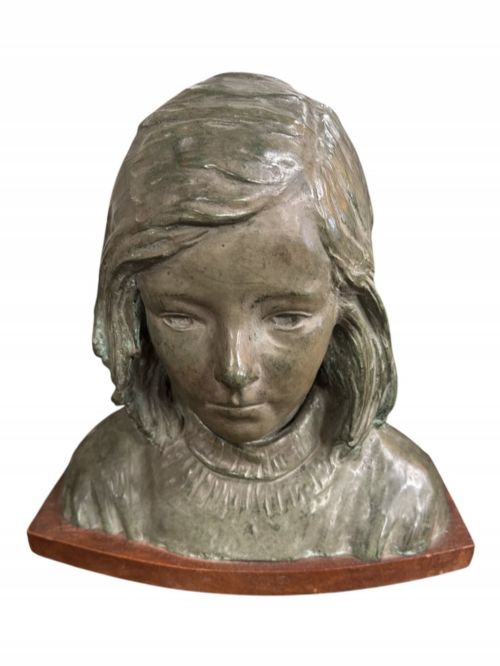
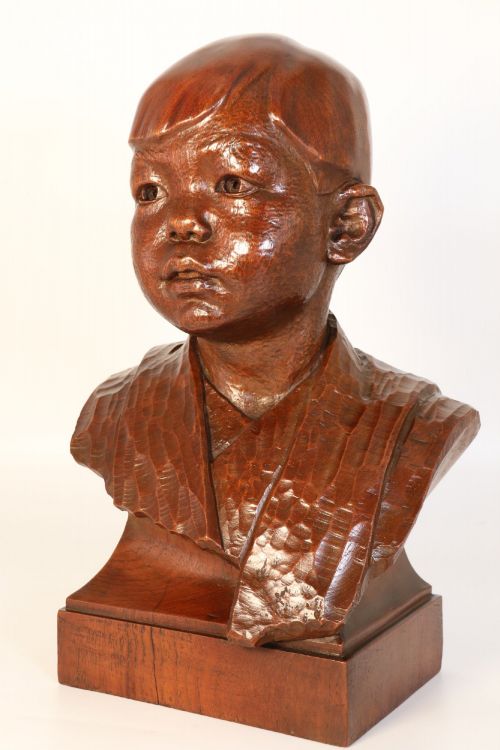
Most examples encountered here take the form of portrait busts depicting young boys and girls, executed in varied sculptural media. The makers include named artists working within established academic and revivalist traditions, alongside anonymous studio artisans.
Origins span British, French, Italian, and Austrian workshops, demonstrating diverse regional approaches to rendering youth. Collectors find pieces influenced by Neoclassical restraint, Victorian sentimentality, and early twentieth-century realism.
Materials and methods
Carved stone such as Carrara marble, alabaster, and walnut represents a primary method of creation, requiring meticulous hand-chiseled detail to achieve soft flesh tones and hair texture. Sculptors selected fine-grained marbles to exploit the material's slight translucency, simulating the quality of human skin.
Metal-worked pieces utilise traditional foundry casting, employing bronze or bronzed metal poured into moulds before receiving hand-chased surface finishing and patination. Terracotta and plaster examples rely on modelling and casting techniques, capturing direct impressions of the artist's initial clay forms.
Materials span natural stone, cast metals, fired earth, and plaster, reflecting diverse European studio practices from the nineteenth century onward.
Evaluating quality and execution
The distinction between standard commercial output and superior works lies in the subtlety of anatomical rendering and expression. Master sculptors conveyed the softness of a child's cheek and the distinct texture of hair with restraint, whereas lesser pieces rely on rigid symmetry and heavy-handed surface tooling.
Material selection and subsequent finishing dictate the visual depth of the object. High-grade marbles and carefully chased bronzes display deliberate attention to light across the contours, whereas routine plaster or metal casts often obscure fine details beneath uniform coatings.
George Henry Paulin RBS·Antonio Merente·Antonio Rossellino·J Camus
The Child Portrait Sculpture Glossary
- Patuna
- The surface sheen and chemical coloration developed on bronze through age or artificial treatment. It adds visual depth to the metal.
- Bust
- A sculpted representation of a person from the chest up. This format focuses attention entirely on facial expression and head carriage.
- Terracotta
- Fired clay used for sculptural modelling. Its warm reddish-brown hue reveals the direct touch of the hand.
- Neoclassical
- A style drawing inspiration from classical antiquity. It emphasises clarity of form, balanced proportions, and dignified composure.
- Chasing
- The manual finishing of a cast metal sculpture using small hammers and punches. This process refines surface details after casting.
Child Portrait Sculpture: Frequently Asked Questions
How should I display a marble bust?
Place the sculpture on a stable column or heavy piece of furniture at eye level to appreciate the carved details. Ensure the display area avoids direct, intense sunlight and sudden temperature shifts.
Keep the piece away from heavy foot traffic where it might be easily knocked. Dust the surface gently with a dry, soft cloth without applying liquid cleaners.
What distinguishes terracotta from plaster?
Terracotta consists of fired clay, presenting a naturally warm, porous earthen body that often bears the direct marks of the modeller. Plaster is a softer, composition-based material usually cast in moulds and finished with paint or surface coatings.
Terracotta generally offers greater durability and weight compared to plaster. Plaster works demand careful handling to prevent chipping along fragile edges.
Are these sculptures contemporary portraits?
These pieces date predominantly from the nineteenth and early twentieth centuries rather than modern periods. They reflect historical artistic conventions and nineteenth-century domestic interior decoration.
Makers often worked from academic studies, commissioned family portraits, or classical revivals. Consequently, the subjects represent historical children or idealized archetypes rather than contemporary sitters.
How do I identify a cast bronze from a solid one?
Most sculptural bronzes are hollow-cast to save weight and metal, utilising processes like lost-wax casting. Examining the underside or base often reveals the inner wall thickness.
Heavier works in this category may employ solid casting for smaller dimensions or use alternative base metals with applied patination. Sound and thermal properties also help differentiate solid metal from hollow formations.