


Signed French Bronze Figures
Signed french bronze figures bring classical subjects, dancers, and animals into domestic spaces through the touch of named founders and modellers.
Signed French Bronze Figures
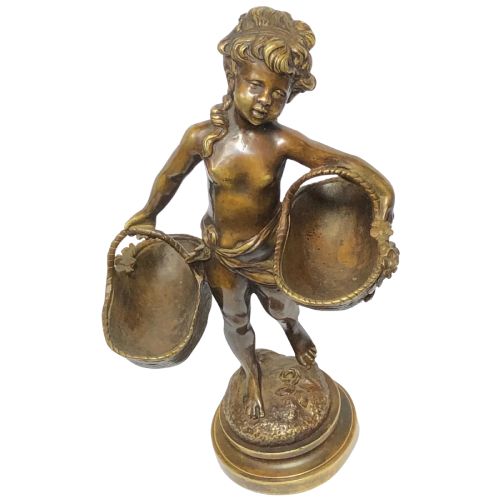
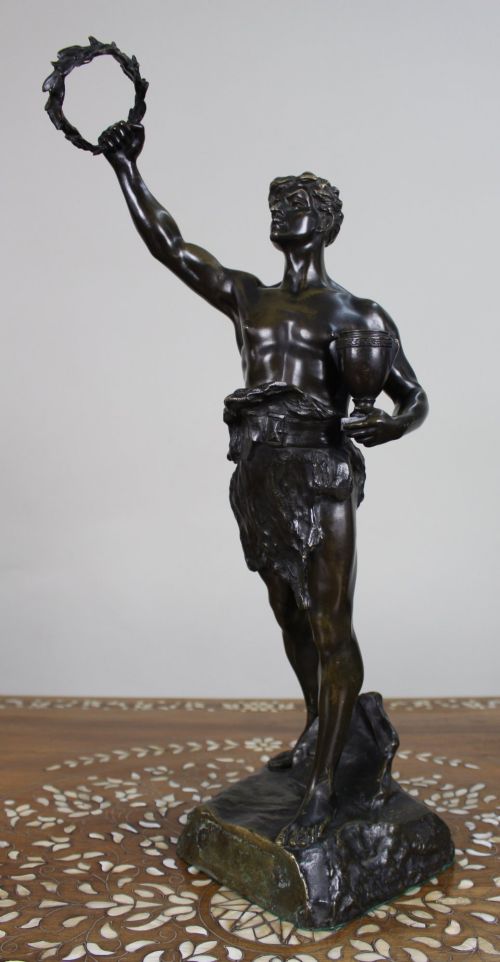
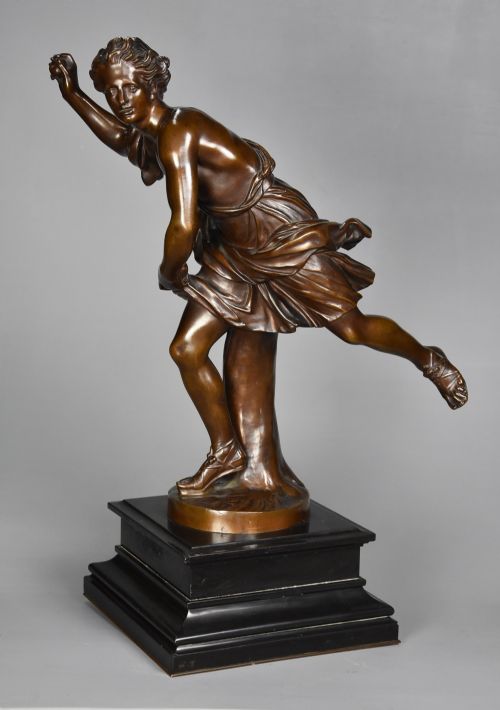
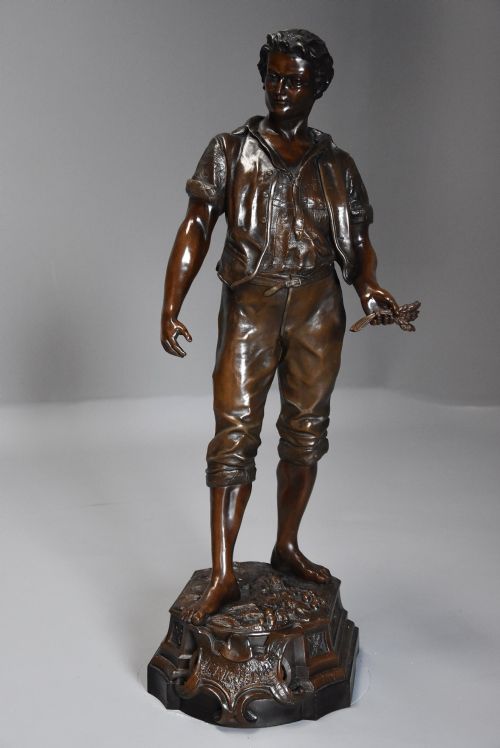
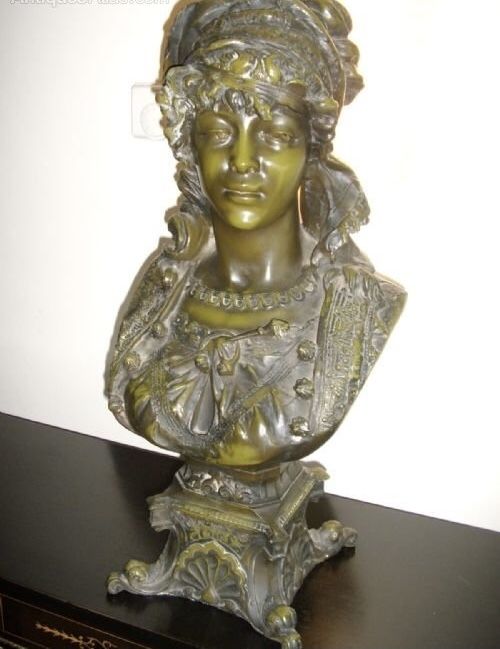
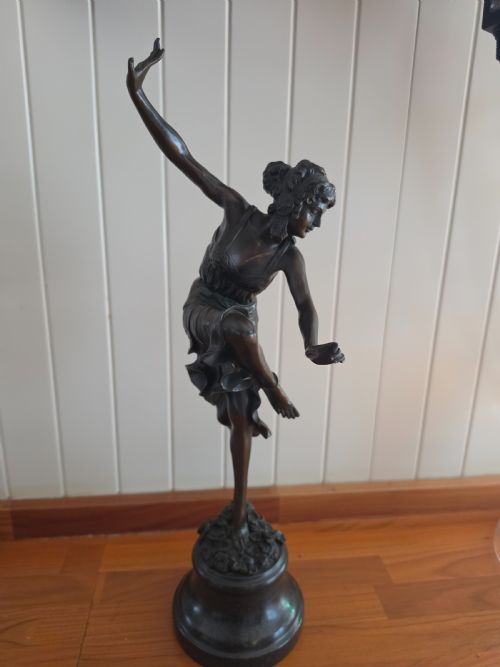
When you search for signed french bronze figures, you encounter works spanning the nineteenth century through the art deco era, representing human figures, mythological characters, and animals. These sculptures range from small cabinet pieces to large floor-standing figures, often mounted on marble or ebonised wood bases.
The most common items on this page are nineteenth-century classical and romantic subjects cast in patinated bronze or spelter. You will also find twentieth-century pieces reflecting the cleaner lines of the art deco movement, alongside figural lamps and torcheres.
Materials and Casting
The primary metal used for these pieces is bronze, handled with various patinations to create dark, warm, or metallic surface tones. Spelter and patinated metal appear as alternative casting materials, often paired with bases made of carved marble or ebonised wood.
Foundries employed traditional casting techniques to capture fine detail in hair, drapery, and facial expressions. Signatures, foundry stamps, and artist credits were typically incised or stamped directly into the metal during or after the casting process.
Listings feature works spanning the nineteenth century through the art deco period, utilising materials such as bronze, spelter, marble, and wood.
Quality and Execution
The reputation of the signer, whether sculptor or foundry, influences the standing of a piece within the market. Fine chiselling after the cast removes surface imperfections and distinguishes workshop output from standard commercial items.
Lemoyne·Barbedienne·F.Milliot·Henry Wissen Senior·C J R Colinet·Julien Lorieux·Charles Anfrie·Clodion·L.Gerfaux·Louis-François-Frémiet·Aug. Moreau·D.H. Chiparus·Louis Auguste Moreau·Dumond·Guillot·Antoine Bofill·Ernest-Eugène Hiolle·Pierre Hebert·Andrey·Paul Fournier·Coutan·Ferrand·E. Laurent·I. Rochard·Dubucand
The Signed French Bronze Figures Glossary
- Patination
- The chemical treatment applied to the surface of the metal to achieve a specific colour and finish. This layer protects the bronze and adds depth to the sculptural details.
- Spelter
- A zinc alloy frequently utilised as a less expensive alternative to bronze. It was often given a bronze finish to resemble the costlier metal.
- Grand Tour
- A cultural journey undertaken by nineteenth-century travellers who acquired small bronzes and classical statues as souvenirs. These pieces often depict mythological figures or ancient subjects.
- Chasing
- The manual refinement of a cast metal surface using hammers and punches. Artisans use this technique to sharpen details and remove minor flaws left by the mould.
Signed French Bronze Figures: Frequently Asked Questions
How do I identify a foundry mark?
Foundry marks and artist signatures are usually stamped, engraved, or cast directly into the base or lower portion of the bronze figure. Examining these inscriptions helps link the piece to a specific workshop or maker.
Some signatures indicate the original sculptor whose work was reproduced, while others credit the foundry responsible for the casting.
Are spelter figures considered bronze?
Spelter is a zinc-based alloy rather than an actual copper and tin bronze. While it has a lighter weight and a different metallic composition, it was often given a bronze finish to mimic the genuine material.
Checking the weight and examining the underside can help distinguish a true bronze casting from a spelter alternative.
Why are some figures mounted on marble?
Marble bases provide structural stability and visual contrast for metal sculptures. Heavier stones ground the composition and protect the lower edges of the figures from wear.
These bases often reflect the design preferences of the period, ranging from simple circular plinths to elaborate stepped pedestals.
How should I clean a bronze sculpture?
Dust bronze figures gently with a soft, dry brush to prevent accumulation in recessed details. Avoid using commercial metal cleaners or water, which can strip the historic patination.
Applying a very light coat of microcrystalline wax occasionally helps protect the surface from atmospheric moisture.