



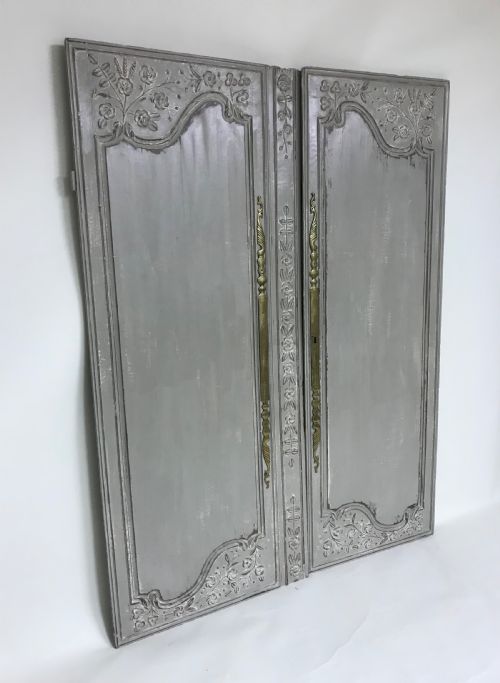

Shutter Door Cabinet
A shutter door cabinet brings sliding slatted mechanism and compact storage together, offering a practical way to keep work spaces tidy.
Shutter Door Cabinet
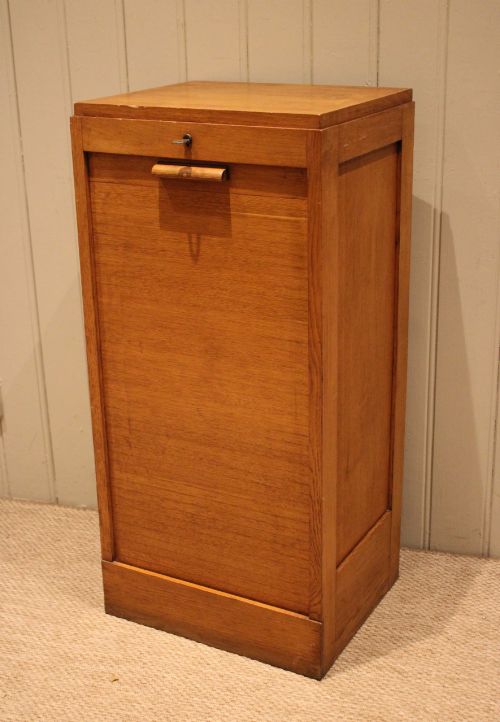
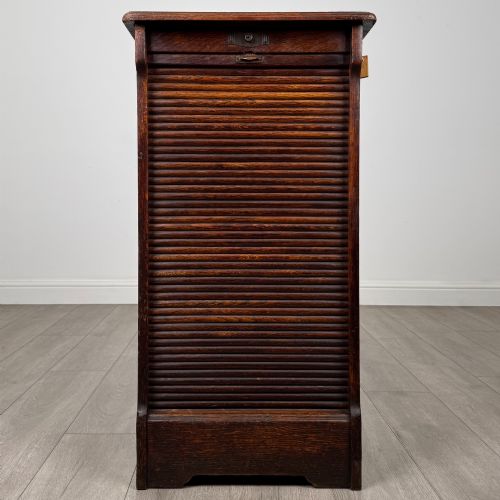
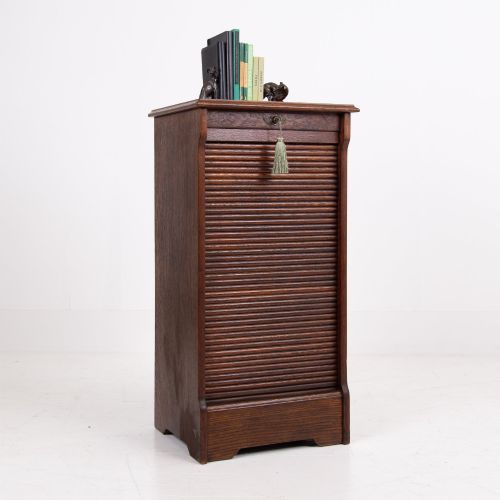
A shutter door cabinet uses a slatted sliding mechanism, often known as tambour or louvre, which retracts smoothly into the frame. This design saves floor space where hinged doors would otherwise intrude into the room. Buyers search for these pieces to secure office supplies, files or household items behind slatted fronts.
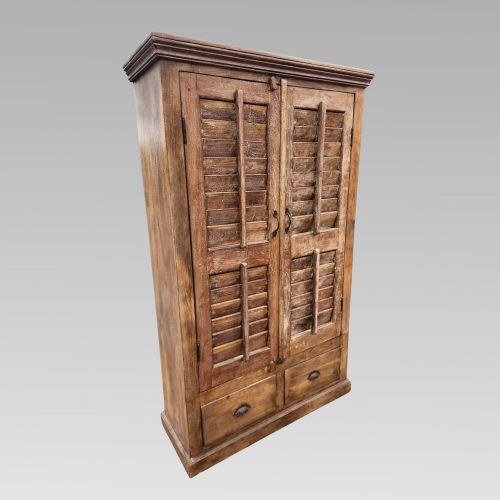
The versions most commonly met on this page include single and double filing cabinets, office storage cupboards, and bedside tables. Oak is the dominant timber seen across these forms, alongside walnut, pine, and reclaimed rosewood. Pieces originate from periods spanning the nineteenth century through the Edwardian era and into the mid-twentieth century.
Stylistic influences range from French provincial and utility designs to early twentieth century office furniture and rustic Indian craftsmanship. Some examples incorporate brass hardware, iron fittings, or painted finishes to complement their wooden carcasses. Certain listings present architectural salvage components such as panelled wooden doors rather than complete enclosed storage units.
Materials and construction
Cabinet makers constructed the primary carcasses from solid hardwoods and softwoods including oak, walnut, pine, and reclaimed rosewood. Oak and walnut predominate in office filing cabinets and stands, providing structural rigidity for daily use. Pine and painted finishes appear in domestic storage furniture and architectural elements.
The characteristic shutter mechanism consists of narrow wooden slats attached to a flexible canvas or fabric backing. This assembly runs within rebated tracks cut into the cabinet sides, allowing the door to curve around the interior walls when opened. Brass handles and iron hardware frequently secure the front edges of these slatted panels.
Shutter Door Cabinet Retail Price Guide 2026
Typical asking prices for shutter door cabinet among the pieces listed under this phrase on Sellingantiques today, from the lower quarter to the upper quarter. They describe what is for sale here now, not the wider market.
Period origins span the nineteenth century, the Edwardian era, and the 1930s to 1940s.
Distinguishing quality in construction
Quality in a shutter door cabinet rests upon the smoothness of the sliding mechanism and the integrity of the slatted tracks. Superior examples feature individually channelled slats that glide without binding or sagging along their curved paths. Inferior pieces suffer from warped timber or degraded canvas backings that cause the shutter to jam.
The choice of cabinet timber and internal fittings further distinguishes the grade of manufacture. Cabinets featuring adjustable shelving and dense hardwoods like oak or walnut represent more substantial production standards than simpler pine or composite alternatives.
The Shutter Door Cabinet Glossary
- Tambour
- A flexible sliding door made from narrow wooden slats attached to fabric. This mechanism allows access to contents without requiring clearance for hinged doors.
- Louvre
- A set of angled horizontal slats designed to allow ventilation while obscuring the interior. These are commonly found on storage cupboards and wardrobes.
- Filing cabinet
- An office furniture form fitted with internal dividers or drawers designed to organise documents. These units frequently incorporate tambour shutters for security.
- Architectural salvage
- Building components such as doors and panels recovered from older structures for reuse. These items retain historical character and original painted surfaces.
Shutter Door Cabinet: Frequently Asked Questions
How do tambour doors operate?
Tambour doors consist of narrow wooden strips glued to a textile backing that slides along routed grooves inside the cabinet. They vanish into the sides of the furniture when opened.
This track system requires occasional cleaning and waxing to ensure the slats move freely without catching on the frame.
What rooms suit a shutter cabinet?
These cabinets suit home offices, studies, and living rooms where floor space is limited. The sliding action of the door requires zero clearance in front of the unit.
They function well as bedside tables or auxiliary storage cupboards where traditional hinged doors prove impractical.
How do I date these cabinets?
Dating relies on timber selection, hardware styles, and construction methods visible in the carcass. Edwardian and early twentieth century pieces often utilise quarter-sawn oak and traditional dovetail joints.
Later utility designs from the mid-twentieth century feature simpler lines and alternative hardware reflecting wartime and post-war manufacturing constraints.
Are the shelves adjustable?
Many office filing cabinets and storage cupboards include adjustable internal shelving to accommodate different file sizes and storage needs. Supporting brackets or track systems allow the shelves to be repositioned.
Buyers should examine the listing details to confirm whether the interior configuration can be altered.