



French Tambour Cabinet
These french tambour cabinet pieces offer discreet slatted storage, combining practical sliding doors with fine timber forms.
French Tambour Cabinet
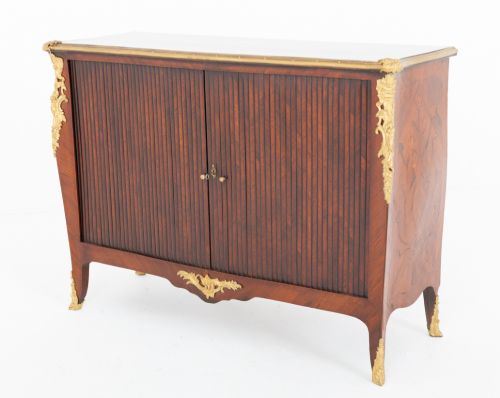
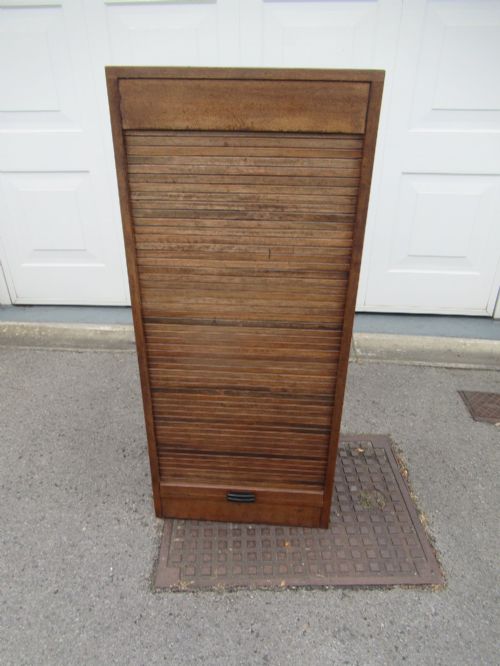
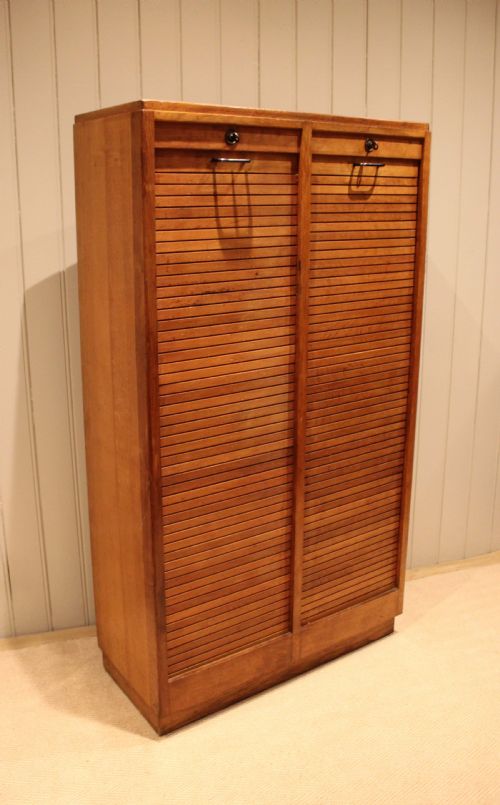
A french tambour cabinet uses flexible wooden slats running in tracks to conceal contents efficiently within a compact footprint. These pieces appear in forms such as filing cabinets, nightstands, writing cabinets, and pot cupboards.
The versions met most often on this page date from the nineteenth century up to nineteen forty, reflecting Victorian, early twentieth century, and French utility styles.
Makers constructed these storage pieces in regional styles ranging from rustic farmhouse and French provincial to neoclassical designs.
How they were made
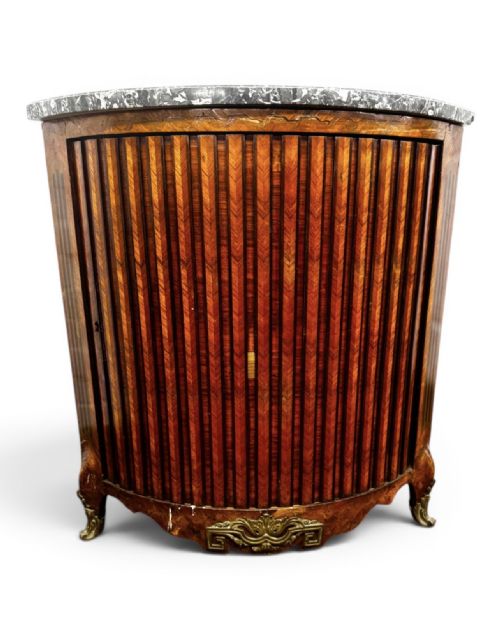
Craftsmen built the frames using timbers such as mahogany, walnut, oak, satinwood, and pine, occasionally mounting marble tops onto bedside tables.
The defining tambour mechanism relies on individual wooden slats glued to a fabric or leather backing, allowing the door to curve smoothly around tracks into the body of the cabinet.
French Tambour Cabinet Retail Price Guide 2026
Typical asking prices for french tambour cabinet among the pieces listed under this phrase on Sellingantiques today, from the lower quarter to the upper quarter. They describe what is for sale here now, not the wider market.
Proofing cupboards keep their secrets behind rolling slats just like an office desk.
What varies in quality
Quality rests on the precision of the slatted track mechanism and the selection of cabinet timbers, where tightly fitted joints distinguish finer examples.
The integration of decorative elements like marquetry work and brass hardware separates standard utility items from more elaborate neoclassical or nineteenth century pieces.
The French Tambour Cabinet Glossary
- Tambour
- A flexible door made of narrow wooden slats attached to a backing fabric. This allows the door to slide open around a curved track without swinging outward.
- Marquetry
- The art of applying pieces of veneer to a structure to form decorative patterns. This technique appears on writing cabinets.
- Pot cupboard
- A small bedside cabinet originally designed to house a chamber pot. Victorian examples often feature marble surfaces.
- Satinwood
- A durable hardwood with a lustrous, satin-like sheen used for fine cabinetmaking. It yields a pale, glowing surface.
French Tambour Cabinet: Frequently Asked Questions
What is a tambour cabinet?
A tambour cabinet is a storage piece featuring slatted sliding doors that roll into the body of the furniture. This design saves space in small rooms and offices.
Such cabinets appear in various forms, including filing units, bedside tables, and writing desks, dating from the nineteenth and early twentieth centuries.
How do you clean tambour doors?
Cleaning requires dusting carefully between the individual wooden slats using a soft brush or cloth. Avoid excess moisture to protect the tracks.
Regular maintenance keeps the sliding mechanism moving smoothly without jamming in the runners.
Where were these cabinets used?
These cabinets served in offices for filing documents and in bedrooms as nightstands or pot cupboards. Their enclosed slatted fronts kept contents tidy and hidden.
French provincial and utility workshops produced them for everyday practical storage in homes and workspaces.
How to date a tambour cabinet?
Dating relies on timber selection, hardware, and structural style conventions associated with periods like the Victorian era or nineteen forty. Mahogany and walnut often indicate nineteenth century origins, while oak frequently marks later pieces.
Construction methods inside the cabinet carcass provide further clues to the manufacturing decade.