









Shop Counter Haberdashery Display
These shop counter haberdashery display pieces bring utilitarian retail history into domestic rooms with glazed timber and brass framing.
Shop Counter Haberdashery Display
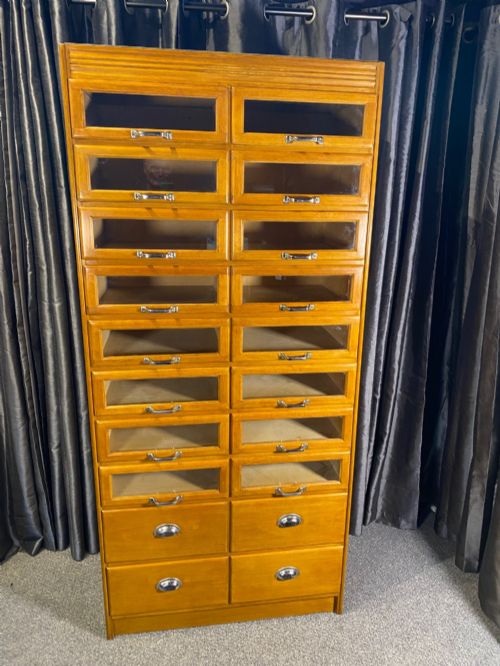
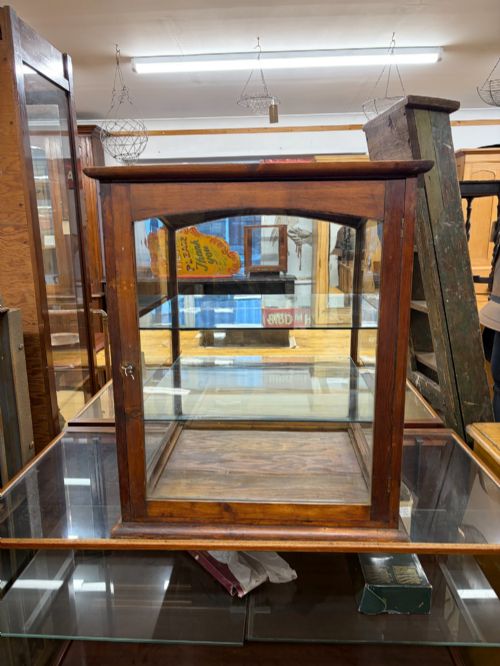
A shop counter haberdashery display encompasses glazed timber counters, countertop cabinets, and tiered stands originally built for commercial retail environments. Buyers encounter Victorian and Edwardian wood cases alongside 1920s and 1930s commercial fittings constructed for merchants.
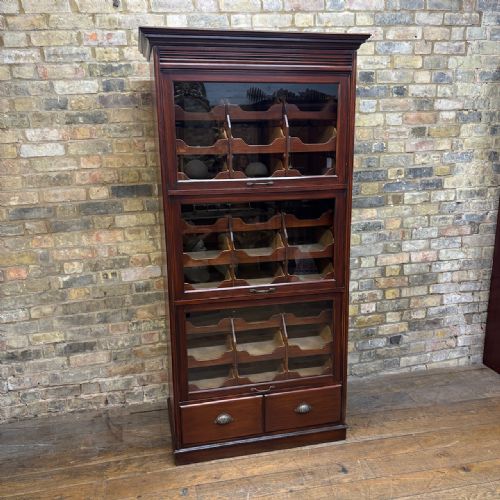
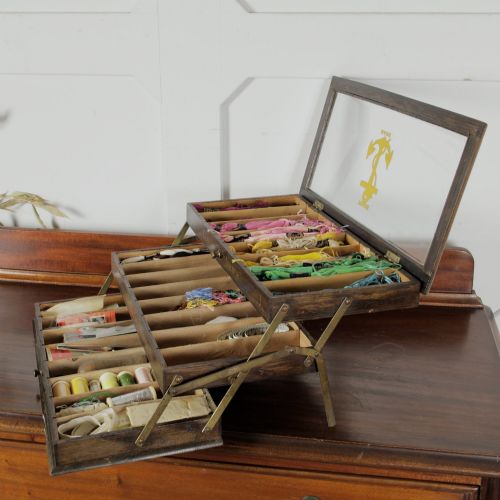
The surviving forms range from large mahogany counters and multi-drawer shop fittings to smaller cotton reel display trees and specialised tabletop cabinets. These pieces derive directly from drapery shops, stationers, and confectioners.
Oak, mahogany, and pine dominate the structural woodwork, frequently paired with large glass panes designed to showcase sewing cottons, biscuits, and confectionery. The items bridge functional shop storage and transparent merchandise presentation.
Materials and construction methods
Makers built these commercial units using dense hardwoods like mahogany and oak, alongside utilitarian pine for structural carcases and drawer interiors. Glazing remained central to the design, employing large sheets of glass housed within timber frames to protect goods from dust while maintaining visibility.
Metal components added durability and specialised movement, utilising brass for framing, handles, and hinges, alongside cast iron and aluminium in later twentieth-century iterations. Joinery prioritized robust daily use in bustling retail premises, resulting in sturdy counter structures and cantilevered or multi-tiered fittings.
Shop Counter Haberdashery Display Retail Price Guide 2026
Typical asking prices for shop counter haberdashery display among the pieces listed under this phrase on Sellingantiques today, from the lower quarter to the upper quarter. They describe what is for sale here now, not the wider market.
The listed pieces span the nineteenth century through the 1930s, utilising mahogany, oak, pine, brass, and glass.
Distinctions in quality and execution
The grade of a shop counter haberdashery display rests upon the sophistication of its timber framing and the integrity of its original hardware. Finer examples display meticulous mahogany joinery, bevelled glass, and branded maker plaques from established shopfitters.
Simpler utilitarian counters constructed from painted pine serve a different aesthetic, where the charm lies in honest commercial wear rather than elaborate cabinetmaking. Quality reveals itself in the proportion of the glazing, the smooth operation of drawers, and the retention of original brass fittings.
F. Sage & Co·Dudley & Co·John Stow Ltd·Saml. Elliott & Sons
The Shop Counter Haberdashery Display Glossary
- Haberdashery cabinet
- A specialised multi-drawer shop fitting designed to organise small sewing items, ribbons, and buttons. These units typically feature numerous shallow drawers with glass fronts or pulls.
- Countertop display cabinet
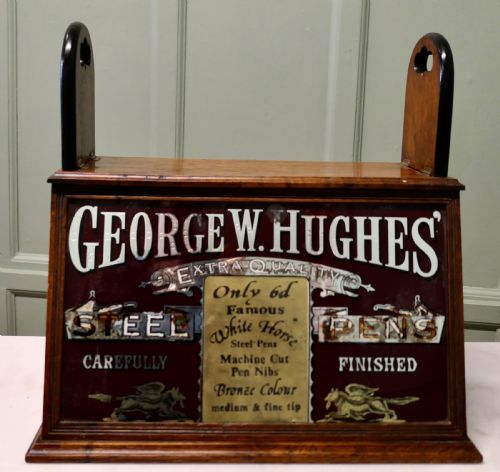
- A smaller glazed showcase placed directly on top of a retail sales counter to draw customer attention to specific goods. They often incorporate hinged rear doors for serving staff.
- Display tree
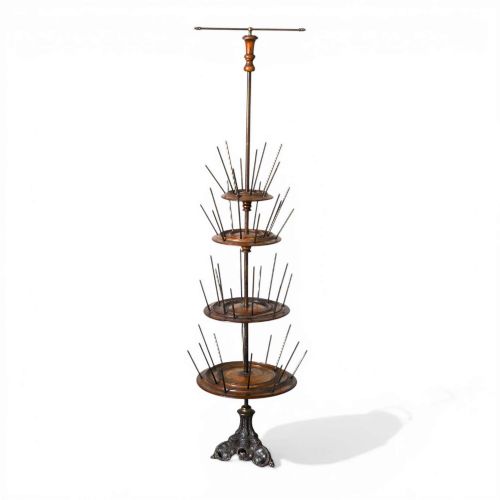
- A vertical, tiered stand utilised in nineteenth-century shops to present spools of cotton or thread. Items like cotton reel display trees maximise vertical merchandising space.
- Shopfitter
- A commercial firm specialising in the interior architecture and display fixtures of retail premises. Companies such as F. Sage and Co built durable cabinets for merchants.
- Drapers table
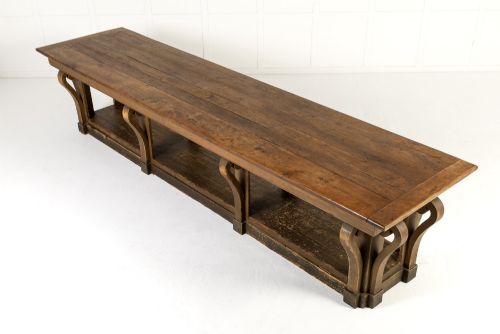
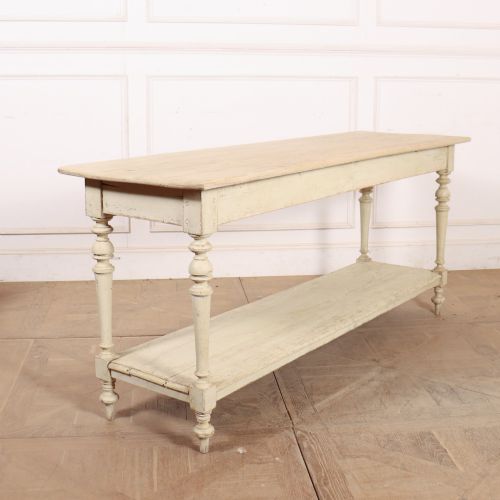
- A low, expansive wooden table utilised in fabric and textile shops for folding and measuring cloth. These tables often feature simple lines and sturdy timber construction.
Shop Counter Haberdashery Display: Frequently Asked Questions
What are shop counter haberdashery displays?
These pieces are antique commercial fixtures originally utilised in nineteenth and early twentieth-century shops to store and showcase merchandise.
They combine functional storage, such as drawers and cupboards, with glazed panels designed to protect goods while keeping them visible to customers.
How were these cabinets used in shops?
Merchants placed these units on sales counters or utilised them as standalone serving tables to organise small goods like cottons, ribbons, and stationery.
Staff retrieved items from behind the counter while customers viewed the stock through glass tops and front panels.
How do I style a shop display counter at home?
These counters function well in domestic spaces as kitchen islands, sideboards, or hallway consoles due to their generous proportions and glazed surfaces.
Their glass tops and internal shelving allow for the display of collections, tableware, or textiles while providing enclosed storage beneath.
How do I tell Victorian pieces from later ones?
Victorian examples often employ dense mahogany or oak with hand-cut joinery and traditional brass hardware, reflecting nineteenth-century retail requirements.
Later pieces from the 1920s and 1930s frequently incorporate alternative materials like aluminium frames, chrome, or distinct Art Deco geometric lines.