

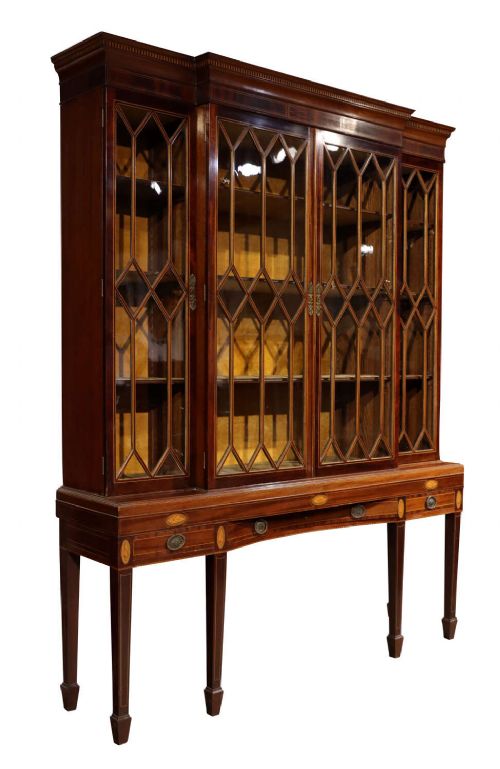
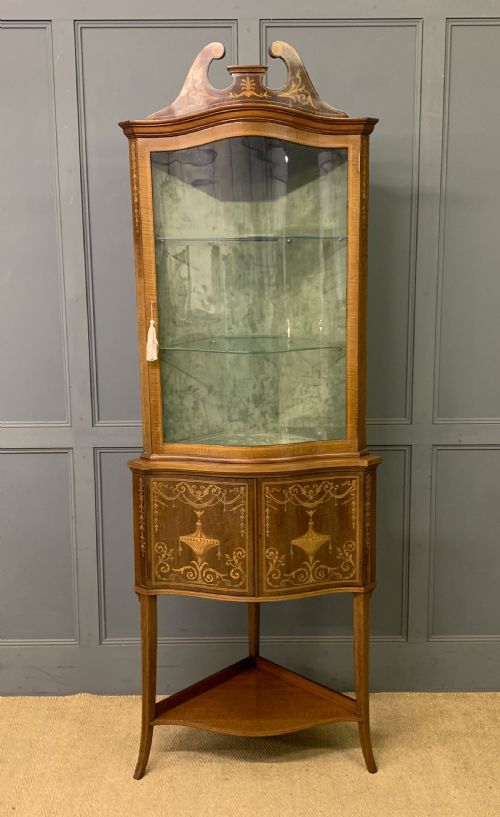


Sheraton Style Vitrine
These Sheraton style vitrine pieces bring refined display cabinets into a room, offering glass fronts and delicate inlays to showcase prized possessions.
Understanding the Sheraton style vitrine
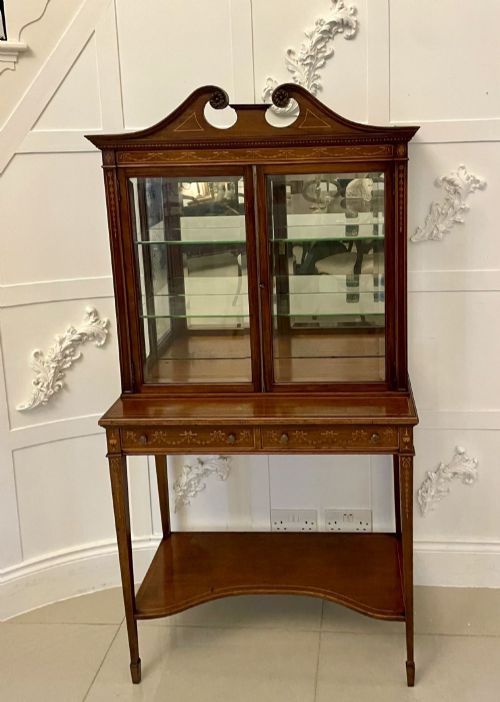
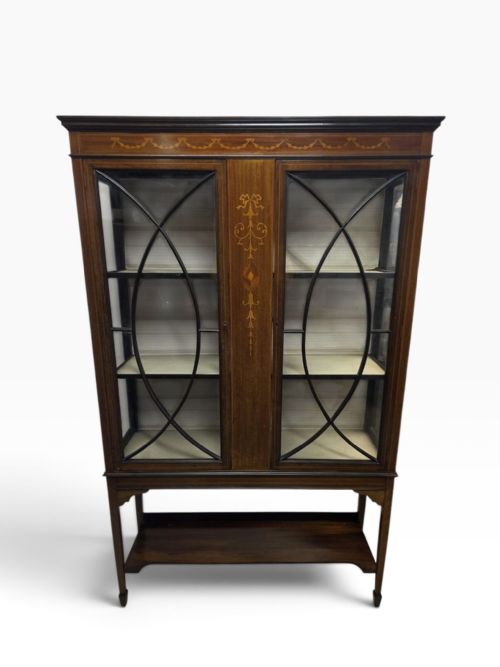
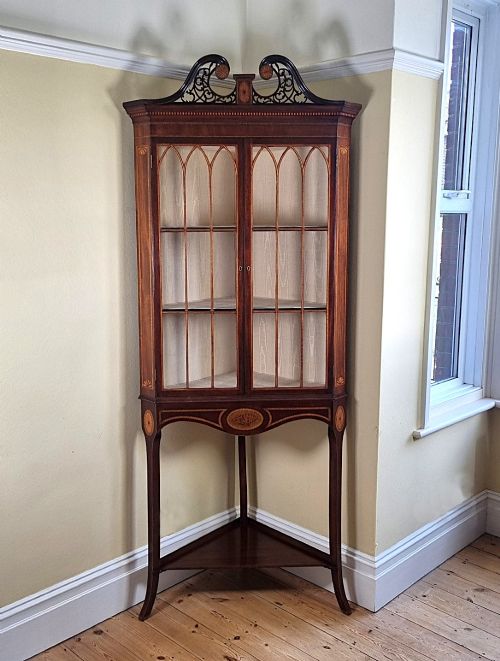
A Sheraton style vitrine is a refined display cabinet designed to showcase porcelain and glassware behind glazed doors. These pieces draw on late eighteenth-century neoclassical designs, translated into later interpretations.
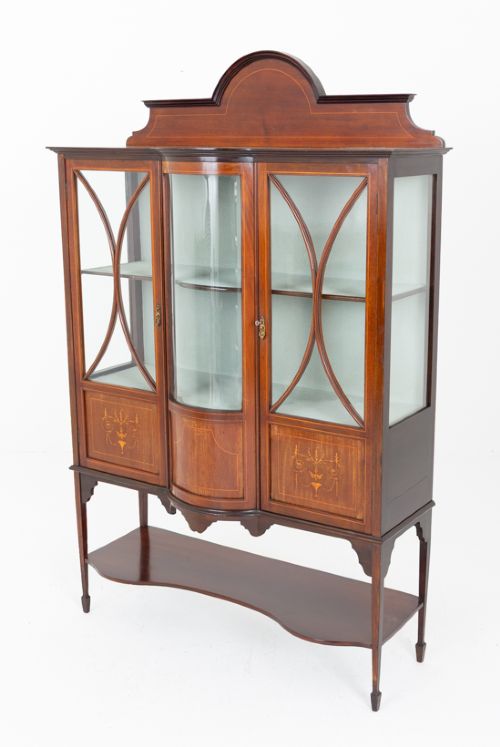
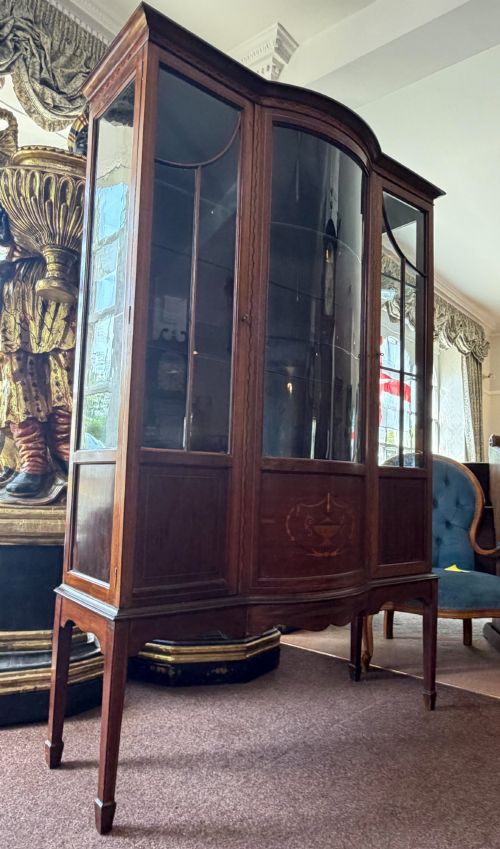
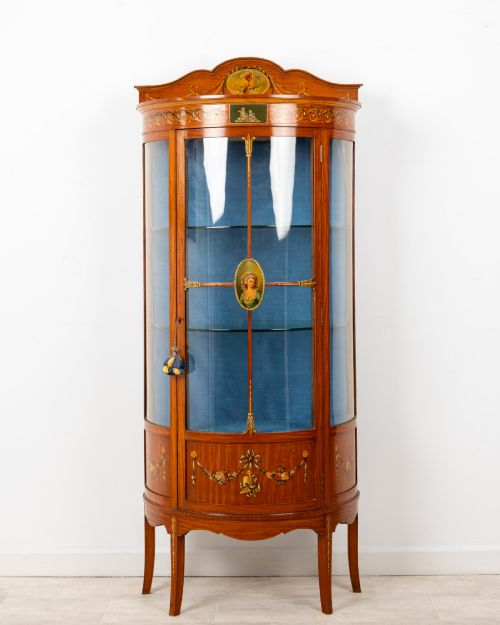
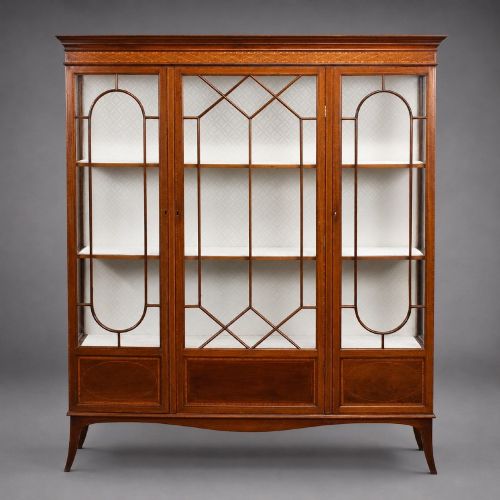
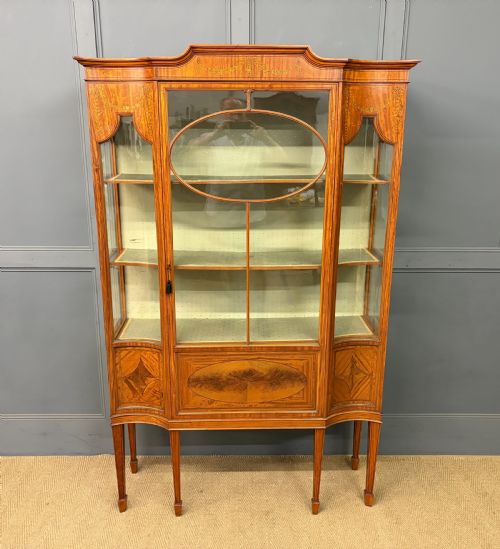
The versions met on this page are largely Edwardian creations, including Edwardian Revival and Sheraton Revival pieces. Makers constructed these cabinets in forms such as bow front, shaped front, and demi lune shapes.
Materials include mahogany and satinwood, frequently enhanced with boxwood inlay, wood inlay, and painted decoration. Brass hardware and fabric linings often complete the interior and exterior presentation.
Construction and materials
Cabinetmakers built these pieces using solid timbers like mahogany and satinwood, applying precise wood inlay and boxwood inlay to create delicate classical motifs. Glazed doors incorporate brass fittings, while interiors occasionally feature fabric linings.
Painted details appear on satinwood surfaces, showing the hand of skilled decorators working during the Edwardian period. Carcass construction relies on traditional joinery to support curved bow fronts and shaped silhouettes.
Retail Price Guide 2026
Typical UK retail prices for sheraton style vitrine, calculated from the Sellingantiques database of over a million retail prices indexed since 2003. This retail price guide relies exclusively on Sellingantiques data; no external sources or auction records are used, so the figures do not describe the wider market.
Cabinet forms include bow front, shaped front, and demi lune display cabinets.
Assessing quality
Quality rests in the precision of the satinwood and boxwood inlay, alongside the fluidity of painted decorations on the timber. Crisp execution of bow fronts and demi lune curves distinguishes superior examples.
The choice of cabinetmaker elevates a piece, with firms like Maple & Co. demonstrating exceptional joinery and timber selection. Finer cabinets balance proportion with restrained classical detailing rather than heavy ornament.
Maple & Co.
The Sheraton Style Vitrine Glossary
- Vitrine
- A glass-fronted display cabinet used for showing fine porcelain and curiosities. These pieces protect delicate objects from dust while maximising visibility.
- Satinwood
- A lustrous, fine-grained timber with a golden yellow sheen, frequently used as a veneer or for stringing and marquetry. It forms the primary surface for painted Edwardian cabinets.
- Bow Front
- A convex curved cabinet front that swells outward in the centre, softening the linear geometry of a room. This shape requires skilled carpentry to bend wood and glass accurately.
- Demi Lune
- A half-moon shape used for the plan of small side cabinets and commodes. These pieces fit flush against a wall while offering a curved profile.
- Stringing
- Thin lines of contrasting wood inlay used to outline panels and drawers. It adds linear definition to mahogany and satinwood surfaces.
Frequently Asked Questions
What is a sheraton style vitrine?
A sheraton style vitrine is an elegant display cabinet inspired by late eighteenth-century neoclassical furniture designs. These pieces typically feature glazed doors and delicate timber inlays.
They serve primarily to showcase fine china, glass, and collectibles within a drawing room or saloon. Their slender proportions and refined decoration suit formal interior spaces.
How do I date a sheraton style vitrine?
Dating relies on examining the construction methods, timber choice, and decorative vocabulary of the cabinet. Most examples found here date from the Edwardian period around nineteen hundred.
Revival pieces often incorporate Edwardian manufacturing traits while mimicking earlier eighteenth-century aesthetics. Maker signatures and retailer labels also provide definitive chronological markers.
Where should I place a vitrine?
These cabinets suit reception rooms and hallways where natural light can pass through the glass doors. Placing them away from direct sunlight protects both the timber finish and displayed contents.
Consider the floor plan when choosing between bow front and demi lune shapes. Curved fronts require adequate clearance to appreciate their silhouette fully.
How do I care for satinwood and mahogany?
Maintain timber surfaces by dusting regularly with a soft, dry cloth and avoiding silicone-based polishes. Keep the cabinet away from direct heat sources to prevent wood splitting.
Check brass hardware and glass panels periodically to ensure mountings remain secure. Gentle wax application preserves the natural lustre of satinwood and mahogany over time.