
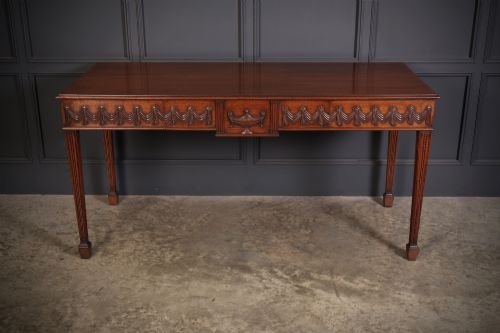
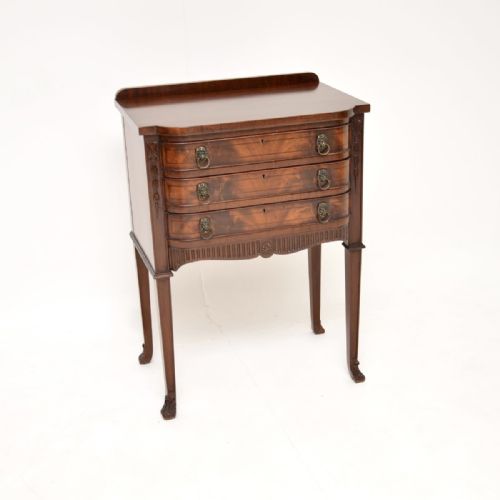
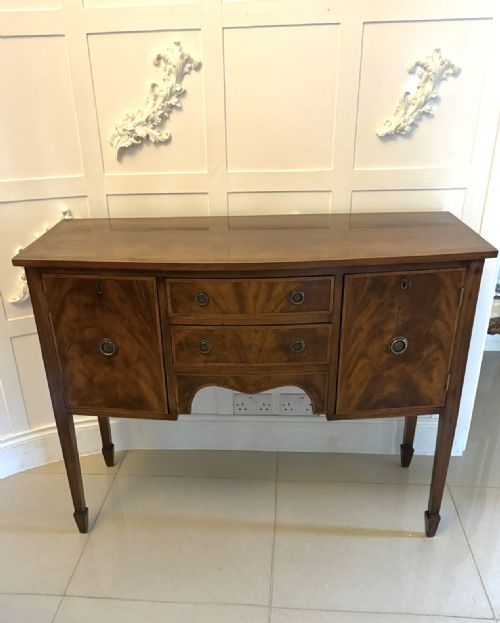
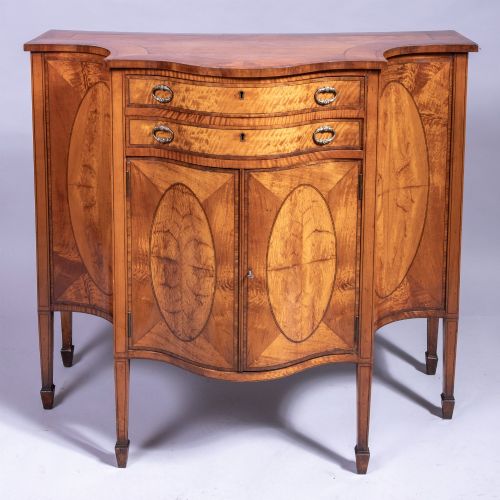

Sheraton Style Server
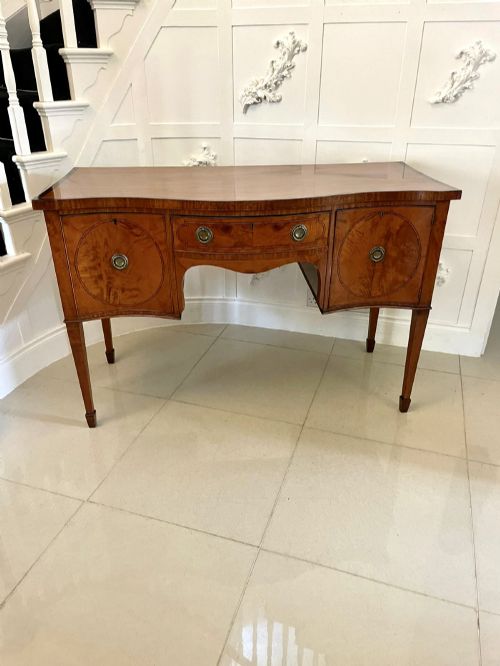
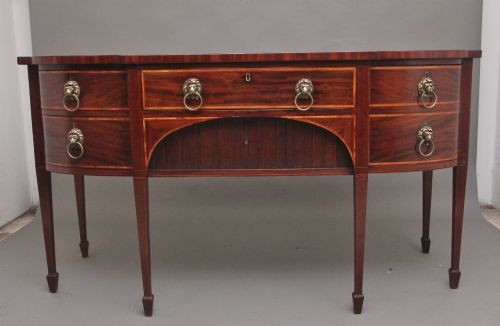
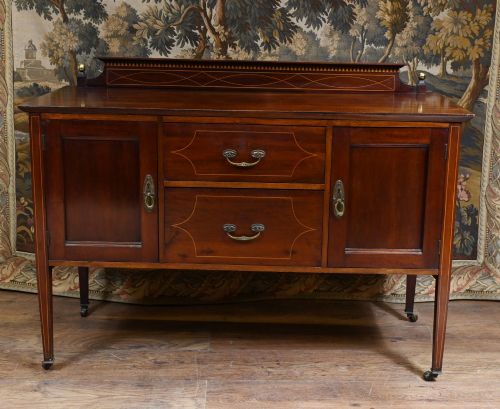
A sheraton style server brings refined proportions and elegant inlay to the dining room.
Sheraton Style Server
A sheraton style server represents a refined group of dining room furniture encompassing sideboards, serving tables, and servers drawn from Georgian principles and later revivals. Buyers searching for a sheraton style server typically encounter pieces spanning the eighteenth century through the Edwardian period and the early twentieth century.
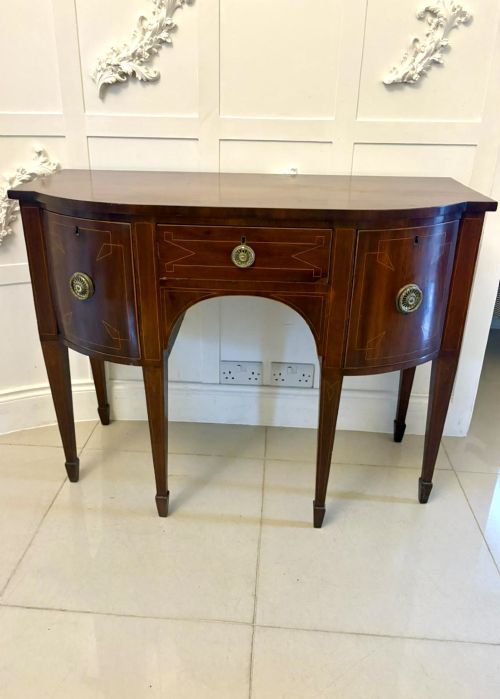
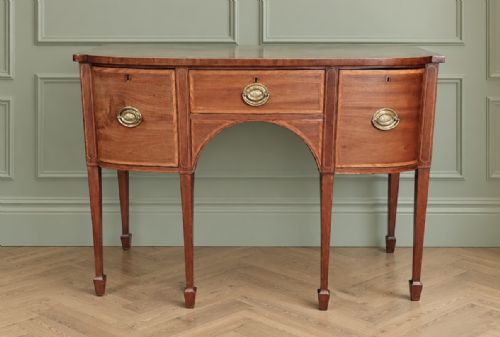
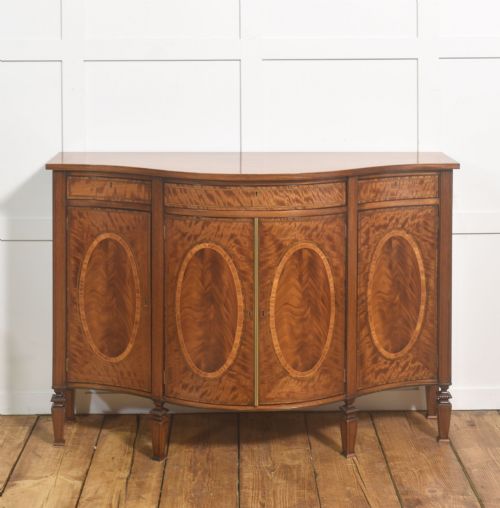
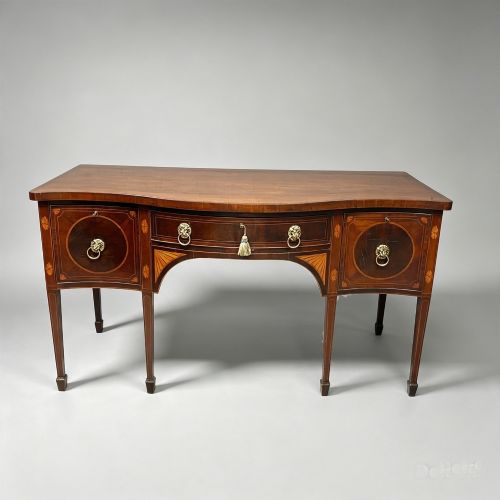
The forms vary from serpentine and bow-front sideboards to slender serving tables, side cabinets, and demi-lune shapes. Mahogany forms the principal structure, accompanied by decorative variations in satinwood and flame mahogany.
Originating in the designs associated with the late eighteenth century, the style found renewed popularity during the Victorian and Edwardian eras, resulting in revival pieces that replicate the distinctive crossbanding and tapered legs of the Georgian originals.
Materials and construction techniques
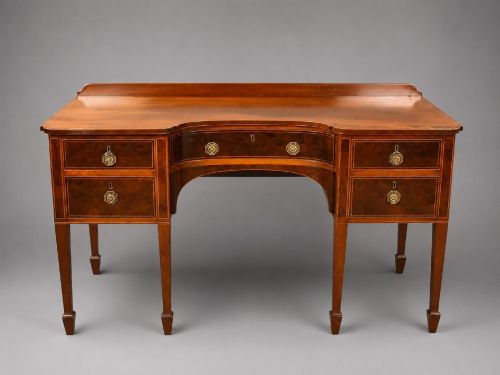
Makers utilised solid mahogany and selected veneers, often incorporating flame mahogany and burr elm for primary surfaces. Structural stability relied on traditional joinery, while decorative impact depended on contrasting timbers.
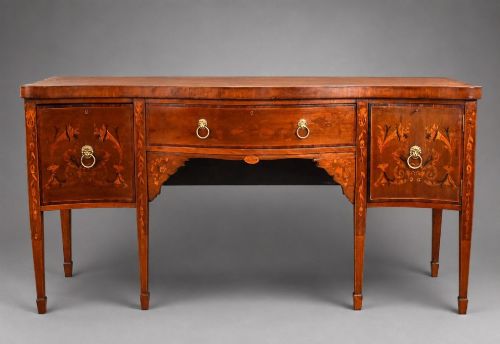
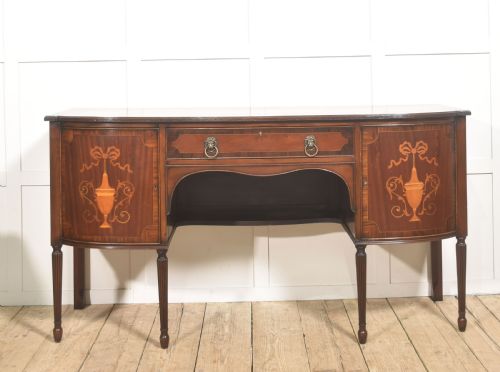
Surface ornamentation involved intricate wood inlay, satinwood inlay, boxwood lines, and marquetry inlay. Brass fixtures and silver plate elements provided functional and decorative accents on select examples.
Sheraton Style Server Retail Price Guide 2026
Typical asking prices for sheraton style server among the pieces listed under this phrase on Sellingantiques today, from the lower quarter to the upper quarter. They describe what is for sale here now, not the wider market.
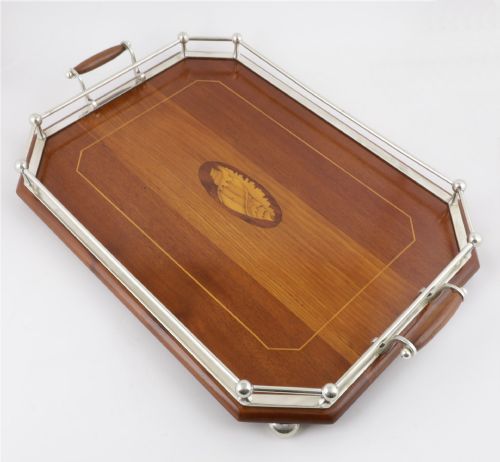
Octagonal gallery trays wait patiently for tea services that vanished a century ago.
Factors determining quality
Quality rests upon the crispness of the inlay and the selection of figured timbers such as satinwood and flame mahogany. The precision of crossbanding and the integration of marquetry separate finer examples from standard production.
Proportion and cabinetwork execution dictate the distinction between pieces, particularly in serpentine and bow-front profiles where curved drawer fronts demand meticulous carpentry.
The Woodworkers Ltd Kilkenny
The Sheraton Style Server Glossary
- Serpentine
- A curved shape featuring a convex centre flanked by concave sides. This profile appears frequently on better quality eighteenth and nineteenth century sideboards.
- Crossbanding
- A narrow strip of veneer applied to the border of a panel or drawer front with the grain running perpendicular to the main surface. It creates a neat framing effect on mahogany furniture.
- Satinwood
- A pale, lustrous timber utilised for contrasting inlay and banding. It adds brightness to dark mahogany surfaces.
- Marquetry
- The art of creating decorative patterns by fitting together small pieces of various coloured woods and veneers. It is often seen on revival servers.
- Bow-front
- A convex curved furniture front that projects outward. This form softens the angles of a dining room server.
Sheraton Style Server: Frequently Asked Questions
What is a sheraton style server?
A sheraton style server is a dining room storage and serving piece inspired by the late eighteenth-century neoclassical designs associated with Thomas Sheraton. These pieces typically feature straight lines, tapered legs, and delicate decorative inlays.
They encompass sideboards, buffets, and serving tables produced during the Georgian period as well as later Edwardian and Victorian revivals.
How do I identify a revival server?
Revival servers, often dating from the late nineteenth or early twentieth century, imitate the lighter proportions and satinwood inlay of eighteenth-century pieces. Examination of the secondary woods, internal construction, and drawer linings helps determine the actual age.
Stylistic markers such as Edwardian proportions or specific brass hardware styles also point to these later revival periods.
What woods were used on these servers?
Mahogany serves as the primary structural and surface timber across the majority of these pieces, often selected as flame mahogany for enhanced figure. Satinwood, boxwood, and various contrasting timbers appear within the inlay and crossbanding.
Some examples also incorporate burr elm or feature marquetry details alongside brass fittings.
Where should I place a server?
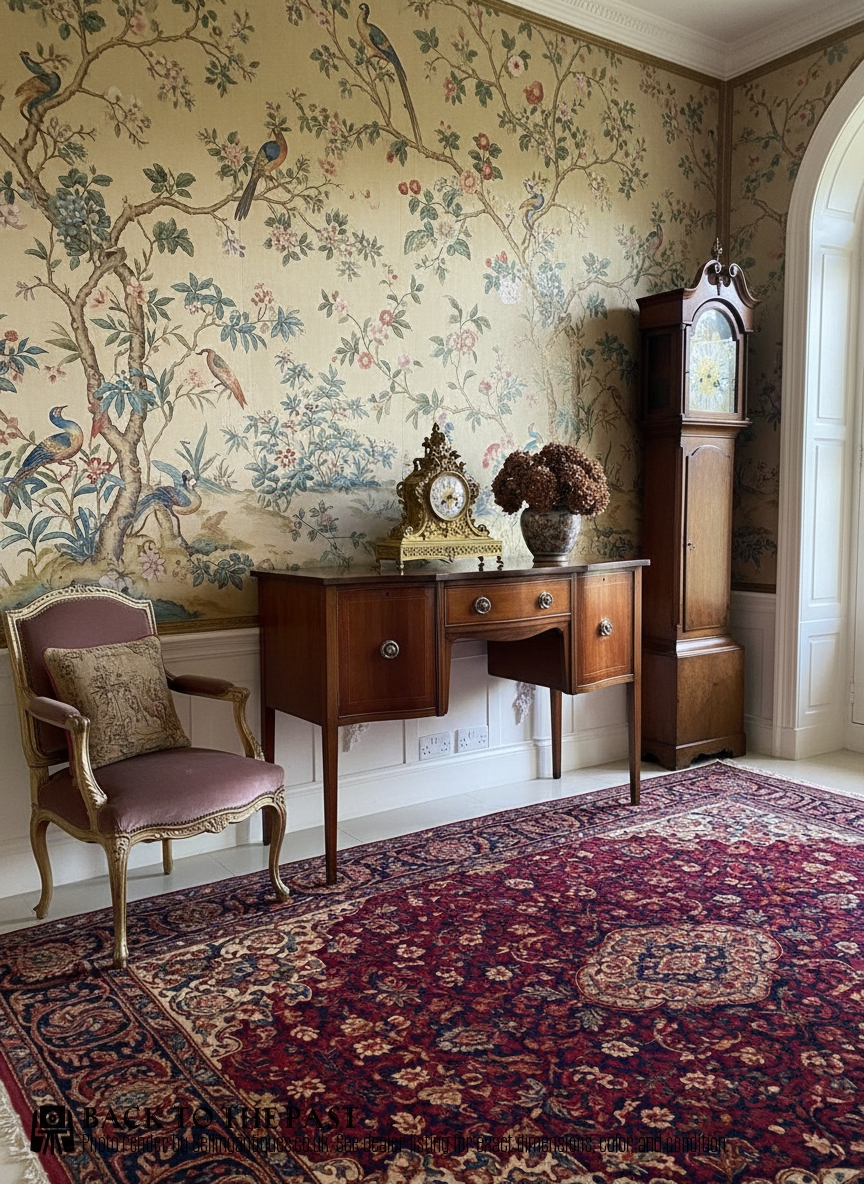
A server traditionally stands against a dining room wall to hold serving dishes, cutlery, and silverware during meals. Their relatively shallow depth compared to full sideboards makes them adaptable for narrow hallways or living spaces.
Surface trays or gallery tops on certain models also provide functional display areas for silver plate and glassware.