


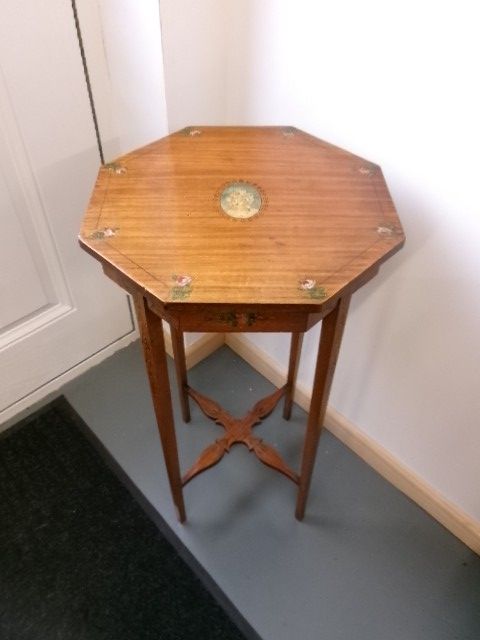


Sheraton Style Lamp Table
These Sheraton style lamp tables bring light elegance and fine timber inlay to a room, offering practical surface space with classical restraint.

Sheraton Style Lamp Table
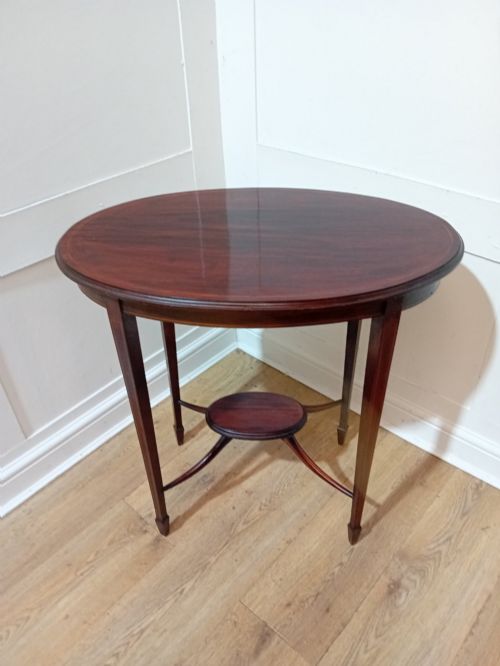
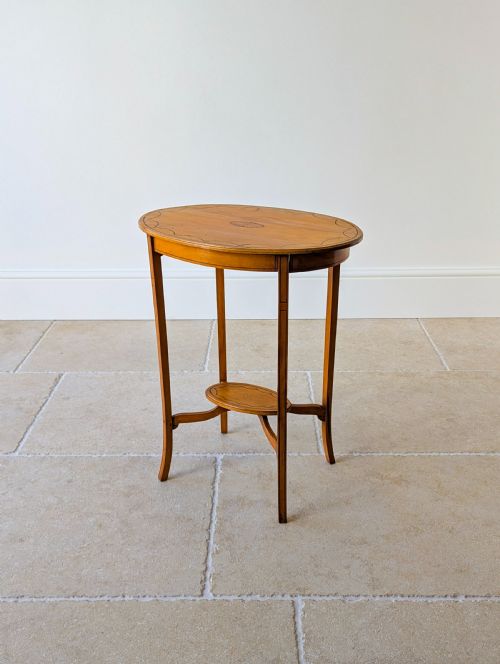
When a buyer looks for a Sheraton style lamp table, they find compact occasional, side, and centre tables designed to hold a lamp or display ornaments. These pieces span the Victorian and Edwardian periods, stretching from the late nineteenth century into the early twentieth century.
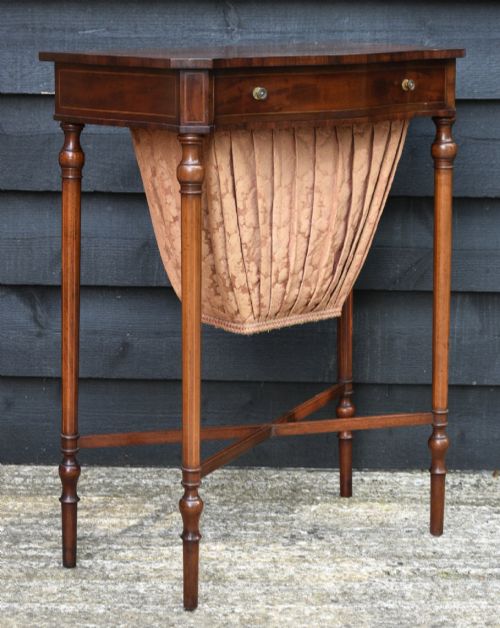
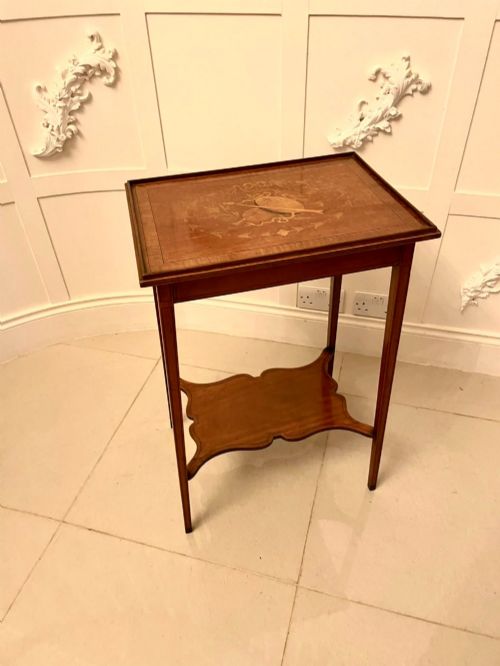
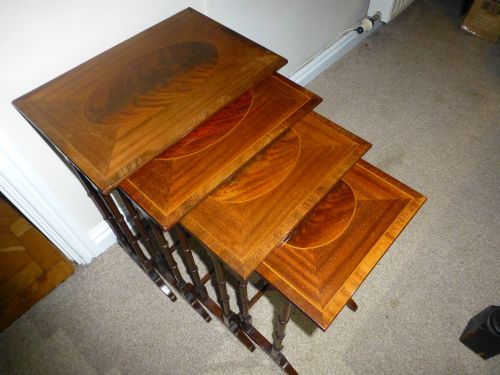
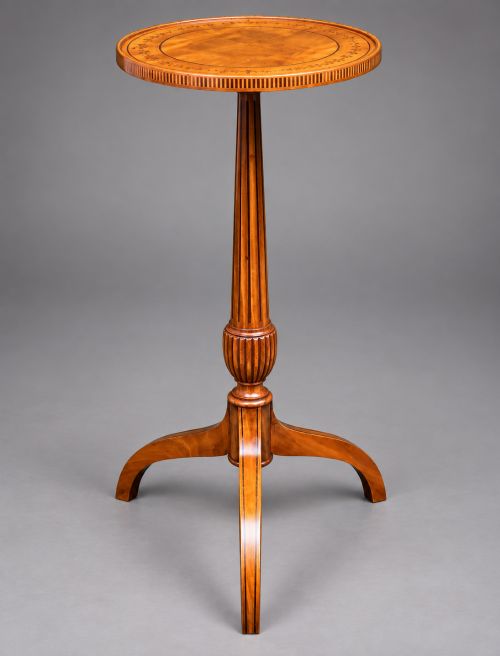
The forms appear as oval, octagonal, kidney-shaped, and rectangular formats, sometimes arriving as a nest of four stacking tables. Most examples emerge under the banner of the Sheraton Revival or Edwardian Sheraton Revival styles.
Makers drew on Neoclassical and Regency influences to shape these light occasional pieces. They serve primarily as decorative side surfaces in drawing rooms and sitting spaces.
Distinctions in quality
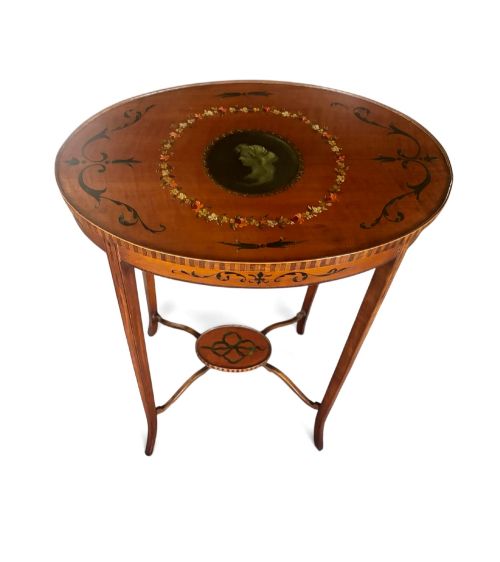
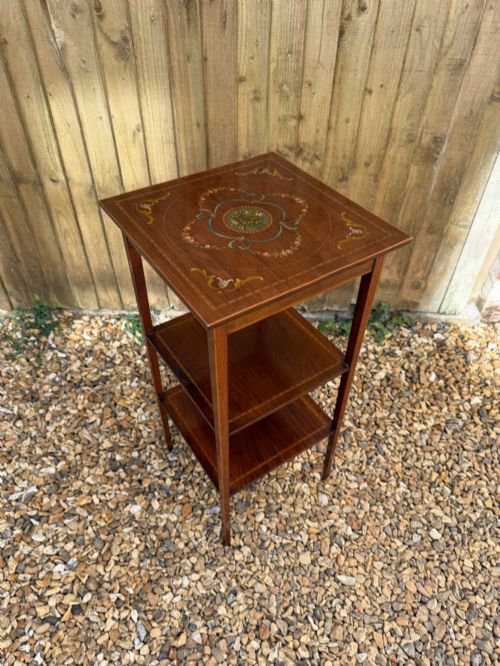
Quality rests upon the crispness of the boxwood inlay and the precision of the hand-painted floral or Neoclassical decoration across the timber top. Tables featuring finely figured satinwood and intricate marquetry sit at the upper end of the range compared to plain mahogany surfaces.
Structural refinement also separates standard production from finer workshop pieces, seen in balanced proportions, neatly joined corners, and well-executed secondary timbers. Maker signatures, such as those by Willmington and Cope, mark out superior craftsmanship.
Sheraton Style Lamp Table Retail Price Guide 2026
Typical asking prices for sheraton style lamp table among the pieces listed under this phrase on Sellingantiques today, from the lower quarter to the upper quarter. They describe what is for sale here now, not the wider market.
Listings feature satinwood, mahogany, rosewood, and yew wood, decorated with boxwood inlay, paint, and timber inlay across Victorian and Edwardian periods.
Willmington & Cope
The Sheraton Style Lamp Table Glossary
- Satinwood
- A hard, yellowish timber prized for its lustrous grain, frequently utilised as the primary veneer on decorative occasional tables. It takes polish exceptionally well and provides a bright ground for painted motifs.
- Marquetry
- The art of forming decorative patterns by fitting together small pieces of wood veneer of different colours and grains. This technique creates complex floral and classical scenes on table tops.
- Etagere
- A small open shelving unit or tiered occasional table used for display. These pieces provide multiple levels for lamps and decorative objects.
- Quartetto nest
- A set of four graduating tables designed to slide neatly beneath one another when not in use. They appeared frequently during the Edwardian period in mahogany and satinwood.
- Boxwood inlay
- Narrow strips of pale boxwood set flush into contrasting darker timbers to form geometric borders and stringing lines. It defines the classical outlines characteristic of the Sheraton Revival.
Sheraton Style Lamp Table: Frequently Asked Questions
What periods do these tables come from?
The pieces listed span the Victorian and Edwardian eras, with many dating from the late nineteenth century and the early twentieth century. Sheraton Revival items draw heavily on eighteenth-century Neoclassical design principles.
Craftsmen recreated these lighter styles during later decades, blending nineteenth-century construction methods with classic Regency and Sheraton aesthetics.
How were these lamp tables used?
These pieces functioned as moveable side tables in drawing rooms and parlours to hold small lamps, books, or decorative objects. Their compact sizes allowed them to sit beside armchairs or against walls.
Certain variations, such as sewing tables or nest tables, provided multi-purpose utility for needlework or serving tea when guests gathered.
How do I care for satinwood and painted surfaces?
Keep these tables out of direct sunlight to prevent the painted floral decorations and satinwood veneers from fading over time. Dust gently with a dry, soft cloth and avoid chemical polishes that can damage delicate hand-painted details.
Maintain a stable room humidity to protect the timber and prevent the boxwood inlay from lifting or drying out.
How can I tell Sheraton Revival from original pieces?
Sheraton Revival pieces generally date from the Victorian and Edwardian periods rather than the late eighteenth century when Thomas Sheraton originally worked. Examination of the secondary timbers, construction joints, and interior drawer linings helps reveal the true age.
Revival pieces often display machine-assisted precision in their inlay alongside hand-painted details typical of late nineteenth-century workshops.