

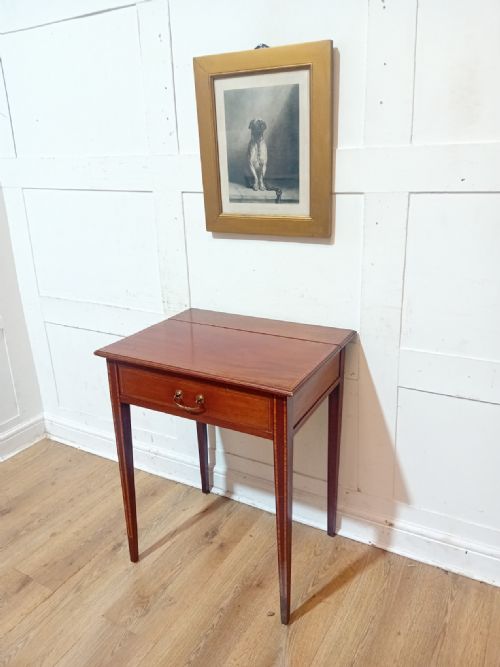


Sheraton Style Drawer Table
Sheraton style drawer table designs deliver clean geometric lines and precise inlay that collectors prize for everyday utility and refined form.
Sheraton Style Drawer Table
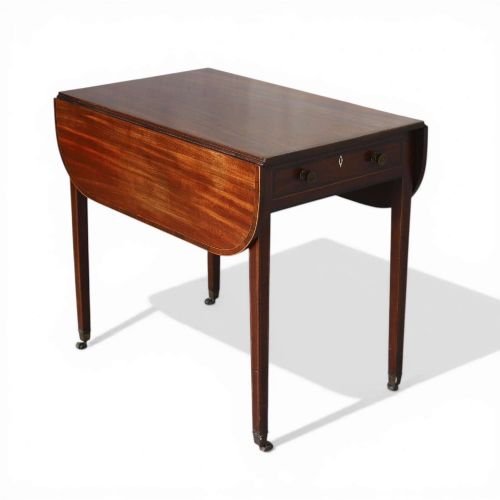
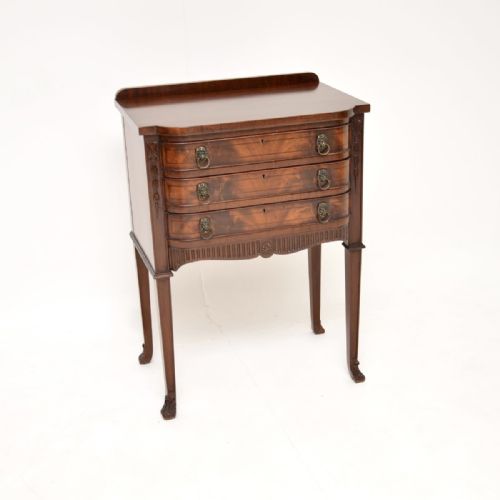
A sheraton style drawer table brings together the linear elegance and classical restraint associated with late eighteenth-century design. Buyers exploring this category encounter pieces originating from the Georgian and Regency periods alongside later revivals from the Victorian and Edwardian eras. The most frequent iteration on this page is the mahogany side table or writing desk featuring fitted drawers and contrasting stringing.
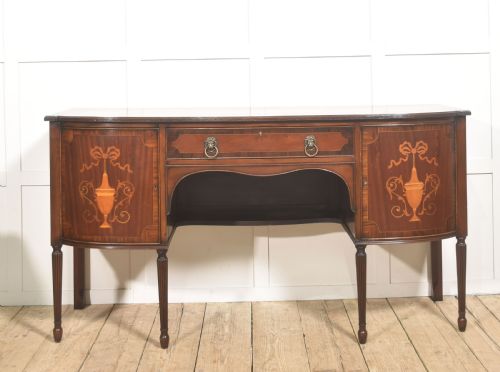
The assortment spans diverse forms including Pembroke tables, serving tables, and specialised writing desks equipped with multiple drawers. Makers across the eighteenth, nineteenth, and early twentieth centuries adapted these proportions for varied domestic uses from dining rooms to ladies writing chambers. These tables balance practical storage through frieze drawers with light architectural framing that avoids heavy ornamentation.
Materials and construction
Cabinet makers relied primarily on mahogany as the structural timber, frequently selecting fine-grained sections for primary surfaces. Tops and drawer fronts often incorporate contrasting veneers such as satinwood or rosewood to create crisp borders.
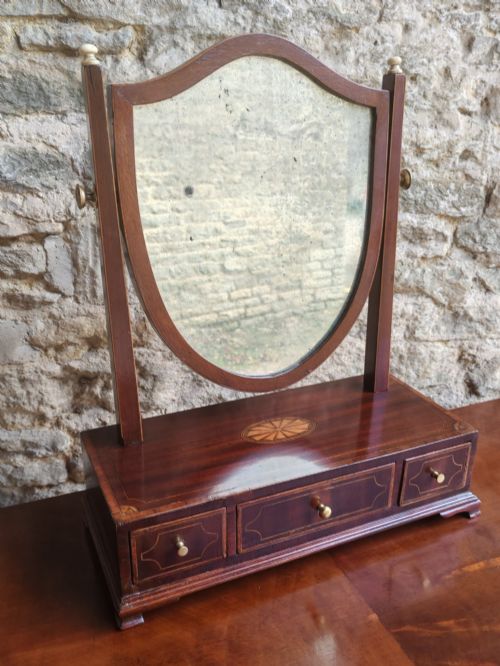
Inlay techniques defined the aesthetic, utilising boxwood, bone, and specialised cross-banding like partridge wood. Brass hardware including drop handles and key escutcheons complemented the pale stringing against dark mahogany fields.
Several tables include secret compartments hidden behind decorative satinwood cross-banding designed to keep private correspondence safe.
Assessing quality and craftsmanship
The distinction between standard examples and superior work rests on the precision of the timber selection and inlay execution. Finer pieces demonstrate seamless integration of contrasting satinwood or boxwood bandings that follow precise geometric paths without gaps.
Structural integrity of the drawer construction and the crispness of turned legs or reeded supports indicate workshop standards. Secondary woods and the subtlety of hand-applied decorative details elevate individual pieces above mass-produced revival items.
Gillows·Willmington and Cope
The Sheraton Style Drawer Table Glossary
- Cross-banding
- A border veneer applied around the perimeter of a tabletop or drawer front where the grain runs perpendicular to the central panel.
- Satinwood
- A lustrous yellow timber prized for its contrasting inlay work and bright decorative panels.
- Pembroke table
- A small drop-leaf table featuring hinged flaps on opposing sides and frequently equipped with a single frieze drawer.
- Stringing
- Thin lines of contrasting wood or bone inlaid into channels cut into the primary timber surface to form geometric borders.
Sheraton Style Drawer Table: Frequently Asked Questions
What is a sheraton style drawer table?
These tables are case furniture pieces featuring one or more frieze drawers defined by the straight lines, classical proportions, and delicate inlay work characteristic of late eighteenth-century design.
They serve as functional writing desks, side tables, or serving surfaces created across multiple periods including the Georgian era and later Edwardian revivals.
How do I date a sheraton style drawer table?
Dating relies on examining secondary woods, construction methods, and the specific style of inlay and brass hardware used on the piece.
While original eighteenth-century examples display period-specific joinery, later nineteenth-century and Edwardian revival pieces often utilise machine-cut elements alongside traditional decorative motifs.
Where were these tables used originally?
Original examples served diverse functions in principal rooms, functioning as writing surfaces in parlours, serving tables in dining spaces, or dressing tables in bedrooms.
Their relatively compact proportions allowed them to be positioned easily against walls or used freestanding within domestic interiors.
How do I care for mahogany and satinwood?
Preserving these surfaces requires maintaining stable indoor humidity levels away from direct sunlight and artificial heat sources that can dry out historic veneers.
Regular dusting with a soft cloth and occasional application of appropriate conservation wax protects the polished finish and delicate inlaid stringing.