
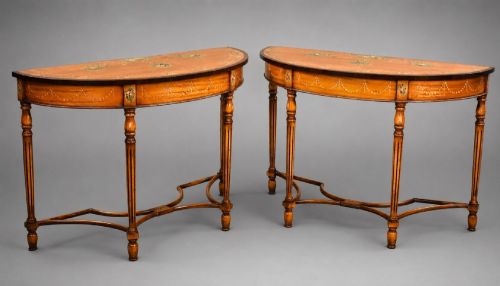
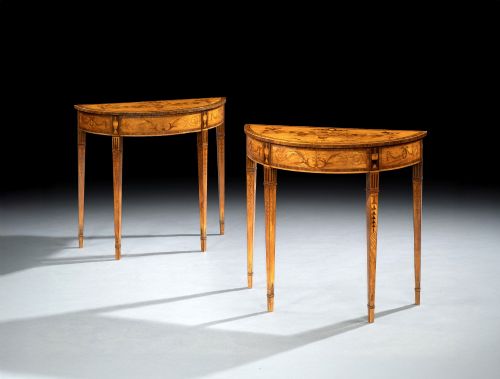
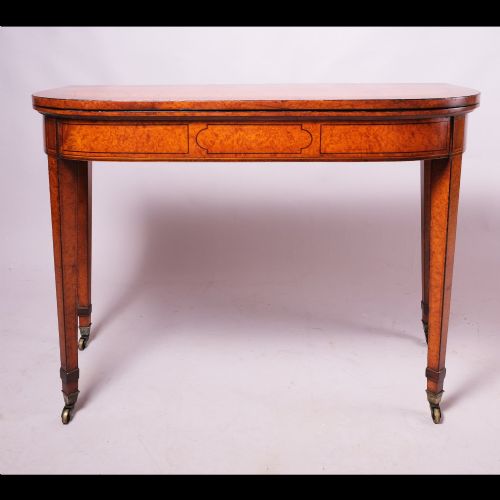
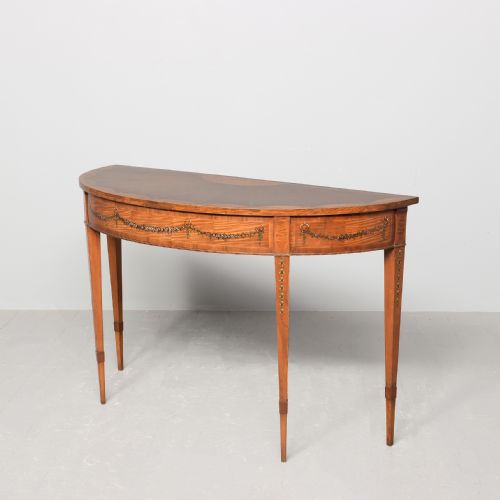




Sheraton Style Demi Lune
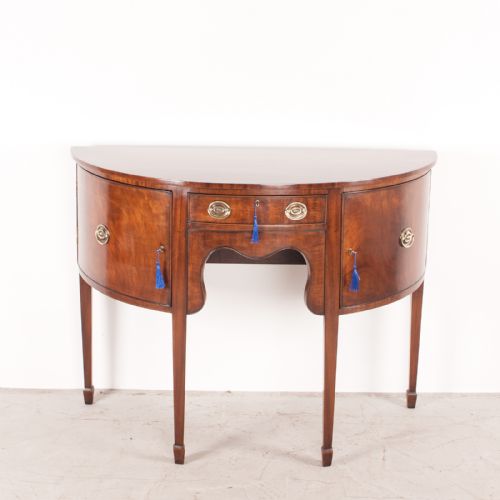
Sheraton style demi lune furniture brings graceful half-round forms and classical geometry into a room through refined satinwood and mahogany.
Sheraton Style Demi Lune
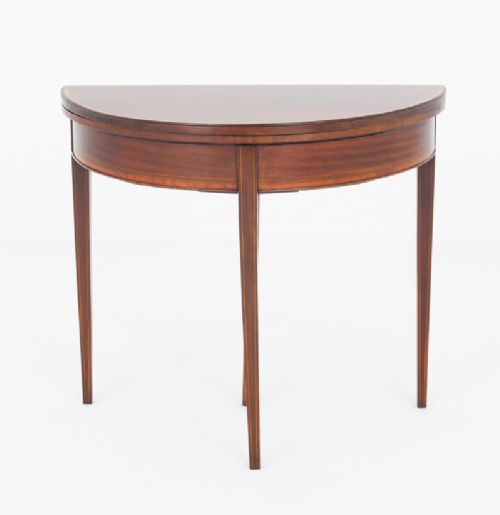
When you search for Sheraton style demi lune furniture, you encounter half-moon tables and cabinets designed to stand flat against a wall. The most common form on this page is the console or side table, often with a fold-over top intended for cards, tea or games. These pieces emerge from 18th century George III origins through to 19th century Sheraton Revival interpretations and later Edwardian variations.
The assortment includes side cabinets, sideboards, and display furniture alongside the predominant tables. Origins stretch from the Georgian period through Victorian times and into the early 20th century, capturing both original neoclassical craftsmanship and later revivals in satinwood and mahogany.
Materials and construction
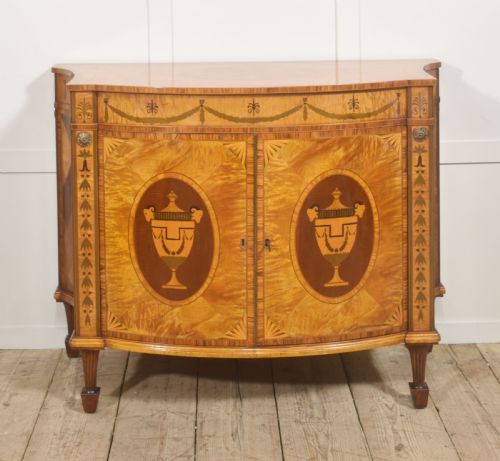
Cabinetmakers relied on mahogany and satinwood as primary timbers, often enhanced by contrasting boxwood inlay and delicate crossbanding. Surfaces frequently display hand-painted enamel panels, floral motifs, and classical designs applied directly to the wood.
Inlaid stringing and marquetry define the surface ornamentation, creating geometric borders and symmetrical patterns that emphasise the curved perimeter. Structural stability is maintained through disciplined joinery suited to the half-round footprint, whether supporting a fixed top or a hinged fold-over leaf.
Some card tables hide their extra swing legs so well you only notice them when guests arrive.
Quality differences
The standard of execution in the painted panels and marquetry separates simpler examples from exceptional pieces. Finer works display meticulous hand-painted detail with crisp outlines and subtle shading on classical motifs, whereas lesser items rely on simpler, heavier surface decoration.
Timber selection and the precision of the boxwood inlay dictate overall refinement. Superior construction shows seamless matching of grain veneers across the curved top and tight, clean joinery along the apron and leg connections.
The Sheraton Style Demi Lune Glossary
- Demi-lune
- A half-moon shape used for console tables and cabinets designed to sit flush against a wall. This profile became a staple of neoclassical interior design.
- Satinwood
- A pale, lustrous timber native to tropical regions, prized for its golden sheen and smooth grain. It served as a favoured ground for painted decoration during the Georgian and revival periods.
- Marquetry
- The art of applying small pieces of veneer to a structure to form decorative patterns or pictorial scenes. Craftsmen used various tinted woods to achieve tonal contrast.
- Crossbanding
- A strip of veneer applied to the border of a table top or drawer front with the grain running perpendicular to the main surface. This technique creates a neat framing effect.
- Stringing
- Thin lines of contrasting wood inlaid into channels cut into the primary surface. It outlines panels and edges to accentuate the geometric form of the piece.
Sheraton Style Demi Lune: Frequently Asked Questions
How do I use a demi lune table?
These half-round tables sit flat against a wall, making them practical for narrow hallways, entrance spaces, or living rooms where floor space is limited. Many feature fold-over tops that open to function as card or games tables when entertaining.
Their curved profile softens the linear corners of a room while providing a useful surface for lamps, decorative objects, or serving tea.
What is the difference between George III and Sheraton revival?
George III pieces date from the second half of the 18th century into the early 19th century, representing original neoclassical design and period construction. Sheraton revival pieces date from later periods, particularly the late 19th and early 20th centuries, recreating those earlier proportions and decorative motifs.
Both categories utilise satinwood and mahogany, but revival pieces reflect the manufacturing techniques and material availability of their own time.
Are painted satinwood tables original?
Many satinwood demi lune tables feature hand-painted classical panels, urns, or floral swags that date to the original manufacture in the 18th or 19th centuries. Painters applied pigments directly to the timber before sealing the surface with clear varnish.
Distinguishing original painted work involves examining how the pigment has aged and settled into the grain over decades of use.
How do I care for antique satinwood?
Satinwood surfaces require gentle maintenance to preserve the pale timber and any delicate painted decoration. Keep pieces away from direct sunlight and excessive heat sources to prevent the wood from drying out or fading.
Dust regularly with a soft, dry cloth and avoid applying modern silicone polishes, which can damage historic finishes.