


Sheraton Satinwood Box
These pieces gather under the banner of the sheraton satinwood box, presenting refined marquetry and light timbers that elevate any room.
Sheraton Satinwood Box
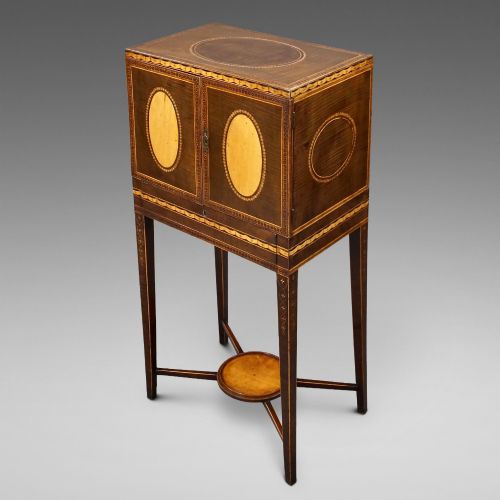
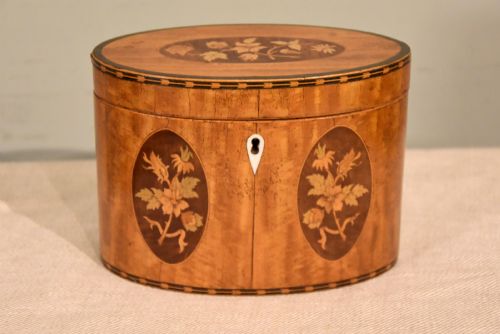
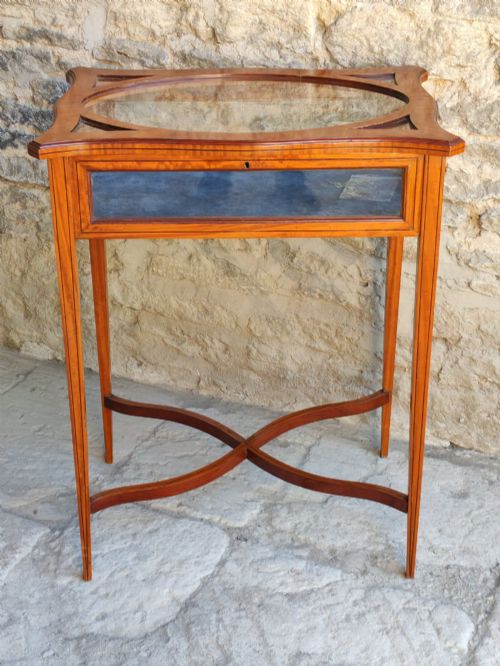
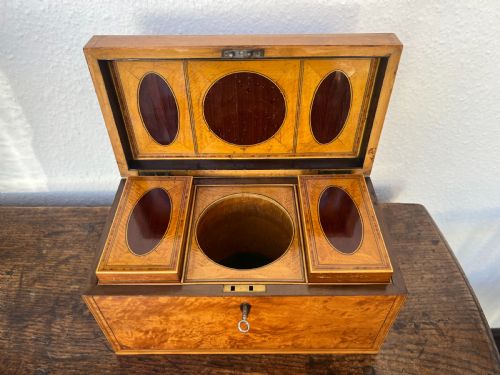
A sheraton satinwood box encompasses several distinct forms designed for practical storage and display, appearing most frequently as tea caddies, work boxes, and small decorative caskets. These pieces emerge from the eighteenth century onwards, carrying the characteristic light timber surfaces associated with the Sheraton style.
The selection here spans compact tea caddies with butterfly or shell inlays alongside larger cabinets and tables influenced by the same neoclassical design vocabulary. Buyers encounter both Georgian originals and later revival pieces from the Edwardian era, all sharing a focus on figured veneers and delicate stringing.
Assessing Quality and Execution
The distinction between tiers rests primarily on the crispness of the inlay work and the choice of timber figuring. Superior examples display tightly fitted contrasting woods with minimal filler, where the grain of the satinwood catches the light evenly across every panel.
Proportion and the retention of original interior fittings heavily influence the standing of an item. Pieces that maintain their uncompromised structural integrity and genuine period brassware command greater appreciation than those with replaced elements or heavy restoration.
Current listings feature pieces spanning the eighteenth century through the Edwardian era, utilising satinwood, harewood, mahogany, and brass.
The Sheraton Satinwood Box Glossary
- Satinwood
- A durable tropical timber known for its lustrous, golden-yellow appearance and satin-like sheen. Cabinetmakers valued it for decorative veneers during the eighteenth and nineteenth centuries.
- Marquetry
- The art of applying pieces of veneer to a structure to form decorative patterns or pictures. This technique relies on contrasting colours of wood, bone, and shell.
- Harewood
- Sycamore timber that has been stained green using iron sulphate solutions. It provides a distinct greyish-green hue frequently seen in Georgian and neoclassical inlays.
- Cheveret
- A small portable writing table or stand equipped with a bookshelf or drawers above. This form appeared in the late eighteenth century for domestic use.
- Stringing
- A narrow band of contrasting timber inlaid into flush channels across a furniture surface. It defines borders and panel shapes on classical boxes.
Sheraton Satinwood Box: Frequently Asked Questions
How do I date a satinwood box?
Dating relies on examining the construction methods, timber choices, and specific inlay motifs present on the piece. Eighteenth-century examples typically show hand-cut dovetails and older secondary woods beneath the satinwood veneer.
Later revival items from the Edwardian period often employ different interior hardware and machine-cut elements while imitating the earlier classical proportions.
What were these boxes originally used for?
Many of these boxes served specific domestic functions such as storing precious tea leaves, sewing implements, or writing stationery. Tea caddies often featured internal lidded compartments to keep expensive leaves dry and secure.
Stationery boxes and workboxes similarly organised letters, threads, and small personal valuables within compartmentalised wooden trays.
How do I care for satinwood furniture?
Satinwood benefits from stable indoor environments away from direct sunlight and excessive moisture fluctuations. Regular dusting with a soft, dry cloth preserves the polished surface without building up residue.
Applying microcrystalline wax occasionally helps nourish the historic timber and protect the delicate veneer from drying out over time.
Are converted boxes still desirable?
Converted items, such as tea caddies or knife boxes adapted for stationery, represent historical changes in household utility. Collectors often appreciate these alterations when executed with period materials and craftsmanship.
The quality of the conversion work and the preservation of the original exterior veneer remain key considerations for authenticity.