

Sheraton Mahogany Vitrine
A sheraton mahogany vitrine brings neoclassical restraint and fine timber into the drawing room to display cherished porcelain and glass.
Sheraton Mahogany Vitrine
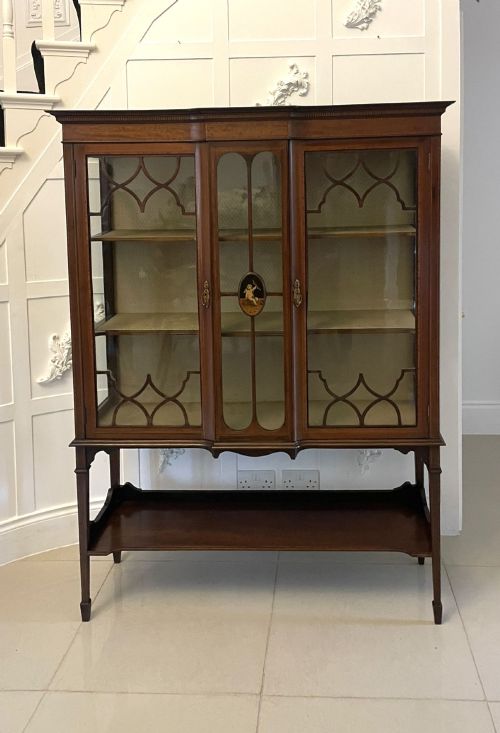
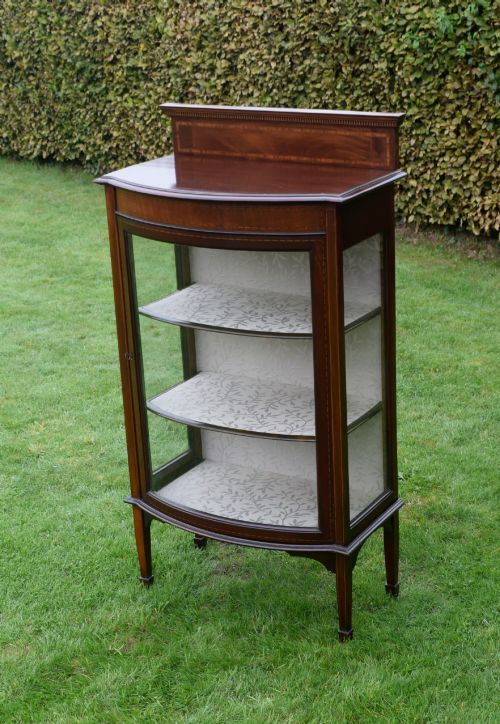
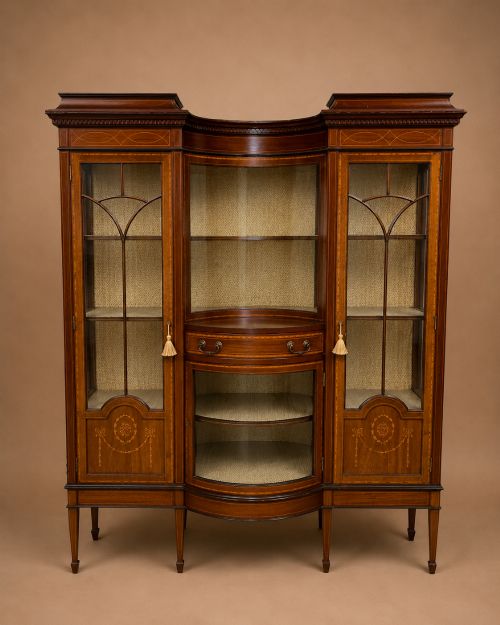
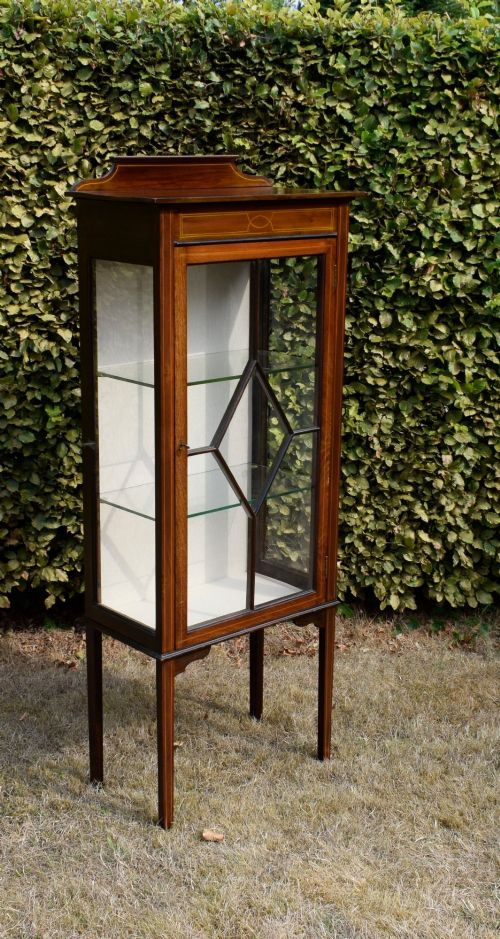
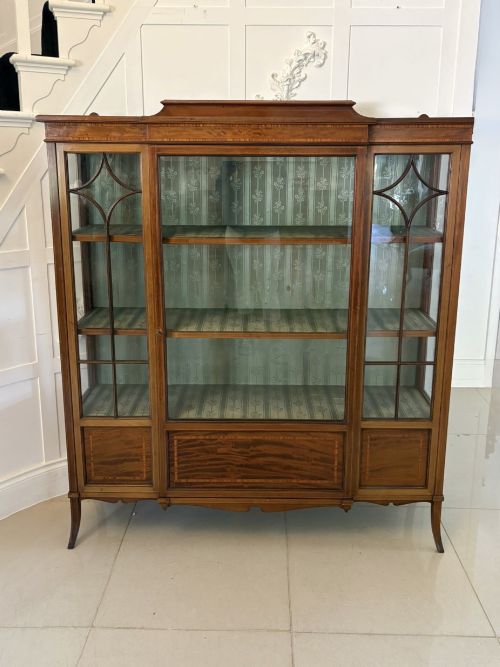
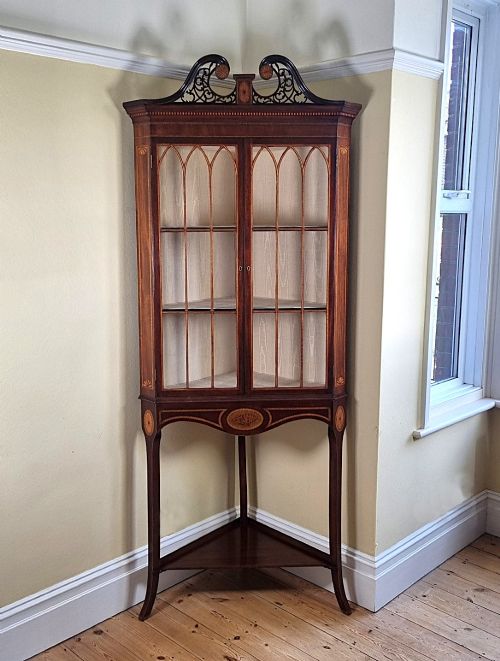
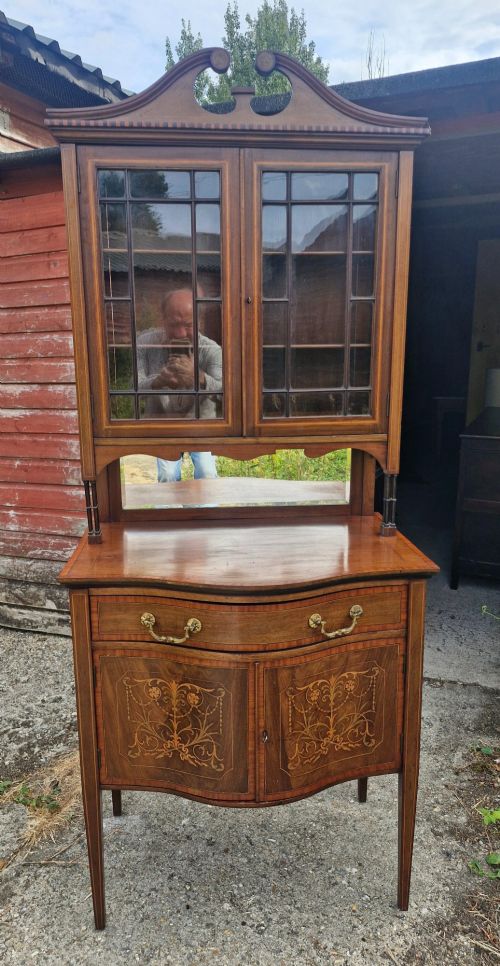
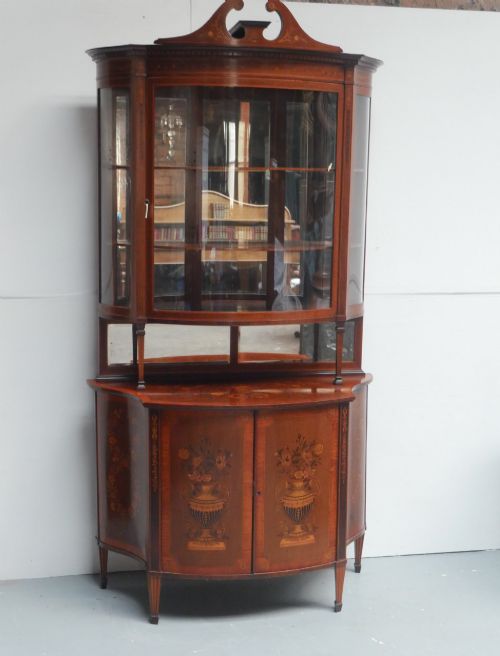
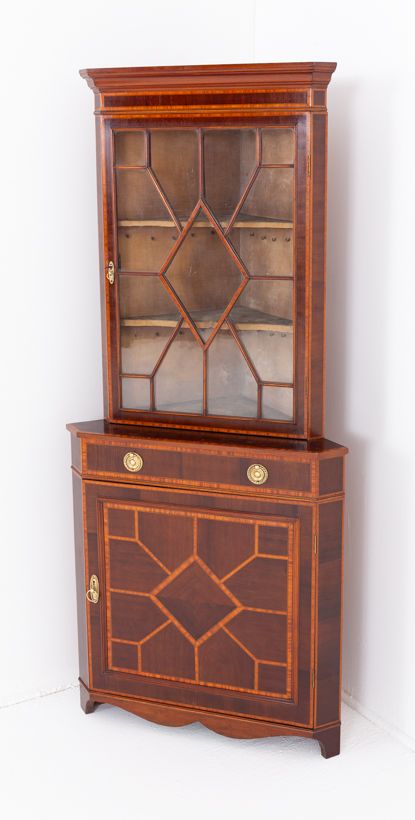
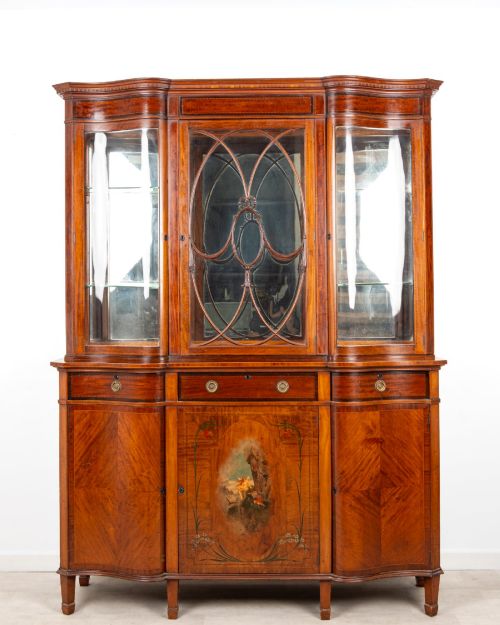
A sheraton mahogany vitrine combines glazed display doors with rich cabinetwork spanning the Georgian period through to the Edwardian Sheraton Revival. These pieces arrive in various forms including corner cabinets, breakfront bookcases, and freestanding bow-front cabinets designed to showcase objects of interest.
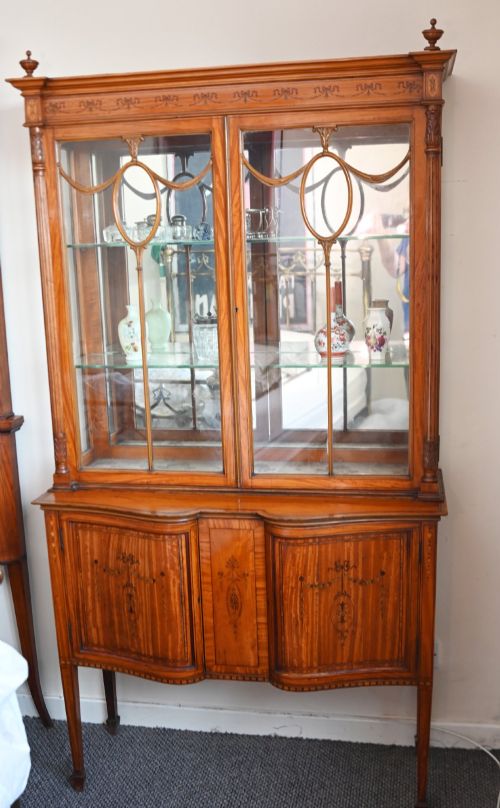
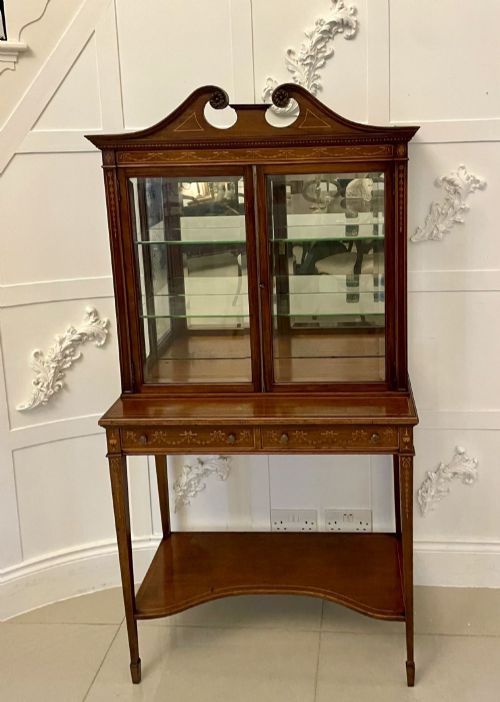
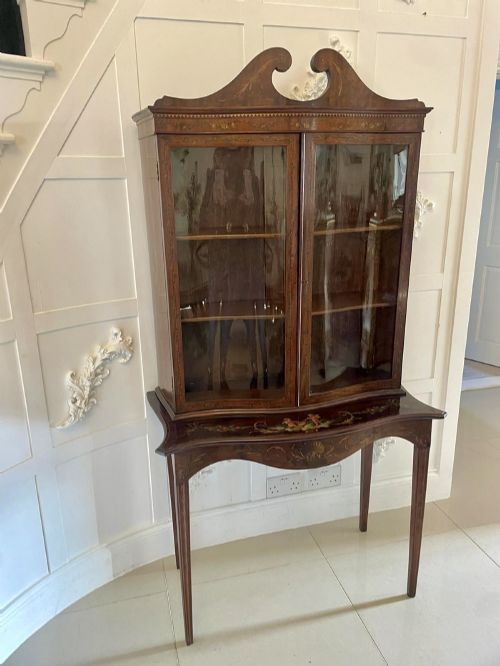
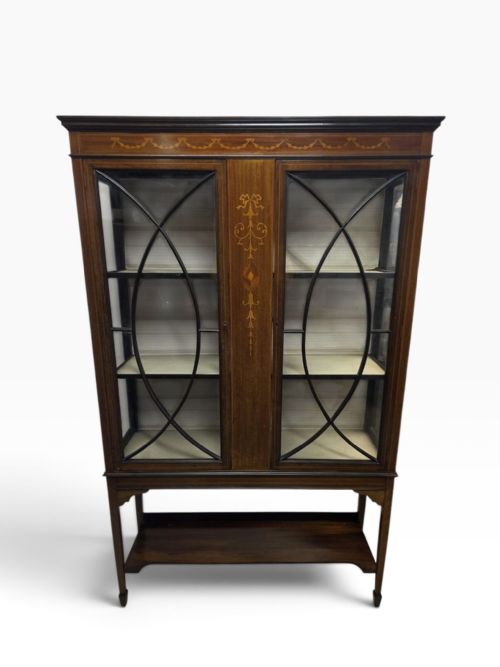
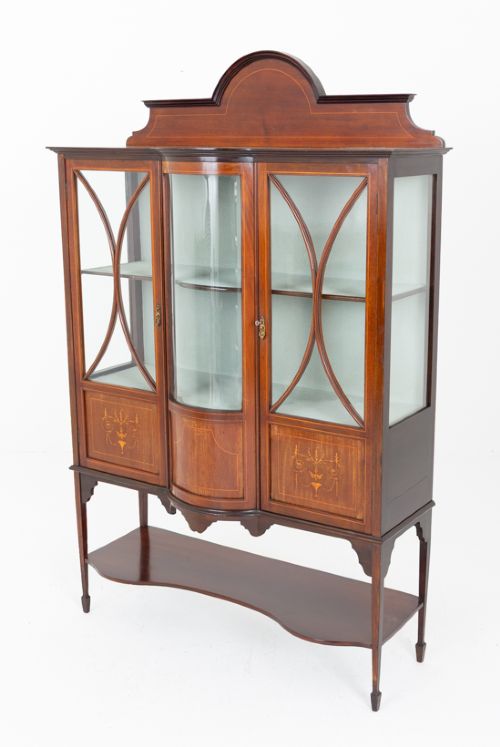
The pieces seen on this page predominantly date from the Edwardian era and the late nineteenth century, adopting earlier neoclassical lines. Buyers encounter upright single-door cupboards, two-door cabinets, and two-part display units fitted with glass panels.
Makers such as Edwards and Roberts contribute to this heritage through marquetry cabinets and refined timber construction. The overarching form serves to elevate the interior by housing collections behind glass and delicate glazing bars.
Materials and construction
Makers built these cabinets primarily using solid and veneered mahogany, frequently enriched with satinwood inlay and fruitwood marquetry. Structural integrity relied on traditional joinery whilst decorative surfaces depended on precise contrasting veneers.
Glazing takes the form of straightforward rectangular panes or intricate astragal glazing bars framing the opening. Interiors often incorporate fabric lining alongside glass shelving to support displayed items.
Listings span the Georgian, Victorian, and Edwardian eras, incorporating mahogany, satinwood, fabric, and brass.
Judging cabinet quality
Quality rests upon the crispness of the inlay work and the depth of the mahogany grain rather than mere size. Finer examples display meticulous marquetry and careful matching of timber veneers across the facade.
The delicacy of the glazing bars and the presence of original painted decoration or brass hardware distinguish superior items. Cabinets retaining original glass and balanced proportions command greater appreciation.
Edwards and Roberts
The Sheraton Mahogany Vitrine Glossary
- Vitrine
- A glass-fronted cabinet designed for the display of curiosities and porcelain. These pieces prioritize visibility through glazed doors and sides.
- Astragal
- A small moulding used to divide panes of glass within a sash or door. These wooden bars form geometric patterns across cabinet fronts.
- Marquetry
- Decorative veneer work forming pictures or patterns using various woods. Craftsmen assemble thin pieces of timber like fruitwood and satinwood into geometric designs.
- Breakfront
- A piece of furniture whose central section projects forward from the flanking wings. This architectural arrangement adds depth to large display cabinets.
- Bijouterie
- A low display case or cabinet intended for small precious objects and jewellery. These tables and cabinets feature glazed tops or upper sections.
Sheraton Mahogany Vitrine: Frequently Asked Questions
What is a sheraton mahogany vitrine used for?
These cabinets were historically designed to house and display collections of fine porcelain, glass, and curiosities within the principal rooms of a home. The glass panels protected delicate items from dust whilst permitting full visibility.
Today they continue to serve their original purpose, functioning as focal points for personal collections while introducing period character into domestic spaces.
How do I date a sheraton mahogany vitrine?
Dating relies upon examining the timber, construction methods, and stylistic cues present in the cabinetwork. Pieces range from eighteenth-century Georgian originals to late nineteenth-century Victorian and Edwardian revival interpretations.
Revival pieces often feature characteristic Edwardian satinwood inlay and lighter framing techniques compared to heavier Victorian counterparts, while original Georgian pieces show distinct period construction.
Where should I place a corner cabinet?
Corner cabinets are engineered to fit snugly into room angles, making them practical solutions for awkward junctions or smaller spaces. They draw the eye upward and utilise vertical wall areas that might otherwise remain empty.
Placing them near a light source enhances the visibility of the interior contents through the glass doors.
Are the glass shelves and panels original?
Many cabinets retain their early glass panes and original shelving, though replacement glass occurs due to the fragile nature of antique display furniture. Examining the glass for subtle imperfections, bubbles, and wave patterns helps determine originality.
Internal fabric linings are frequently updated during restoration to suit modern decorative preferences.