


Sheraton Dining Chairs
Sheraton dining chairs bring refined late-eighteenth-century elegance and slender neoclassical proportions into the modern dining room.
Sheraton Dining Chairs
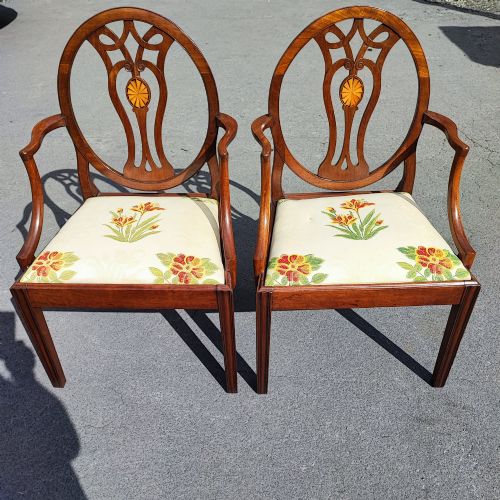
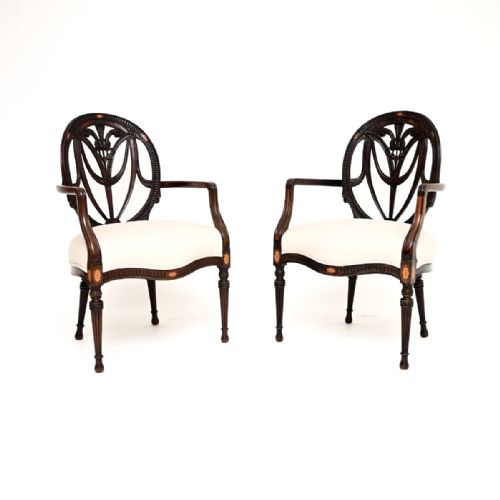
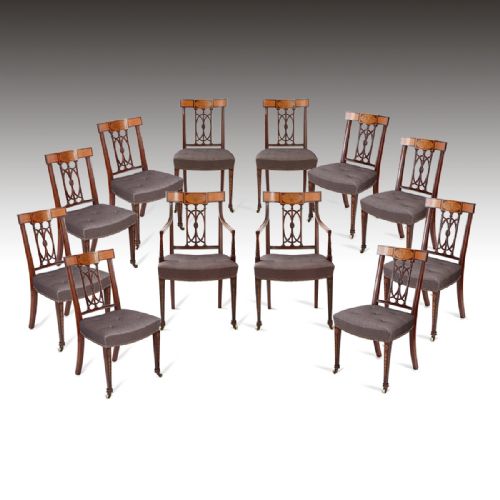
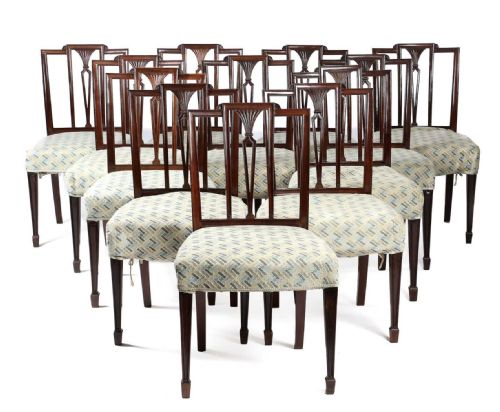
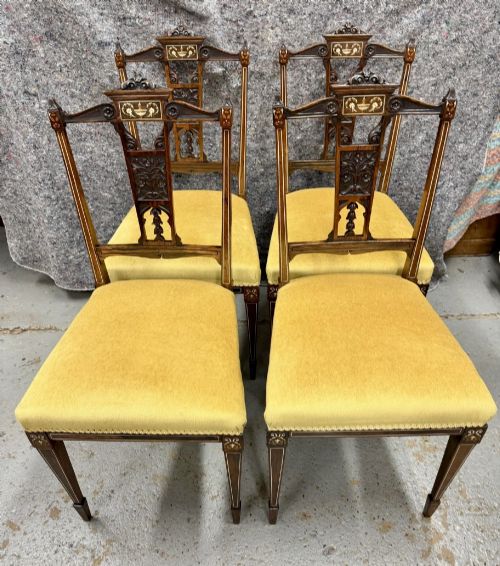
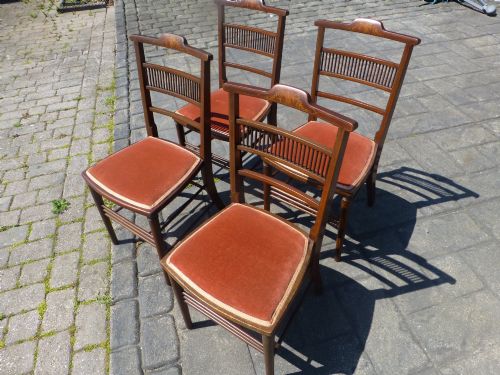
Sheraton dining chairs comprise quintessential neoclassical seating forms originally conceived during the late eighteenth century under the influence of designer Thomas Sheraton. Buyers searching for sheraton dining chairs encounter both authentic late-Georgian examples and later Edwardian Sheraton Revival interpretations produced around nineteen-hundred.
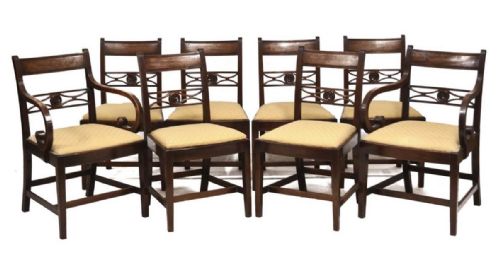
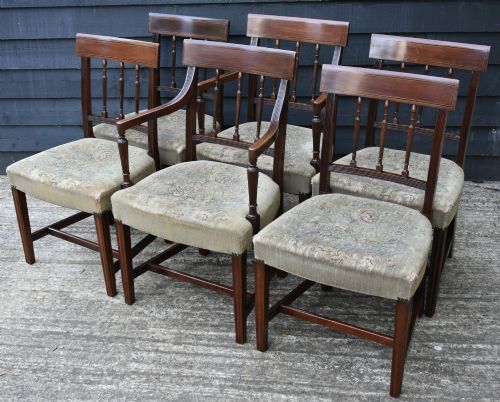
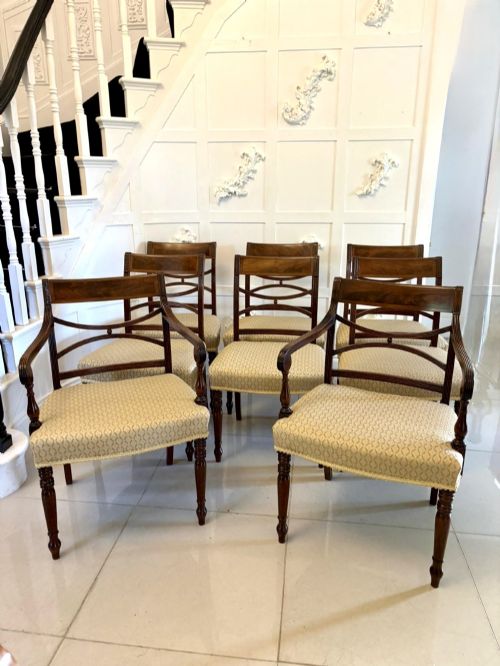
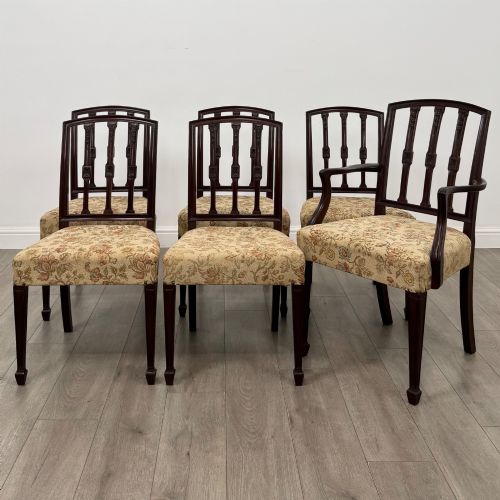
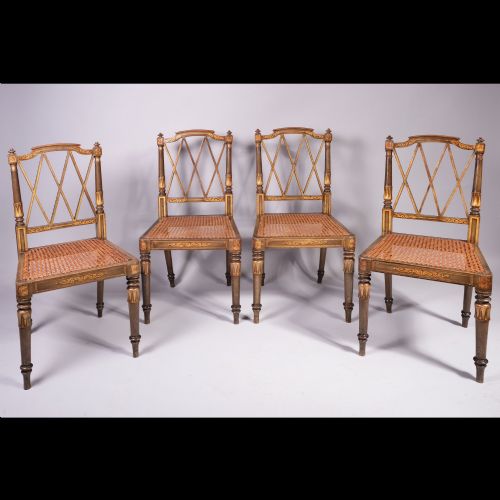
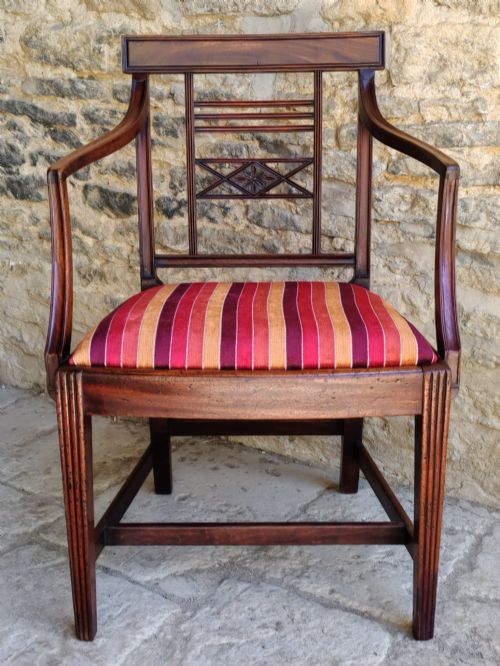
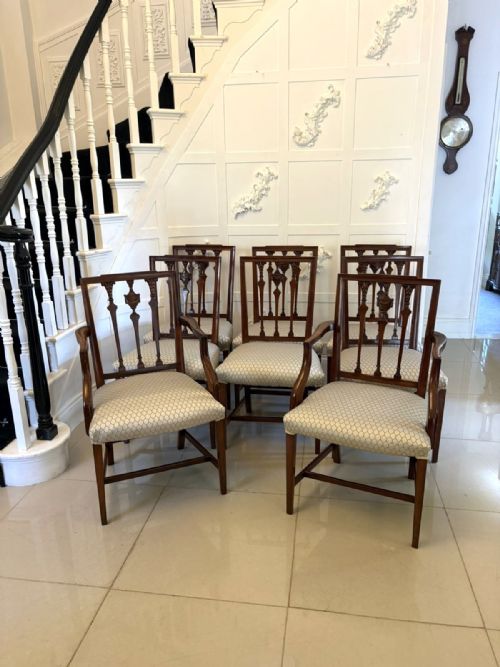
The form typically encompasses dining chairs, armchairs, and carvers featuring characteristic rectilinear or shield-shaped backs with delicate vertical splats. Sets often appear in configurations of four, six, eight, or larger groupings suited for traditional dining spaces.
Materials and Construction
Cabinetmakers relied primarily on solid mahogany for its strength and rich grain, frequently embellishing surfaces with contrasting satinwood inlay and marquetry. Frame construction involved precise joinery to support slender uprights and tapered legs without compromising structural integrity.
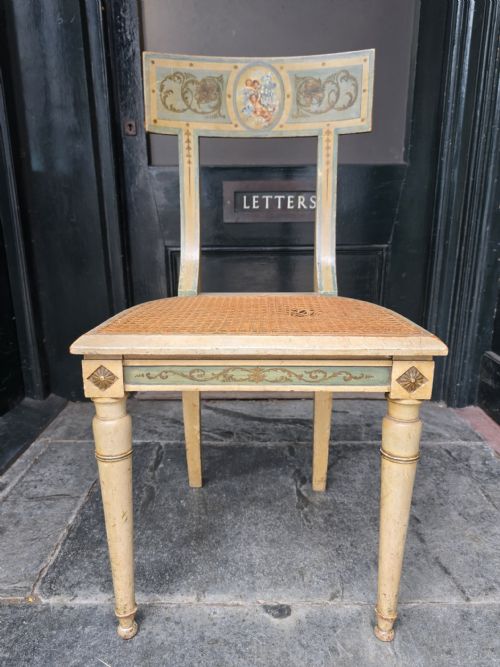
Upholstery materials such as fabric, velvet, and cane insert seats were integrated into the frames, ranging from traditional drop-in pads to newly upholstered padded cushions.
Some provincial makers swapped fine mahogany for local elm, creating sturdy country cousins that still pulled up to the farmhouse tea.
Assessing Quality and Execution
Quality rests upon the crispness of the carved details, the subtlety of the contrasting wood inlays, and the integrity of the original timber frame. Superior sets maintain matching grain patterns and uniform proportions across every single chair and carver.
Later revivals demonstrate varying degrees of craftsmanship, where master-carved Edwardian interpretations rival eighteenth-century outputs, while simpler provincial elm versions prioritize rustic vernacular utility over refined neoclassical geometry.
James Garvie & Sons
The Sheraton Dining Chairs Glossary
- Shield back
- A chair back shaped like a classic heraldic shield, frequently filled with carved vertical splats or wheatsheaf motifs.
- Carver
- An armchair designed with open arms to match a set of single dining chairs, traditionally placed at the heads of the table.
- Satinwood
- A pale, dense exotic timber utilised extensively for contrasting stringing and decorative inlaid motifs on mahogany furniture.
- Sheraton revival
- A late nineteenth and early twentieth century design movement that recreated the lightness and neoclassical geometry of eighteenth-century Sheraton pieces.
- Splat
- The vertical central strip of wood connecting the seat of a chair to the top rail of the backrest.
Sheraton Dining Chairs: Frequently Asked Questions
How do I distinguish eighteenth-century originals from Edwardian revivals?
Original eighteenth-century pieces exhibit distinct timber oxidation, hand-cut joinery marks, and wear patterns consistent with prolonged domestic use.
Edwardian Sheraton Revival pieces, produced around nineteen-hundred, typically feature machine-assisted precision and cleaner internal framing while retaining the classic neoclassical aesthetic.
What is the difference between single chairs and carvers?
Single chairs are armless seats designed to fit compactly side by side along the flanks of a dining table.
Carvers feature open armrests and offer a wider seat, traditionally intended for the host and hostess at either end of the table.
How should I care for antique mahogany and inlaid surfaces?
Protect the wood from direct sunlight and sudden humidity fluctuations to prevent timber shrinkage and veneer lifting.
Apply microcrystalline wax periodically to nourish the polish and maintain the natural patina without sealing the pores.
Can I mix Sheraton dining chairs with a modern table?
The slender tapered legs and understated neoclassical geometry allow these chairs to complement contemporary glass, metal, or plain timber tables.
The restrained proportions prevent the seating from overwhelming modern architectural dining spaces.