



Sheffield Plate Tureen
Sheffield plate tureen pieces bring the substantial weight and warm glow of early fusion metalwork to the dining table.
Sheffield Plate Tureen
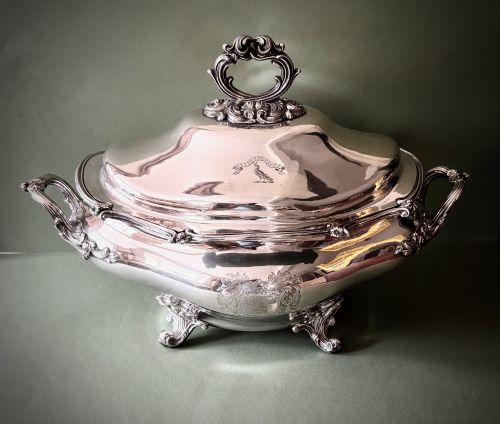
A sheffield plate tureen is a vessel designed for serving soup, sauce, beef, or entrees, originating primarily from the Georgian and Regency periods. The pieces appearing most frequently take the form of lidded sauce tureens, soup tureens, and warming dishes dating from around eighteen hundred through the nineteenth century.
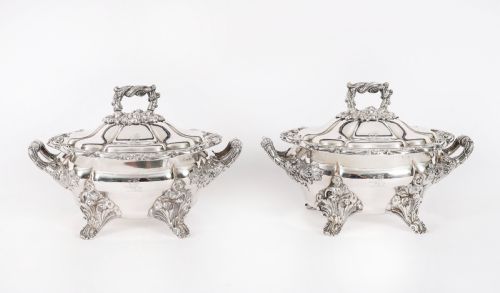
Buyers encounter both single items and matched pairs or sets, often featuring oval or square bodies with domed covers. Many incorporate integrated warming stands or feature engraved family crests and coats of arms.
Materials and construction methods
These items are constructed using the fusion technique of Old Sheffield plate, which fuses a thin layer of silver to a thicker base metal core of copper. This process creates a durable material that allows the underlying copper to occasionally show through at high points and edges over time.
Makers shaped the fused metal sheets into hollowware vessels, soldering on cast silver handles, feet, and decorative borders that provide structural definition and visual contrast.
Sheffield Plate Tureen Retail Price Guide 2026
Typical asking prices for sheffield plate tureen among the pieces listed under this phrase on Sellingantiques today, from the lower quarter to the upper quarter. They describe what is for sale here now, not the wider market.
Listings feature items from the Georgian, Regency, and nineteenth-century periods, constructed in silver plate, Old Sheffield Plate, and copper.
Assessing quality in early serving vessels
Quality rests in the crispness of the chased and applied decoration, the integrity of the silver layer over the copper substrate, and the presence of maker marks. Superior examples retain their original applied silver wire borders and cast handles without excessive wear down to the base metal.
The scale and complexity of the object also dictate standing, ranging from simple sauce vessels to large warming tureens fitted with stands and elaborate armorial crests.
Matthew Boulton·Cresswick·Dan Holy
The Sheffield Plate Tureen Glossary
- Old Sheffield Plate
- A composite material made by fusing a sheet of silver to a copper ingot, developed in the eighteenth century before electroplating replaced the method.
- Entree Dish
- A shallow vessel designed for serving specific courses at dinner, frequently found with a domed cover that can double as a separate serving dish.
- Warming Tureen
- A specialised serving vessel equipped with a compartment for hot water or coals to keep food heated during long meals.
- Base Metal
- The underlying metal core, typically copper, revealed when the fused silver layer wears thin from polishing or age.
Sheffield Plate Tureen: Frequently Asked Questions
How do I use a sheffield plate tureen today?
These vessels suit modern dining as centrepieces for serving soups, sauces, or side dishes during formal meals. Their historical presence adds gravitas to a dining room sideboard when not in active use.
Care requires gentle hand washing with non-abrasive cleaners to preserve the remaining silver layer over the copper base. Avoid harsh chemical dips that strip the character built over centuries.
What is the difference between a sauce tureen and a soup tureen?
Sauce tureens are smaller vessels intended for gravies and condiments, usually accompanied by matching ladles and matching small stands. Soup tureens are substantially larger, built to hold enough liquid for multiple guests at a formal Georgian dinner.
Both forms share similar manufacturing traits, employing fused silver and copper with cast decorative handles. Collectors often seek matched pairs of the smaller sauce variants for symmetry on the table.
How can I tell if a piece is genuine Old Sheffield Plate?
Genuine Old Sheffield plate exhibits subtle traces of copper showing through the silver layer on high friction points, such as edges and raised relief details. Electroplated items lack this physical fusion sandwich and wear differently.
Examining the weight and construction seams reveals the older manufacturing method of fused metal sheets rather than deposited silver over a modern base metal.
What do crests and coats of arms signify on these tureens?
Engraved crests and coats of arms indicate that the serving vessel was commissioned for a specific aristocratic or wealthy household. These heraldic markers often allow researchers to trace the item back to its original family.
Pieces bearing distinguished provenances or military connections hold a particular appeal for collectors seeking documented history alongside fine metalwork.