


Antique Silver Tureen Lid
An antique silver tureen lid is a survivor of a grand dining service, offering a glimpse into formal tables of the past.
Antique Silver Tureen Lid
When you search for an antique silver tureen lid, you are looking at the protective top half of a formal serving vessel designed to keep soups, sauces, or meats warm at the dining table. These individual lids survive from Georgian, Victorian, Edwardian, and later periods, often separated from their original bodies through centuries of domestic use.
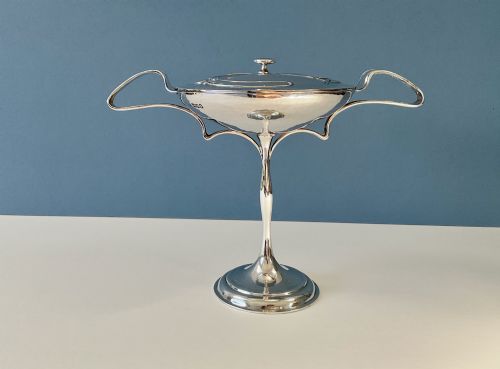
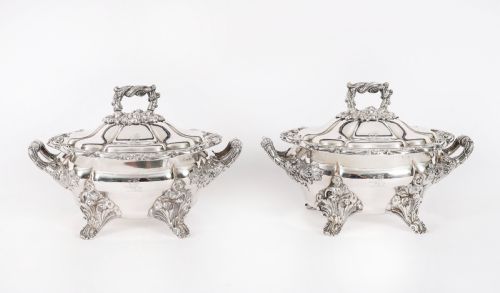
On this page, the pieces you meet span solid sterling silver and silver plate, taking rectangular, oval, and circular forms. Styles range from restrained Georgian neoclassical designs to elaborate Edwardian and Art Nouveau creations.
Materials and construction
Silversmiths formed the earliest pieces from solid sterling silver or utilised Old Sheffield Plate, a process fusing a thin sheet of silver to a copper base. As technology progressed into the nineteenth and twentieth centuries, makers adopted nickel silver and applied electroplating techniques, known as EPNS.
Construction involved hammering, casting, or rolling metal sheets into shape, then hand-soldering handles, finials, and decorative borders. Silversmiths frequently added engraved family crests or decorative chased motifs to the upper surface.
Measures of quality
Quality rests in the weight of the metal, the crispness of the chased or cast ornamentation, and the integrity of the base material beneath any plating. A heavier piece retains heat better and indicates a more substantial original commission.
The finesse of the handle or finial attachment and the balance of the proportions separate standard production items from exceptional workshop outputs. Marks indicating renowned makers or clear hallmarks provide further distinction.
Tiffany and Co·Mappin and Webb·Daniel and Arter·Walker and Hall·Elkington·Matthew Linwood·William Hutton and Sons·Cresswick·Christofle / Gallia·Benjamin Laver·William Grundy·Hamilton and Inches·JC Moore
The Antique Silver Tureen Lid Glossary
- Old Sheffield Plate
- An early method of fusing silver to copper before the invention of electroplating. It often reveals faint hints of copper showing through where decades of polishing have worn the surface.
- EPNS
- Electroplated nickel silver, a common nineteenth and twentieth-century manufacturing method. This process coated a base alloy with a thin layer of silver using an electrical current.
- Entree dish
- A shallow serving vessel with a removable lid, used for serving individual courses at formal meals. These dishes are frequently rectangular or oval in shape.
- Finial
- The decorative knob or handle positioned on top of the lid. They are often cast in floral, figural, or geometric forms to allow a secure grip.
- Chasing
- A metalsmithing technique where the artisan hammers the metal from the front to push the design inward and create raised surface relief. This adds texture and visual depth to the metal.
Antique Silver Tureen Lid: Frequently Asked Questions
How were tureen lids used?
These lids covered large serving vessels that held soups, sauces, or entrees at the dining table. They kept food warm and trapped aromas until the host served guests.
Servants lifted the lids at the table using the cast handle or finial on top. This kept the dining room elegant and the meal at the correct temperature.
How do I live with an antique lid?
You can display a solitary lid on a sideboard, wall bracket, or plate rack to showcase its engraving and metalwork. Many collectors enjoy them as sculptural decorative objects in their own right.
Care involves gentle cleaning with appropriate silver polish to maintain the finish without removing the underlying plating or hallmarks.
How can I tell the period?
Stylistic clues such as neoclassical restrained lines point to the Georgian era, while heavy ornamentation often indicates Victorian taste. Edwardian and Art Deco pieces show sleeker or more organic lines.
Maker marks, registry numbers, and silver hallmarks stamped into the metal provide the most accurate dating evidence. These stamps reveal the exact year of manufacture and the workshop responsible.
What is Old Sheffield Plate?
Old Sheffield Plate is an early composite material created by fusing a thin layer of sterling silver onto a thicker copper core. Makers used this technique before electroplating became common in the nineteenth century.
Under magnification or around edges, you may spot a rosy copper tint where the silver layer has thinned from age and use. This characteristic is a sign of authenticity for collectors.