




Antique Silver Chafing Dish
An antique silver chafing dish brings table-side warmth and classic dining theatre to your home, selected from Georgian and Victorian serveware.
Antique Silver Chafing Dish
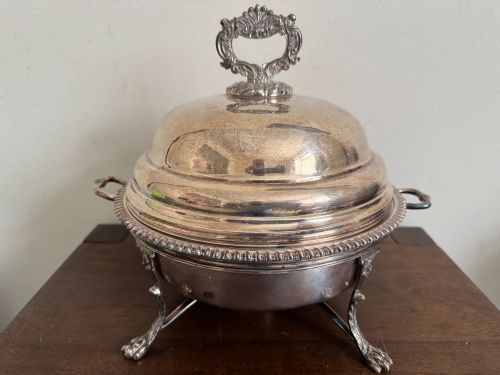
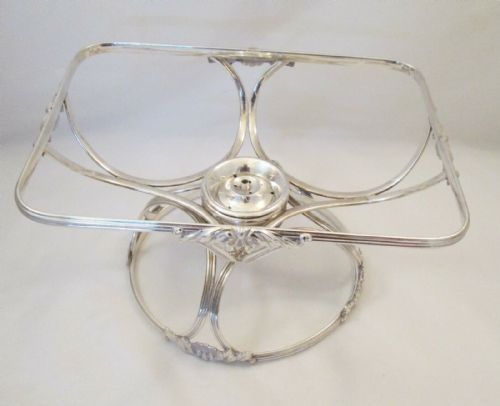
The antique silver chafing dish is a dedicated table-side vessel designed to keep food warm during service, encompassing serving dishes, food warmers, and dish warmers. You encounter these across Georgian, Victorian, and Edwardian periods, taking forms from simple dish crosses to elaborate revolving breakfast dishes and double rollover tureens.
The domestic dining room relied upon these pieces for service before modern heating, utilising spirit burners or heated water bases to maintain food temperature. The examples you meet span sterling silver, silver plate, Old Sheffield plate, and copper, frequently paired with ceramic liners or stands.
Continental pieces sit alongside English productions, including specific forms like toasted cheese dishes, asparagus warmers, and egg warmers. Each configuration serves a distinct culinary purpose at the table, reflecting the dining customs of the eighteenth and nineteenth centuries.
Materials and construction methods
Silversmiths formed the primary bodies from sterling silver or applied thin silver sheets over copper bases to create Old Sheffield plate. Later Victorian and Edwardian workshops utilised electroplated nickel silver and standard silver plate, applying silver coatings to base metals.
Makers constructed complex pieces with hinged revolving covers, removable liners, and matching lampstands or burners. Assembly involved soldering cast feet, handles, and mounts to spun or raised body panels, often incorporating ceramic inserts for food placement.
Antique Silver Chafing Dish Retail Price Guide 2026
Typical asking prices for silver chafing dish among the pieces listed under this phrase on Sellingantiques today, from the lower quarter to the upper quarter. They describe what is for sale here now, not the wider market.
Several Victorian breakfast dishes feature ingenious revolving hoods that glide open smoothly, allowing diners to sneak a sausage without disturbing the table conversation.
Evaluating quality and execution
Quality rests in the substantial weight of the metal and the precision of mechanical elements like revolving hoods and hinged lids. Superior pieces display crisp cast mounts, sturdy handle attachments, and well-fitted internal liners that seal without rocking.
The distinction between standard plated wares and finer items like Old Sheffield plate or heavy sterling lies in the durability of the metal and the subtlety of engraved or chased ornament. Maker attribution to notable firms also influences the standing of a piece within its period.
Hamilton and Inches·Mappin and Webb·Walker and Hall·Dan Holy·Elkington·Fenton Brothers
The Antique Silver Chafing Dish Glossary
- Old Sheffield plate
- A method of fusing a thin sheet of sterling silver to a copper core before forming the vessel. This technique predates modern electroplating and produces characteristic subtle copper bleed along edges.
- Electroplated nickel silver
- A base metal alloy of copper, nickel, and zinc coated with a layer of pure silver using an electrical current. This process became widespread during the Victorian era for durable tableware.
- Dish cross
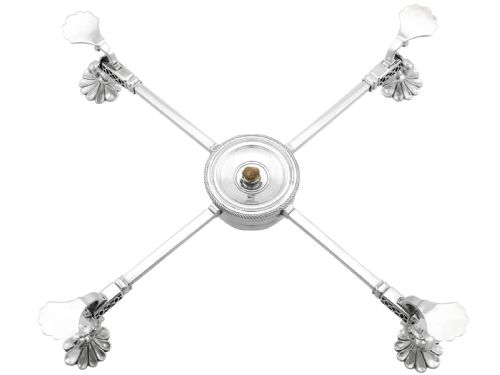
- An adjustable metal framework placed beneath a dish to hold it above a spirit lamp or heating element. Eighteenth-century examples often feature sliding arms and a central lamp.
- Rollover dish
- A serving vessel featuring a semi-cylindrical cover that rotates backward on a pivot to reveal the interior. These pieces allowed diners to access food from both sides of the table.
- Entree dish
- A shallow container with a fitted cover used for serving main course portions at the dining table. Many include original stands and heating bases.
Antique Silver Chafing Dish: Frequently Asked Questions
How did a chafing dish work?
These warmers relied on a spirit burner or a heated water compartment positioned beneath the main serving vessel. The flame or hot water maintained the food temperature during prolonged dining.
Operators adjusted the burner flame to control the heat output, preventing the food from burning while keeping it ready for guests.
What is Old Sheffield plate?
Old Sheffield plate is an early fusion material made by melting a sheet of silver onto a thick copper ingot. Craftsmen then rolled the combined metals into sheets for manufacturing tableware.
This technique creates distinctive pieces where tiny traces of the underlying copper show through high-wear areas over the decades.
Are these pieces safe for food?
Most antique silver plated and sterling warmers serve dry foods or items contained within original ceramic liners. Direct food contact with worn plate surfaces requires consideration of the underlying base metal.
Modern users often place a contemporary glass or ceramic dish inside the antique frame to protect the historic silver surface during service.
How do I clean an antique silver warmer?
Cleaning requires a gentle silver polish and a soft cloth to remove tarnish without abrading the thin silver layer. Avoid harsh chemical dips, particularly on plated items or Old Sheffield plate where the base metal might become exposed.
Wash components in warm soapy water and dry them completely after use to prevent moisture spotting on the metal surfaces.