

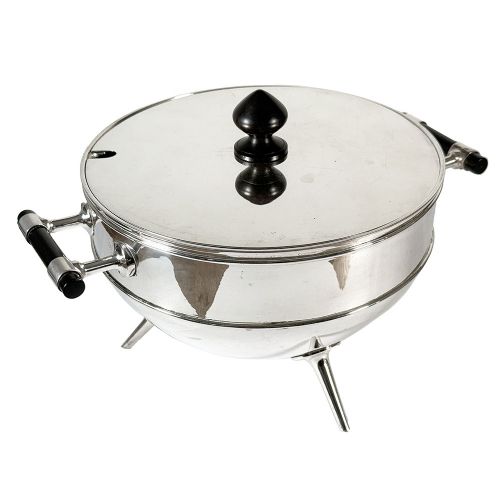


Victorian Silver Tureen
A victorian silver tureen brings heavy silver plate and sterling metal to the dining table for serving soups, entrees, and sauces with nineteenth-century weight.
Victorian Silver Tureen
A victorian silver tureen stands as a centrepiece of nineteenth-century dining, designed to hold soups, gravies, and entrees at the formal table. These vessels emerge across the periods, incorporating serving dishes, sauce boats, and warming dishes into comprehensive dining services.
Silver plated metal and sterling silver dominate the forms, frequently appearing alongside ebonised wood handles or copper elements. Makers construct these tureens in styles ranging from standard Victorian patterns to Aesthetic Movement designs and Victorian Neoclassical adaptations.
Distinctions in Quality
Weight and structural thickness separate substantial service pieces from lighter domestic examples, determining how well a tureen retains heat at the table. Crispness in cast borders, heraldic crests, and handles reveals the skill of the silversmith or manufacturer.
The integrity of the silver plating over the underlying nickel silver or copper base dictates longevity, while maker marks from established firms indicate higher workshop standards.
Victorian Silver Tureen Retail Price Guide 2026
Typical asking prices for victorian silver tureen among the pieces listed under this phrase on Sellingantiques today, from the lower quarter to the upper quarter. They describe what is for sale here now, not the wider market.
Materials span sterling silver and silver plate, incorporating electroplated nickel silver, copper, and ebonised wood details.
Christopher Dresser for Hukin & Heath·Tiffany & Co·Hamilton & Inches·Mappin and Webb·Daniel and Arter·Edward & John Barnard·Walker and Hall·Elkington·William Hutton & Sons·Dan Holy
The Victorian Silver Tureen Glossary
- Sterling silver
- A standard of silver alloy containing ninety-two point five percent pure silver by weight. This metal provides the highest intrinsic value among the tableware materials.
- Silver plate
- A thin layer of silver fused or electroplated onto a base metal such as copper or nickel silver. This technique allowed Victorian households to own substantial vessels at a lower cost than solid silver.
- Entree dish
- A shallow lidded vessel designed specifically for serving individual courses at formal dinners. These pieces frequently form matching pairs within larger dining services.
- EPNS
- Electroplated Nickel Silver, a common base material for nineteenth-century tableware coated via an electrical process. It forms the foundation for many plated tureens in the archive.
Victorian Silver Tureen: Frequently Asked Questions
How do I clean a silver plated tureen?
Use a soft cloth and a specialised silver polish formulated for plated items to remove tarnish gently. Avoid harsh abrasives that can wear away the thin silver layer over the base metal.
Wash the vessel in warm soapy water and dry thoroughly after polishing. Proper storage in a dry environment reduces the need for frequent cleaning.
What is the difference between sterling and plate?
Sterling silver consists of solid precious metal throughout the entire thickness of the vessel wall. Silver plate involves a thin coating of silver applied over a base metal core like nickel silver or copper.
Hallmarks stamped into the metal distinguish solid silver pieces from plated wares. Weight and visual wear patterns also reveal the underlying construction.
Were these tureens used for soup?
Large tureens served as the primary vessel for holding and dispensing soup at the nineteenth-century dining table. Smaller versions functioned as sauce boats or entree dishes for side courses.
Lids helped retain heat during long formal meals before service plates reached the guests. Ladles often accompanied these pieces to complete the serving set.
How do I date an antique tureen?
Examine the maker marks and hallmarks stamped onto the base or rim of the vessel. Reference books and archive records match these stamps to specific years or registry dates.
Stylistic cues such as Aesthetic Movement engraving or Neoclassical handles also narrow down the period of manufacture.