




Sheffield Plate Table Centrepiece
A sheffield plate table centrepiece commands the dining table with silver fused over copper.
Sheffield Plate Table Centrepiece
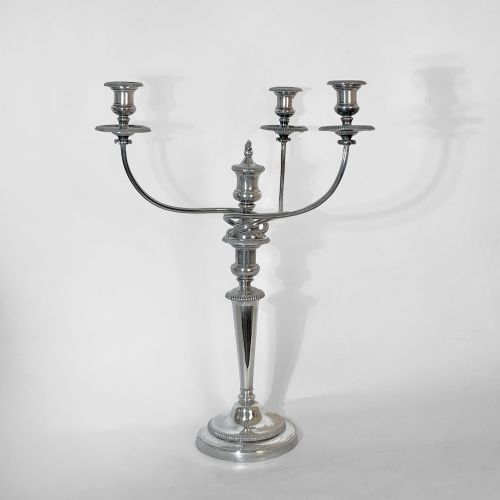
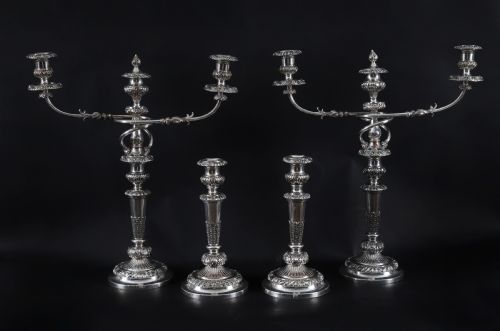
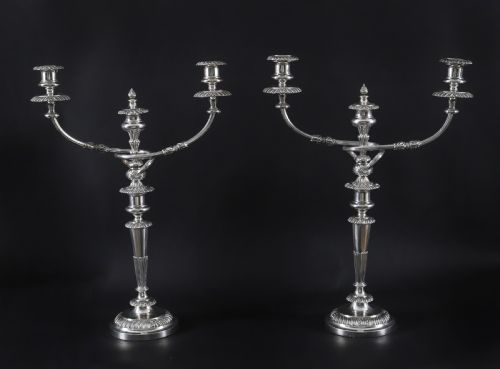
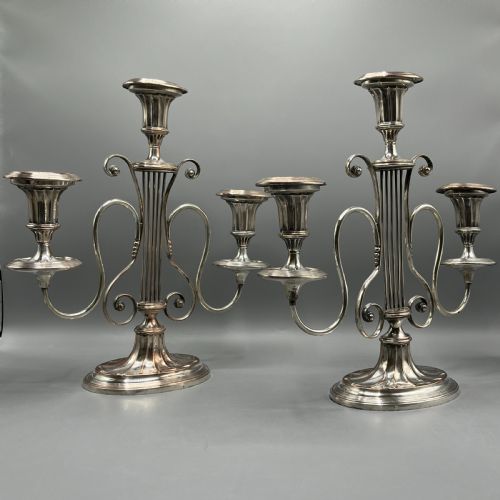
A sheffield plate table centrepiece brings a commanding presence to a formal dining table, anchoring the display with silver fused over a copper base. These grand items include towering epergnes with hanging baskets, multi-branch candelabra suites, and deep wine coolers designed to chill bottles in ice.
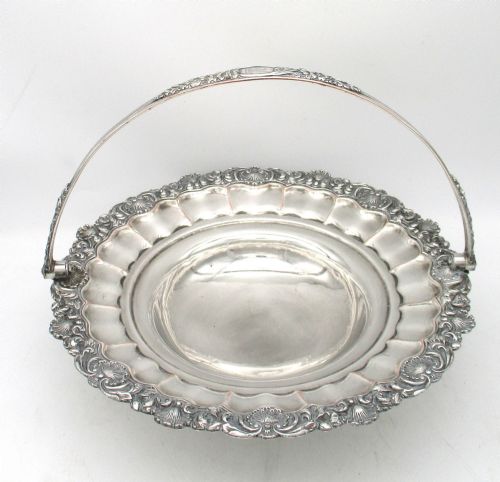
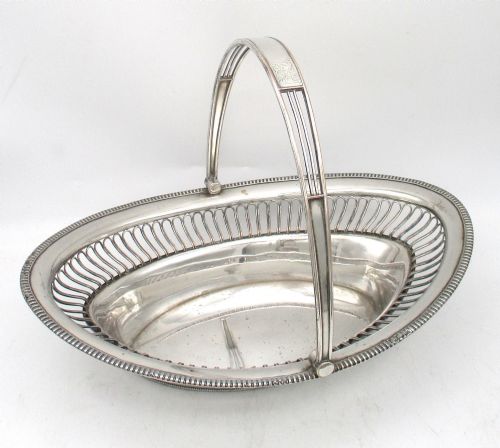
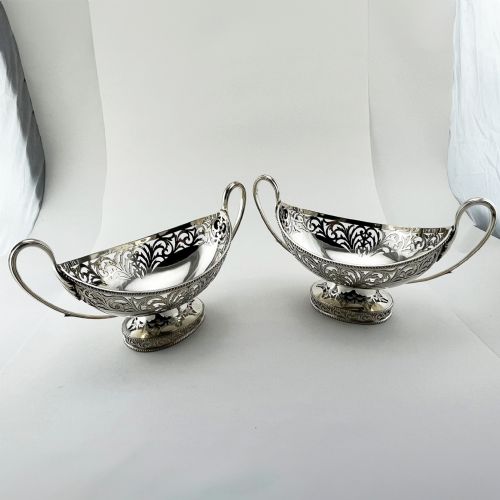
The pieces appearing on this page span the 18th century through the Victorian and Edwardian eras, with a strong representation of Georgian and Regency examples. Buyers meet candelabra and wirework baskets most frequently, alongside campana-shaped wine coolers and tiered centrepieces.
Origins trace directly to Sheffield workshops, utilising the fusion technique invented by Thomas Bolsover. Makers combined the rich lustre of silver with the structural strength of copper, creating weighty tableware for elite dining.
How they were made
Old Sheffield plate relies on the fusion of a silver sheet onto a thicker copper ingot through intense heat and pressure. Workers then rolled the combined metals into sheets, fashioning items that maintained a genuine silver exterior while keeping production costs below solid sterling.
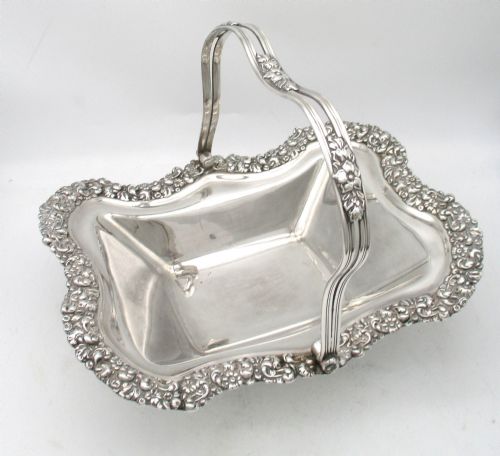
Makers often applied a thin layer of gold wash, known as vermeil, to the interior of sweetmeat baskets or bowls for contrast. Wirework baskets required delicate soldering of individual metal strands into airy geometric patterns, while candelabra utilised weighted bases for stability.
Listings feature silver plate, copper, and old sheffield plate, spanning neoclassical, regency, georgian, and victorian naturalism styles.
What varies in quality
The distinction between standard items and exceptional works lies in the crispness of the chased decoration and the subtlety of the plating. Superior examples retain their silver layers without excessive copper bleed through, where the underlying metal shows pink through worn areas.
Weight and balance signal higher craftsmanship, particularly in large candelabra and multi-piece suites where proportions must remain harmonious. Maker marks and crisp armorial crests or engraved family crests further elevate a piece by documenting its origin and elite commission.
Matthew Boulton·Thomas Bradbury·Mappin and Webb·Elkington·Blagden, Hodgson And Co·James Deakin
The Sheffield Plate Table Centrepiece Glossary
- Old Sheffield Plate
- An early method of fusing silver sheet to a copper core by heat and pressure, producing authentic plated items before electroplating was introduced. This technique leaves a distinctive copper seam visible on edges.
- Epergne
- A large ornamental centrepiece featuring a central bowl with branching arms and hanging baskets for fruit, sweetmeats, or flowers. These structures anchor formal dining arrangements.
- Campana
- A bell-shaped vessel form commonly utilised for wine coolers and ice pails during the Regency period. The profile flares gracefully from a narrow foot to a wide rim.
- Wirework Basket
- A decorative table vessel constructed from interwoven metal strands to create openwork lattice designs. These delicate forms appeared frequently around the turn of the nineteenth century.
- Candelabra
- A branched candlestick holding multiple lights on a central stem. These lighting pieces often convert into single candlesticks by removing the upper arms.
Sheffield Plate Table Centrepiece: Frequently Asked Questions
How do I clean old sheffield plate?
Use a gentle silver cloth and mild soapy water to maintain the surface without removing the thin silver layer. Avoid abrasive dips or heavy scouring that exposes the underlying copper.
Store pieces in dry environments away from direct sunlight and dampness to prevent tarnishing and corrosion of the base metal.
What is copper bleed?
Copper bleed occurs when the thin silver layer wears away through decades of polishing, revealing the reddish copper underneath. This natural ageing process shows the genuine fusion method used in early production.
Collectors view minor bleed as an authentic sign of age, provided the overall form and decoration remain sharp and intact.
Can I use these for dining?
These historical pieces function well for modern dining if treated with care and hand washed immediately after use. Wine coolers hold ice and bottles securely, while baskets serve bread or fruit.
Acidic foods should not sit on the metal for extended periods to protect the antique surface from staining.
How do I tell old sheffield plate from electroplate?
Old sheffield plate displays a visible copper edge where the two metals were fused and folded over seams. Electroplated items, introduced later in the nineteenth century, show an even silver coating without copper lines.
Weight also differs, as fused plate maintains a heavier, more rigid structure than early electroplate.