
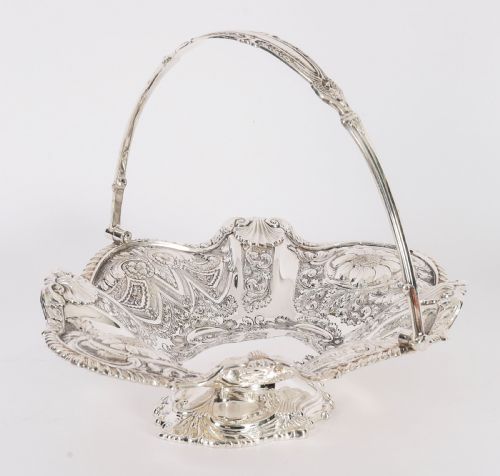
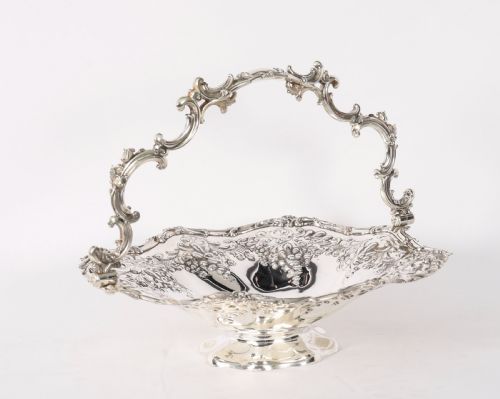
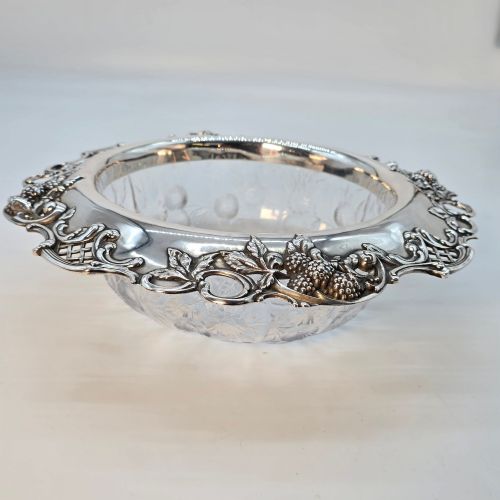
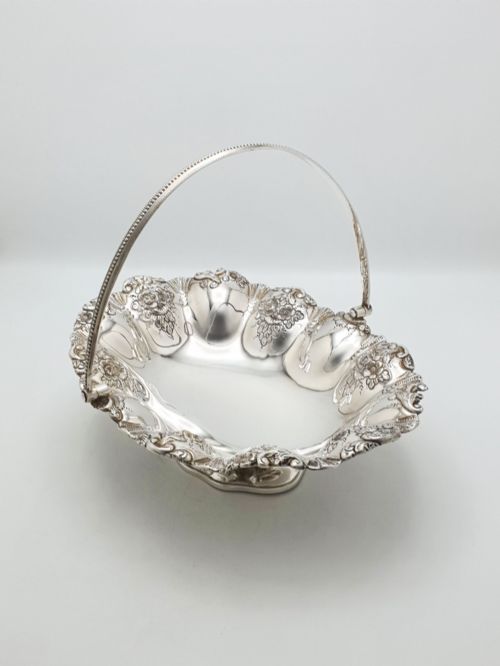


Silver Repousse Fruit Bowl
A silver repousse fruit bowl brings tactile weight and hammered depth to a dining table.
Silver Repousse Fruit Bowl
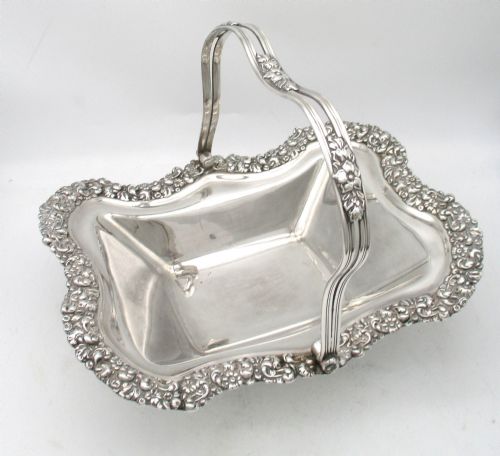
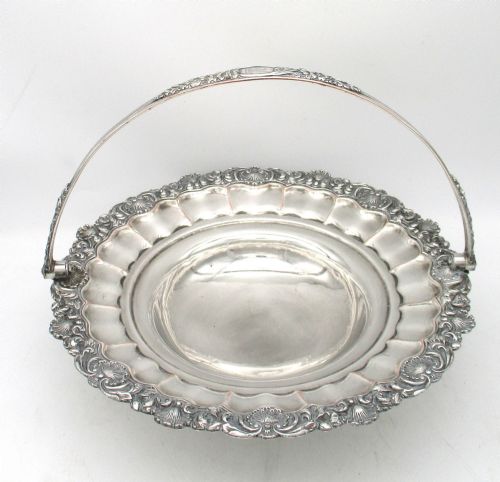
A silver repousse fruit bowl is a table vessel shaped to hold fruit or display centrepiece fruit baskets and serving dishes. These items emerge primarily from the Victorian and Edwardian eras, alongside Georgian and early twentieth-century examples.
The objects on this page span solid sterling silver, silver plate, and old Sheffield plate, taking forms from footed pedestal bowls to ornate handled baskets.
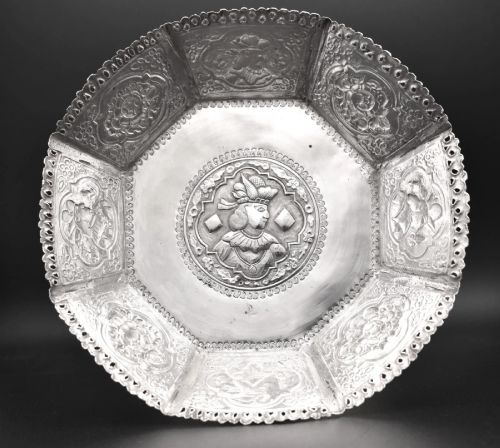
Regional variations appear too, including Anglo-Indian, Chinese export, and German historicism pieces that introduce distinct motifs to the traditional fruit bowl form.
Materials and hammering techniques
Makers shaped these vessels using sterling silver, solid silver, and various plated metals, sometimes incorporating crystal inserts, cobalt blue glass liners, or bronze foundations.
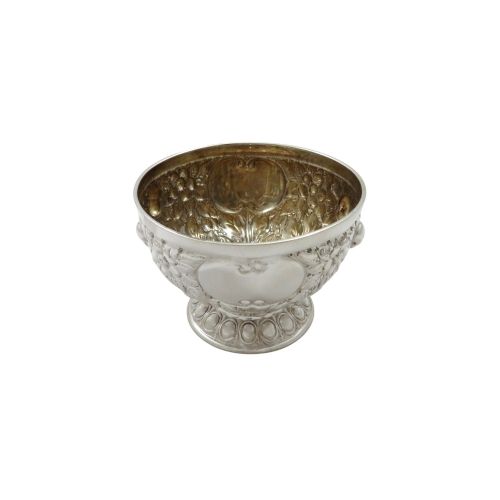
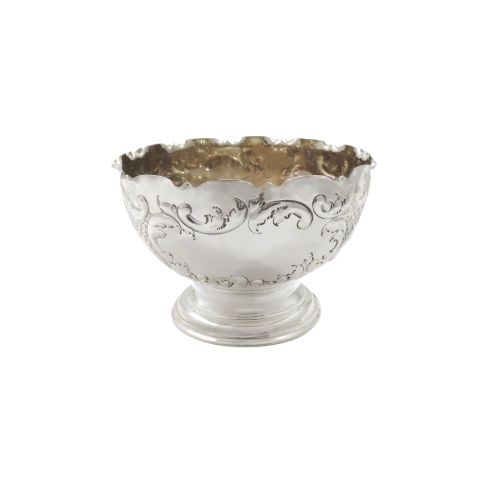
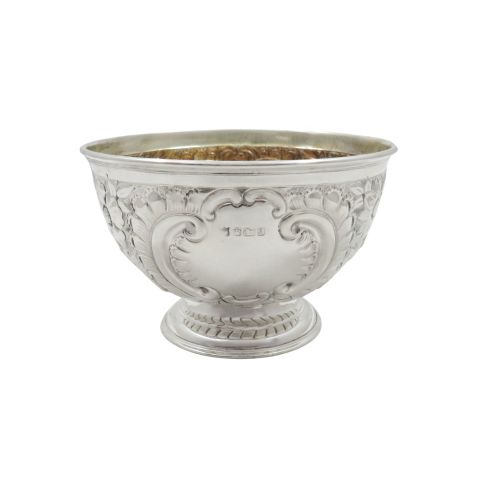
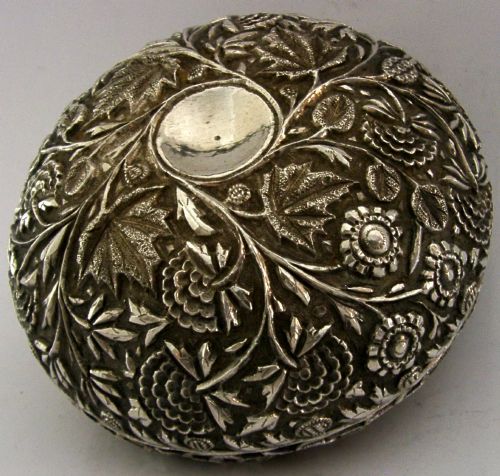
The characteristic surface texture relies on repousse work, where artisans hammered the metal from the reverse side to push out floral, avian, and scroll designs in relief.
The listings show pieces spanning solid sterling silver, silver plate, old Sheffield plate, copper, and silver gilt across Victorian, Georgian, and Edwardian periods.
The markers of finer execution
Quality rests in the crispness and depth of the hammered relief work, where skilled hands achieved clean separation between background texture and raised motifs.
Heavier gauge metal and substantial weight indicate superior craftsmanship, preventing distortion across wide bowls and open fruit baskets.
The integrity of applied rims, crisp crest engravings, and well-preserved silver gilt or plating surfaces distinguish the better workshops.
George W. Scott And Sons Ltd·Tiffany And Co·William Chawner II·Martin Hall·Elkington And Co·James Dixon
The Silver Repousse Fruit Bowl Glossary
- Repousse
- A metalworking technique where the artisan hammers designs from the reverse side to create raised ornamentation on the front.
- Old Sheffield Plated
- A fused composite material made by sandwiching a layer of copper between two sheets of silver, common in earlier tableware.
- Berry Spoon
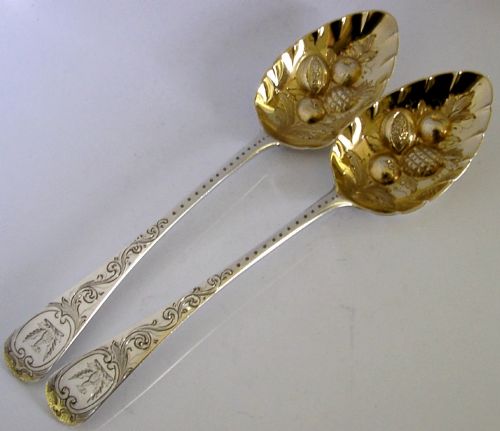
- A large serving spoon, often Georgian or Victorian, retrofitted or originally chased with fruit and foliage motifs.
- Tazza
- A shallow bowl or dish mounted upon a stem and foot, designed for serving fruit or sweets.
- Silver Gilt
- Silver that has been coated with a thin layer of gold on its surface, sometimes called vermeil.
Silver Repousse Fruit Bowl: Frequently Asked Questions
How do I clean a silver repousse fruit bowl?
Use a soft cloth and a gentle silver polish formulated to protect delicate hammered details.
Avoid abrasive dips that strip away the dark oxidisation tucked deep inside the repousse crevices.
Can I use these bowls for actual fruit?
These vessels suit whole dry fruits, though acidic citrus should not sit directly against unprotected antique silver surfaces for extended periods.
Glass or crystal liners found in certain examples provide a safe barrier for moisture.
What is the difference between silver plate and solid silver?
Solid silver items consist entirely of precious metal throughout their structure, whereas plated pieces apply a thin layer of silver over a base metal like copper or bronze.
Hallmarks usually stamp solid sterling pieces, while plated items rely on maker marks or absence of standard assay stamps.
How can I tell a Victorian bowl from a Georgian one?
Georgian pieces often display restrained lines, crested engraving, or heavier berry spoon adaptations from the early nineteenth century.
Victorian and later Edwardian pieces frequently embrace heavier floral repousse, pierced rims, and more exuberant revival styles.