

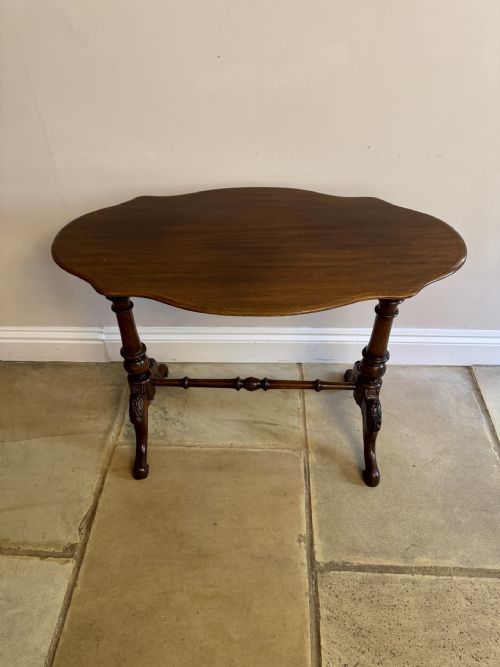
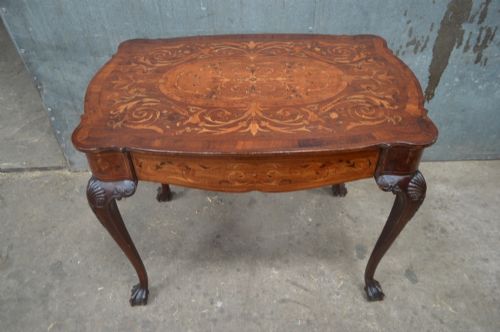


Shaped Walnut Tea Table
A shaped walnut tea table brings distinct warmth and graceful curved lines to a room, offering a versatile surface for daily use or display.

Shaped Walnut Tea Table
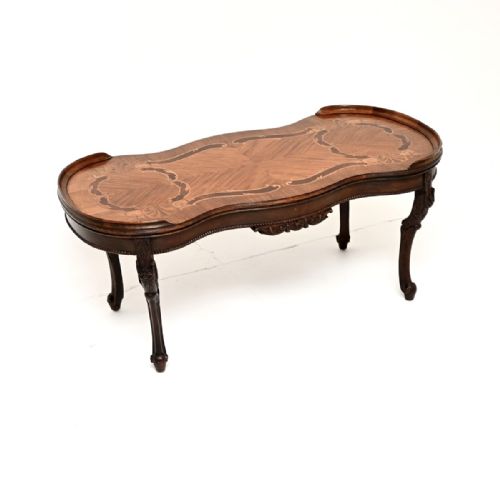
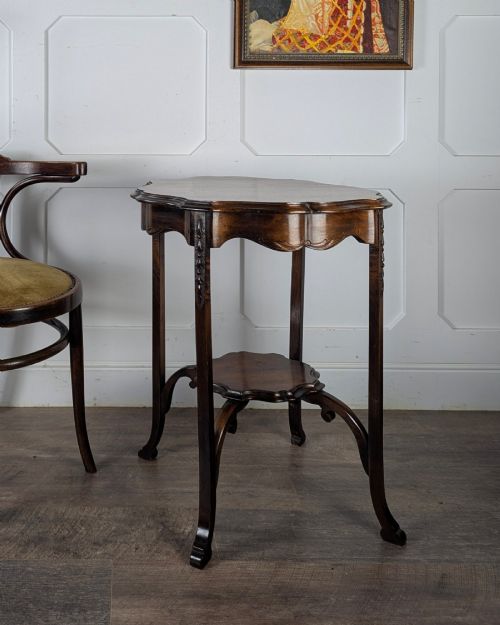
A shaped walnut tea table is a functional antique surface designed for entertaining or parlour use, defined by its curved top and rich timber grain. Buyers searching for a shaped walnut tea table will find examples primarily from the Victorian period, alongside pieces from the Edwardian era and the 1920s Art Deco movement.
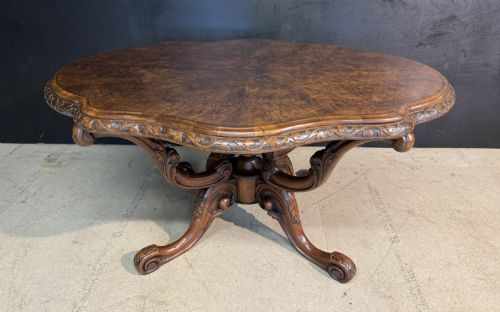
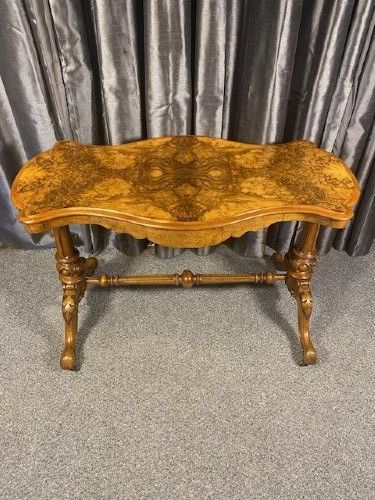
The form appears in various configurations, including occasional tables, card tables, and centre tables, often featuring serpentine or butterfly shapes. Victorian iterations frequently employ burr walnut veneer to create intricate patterns across the top, while later 1920s examples lean towards cleaner coffee table formats.
Originating largely from 19th-century British workshops, these tables display distinct stylistic revivals ranging from Queen Anne to French Louis XV. The most common varieties encountered here utilise rich walnut timber with moulded edges and pedestal or stretcher supports.
How they were made
Cabinet makers constructed these tables using solid walnut frameworks combined with burr walnut veneer to achieve striking decorative patterns on the top surface. Boxwood and fruitwood inlays occasionally accent the primary timber, adding contrasting linear detail to the borders.
Shaped edges, such as serpentine and octagonal profiles, required precise hand-sawing and planing by skilled artisans. Brass fittings and hinges appear on fold-over card table variants, securing the pivoting leaves used for games and social gatherings.
Listings feature walnut tables spanning the Victorian era through the 1930s, incorporating brass hardware, fruitwood inlay, and boxwood accents.
What varies in quality
The selection of timber grain largely determines the visual impact of the piece, with dense, highly figured burr walnut commanding greater attention than plain timber. The crispness of the moulded edge and the fluidity of the curved outline show the maker's hand and level of care.
Structural stability in the pedestal or stretcher base dictates longevity, ensuring the table remains balanced during daily use. The precision of the inlay work and the smoothness of the fold-over mechanisms on card tables separate standard utility pieces from finer examples.
The Shaped Walnut Tea Table Glossary
- Burr walnut
- A figured timber taken from the growth excrescences on walnut trees, prized for its swirling grain patterns. It provides a highly decorative surface on Victorian table tops.
- Serpentine
- A line that curves inward centrally and outward at the ends, creating a gentle wave-like edge. This profile defines many Victorian tea and card tables.
- Occasional table
- A small, movable table designed for periodic use around a room rather than a fixed central purpose. These pieces appear frequently across 19th-century listings.
- Stretcher table
- A table featuring horizontal wooden braces connecting the legs for added structural support. These braces often intersect beneath the central pillar.
- Fold-over card table
- A table with a hinged top that opens to double the surface area, traditionally lined with baize for playing games. Many feature shaped edges to accommodate the folding mechanism.
Shaped Walnut Tea Table: Frequently Asked Questions
How were these tables used?
These tables served primarily for serving afternoon tea, holding decorative lamps, or providing a stable surface for card games in the parlour.
Fold-over variants adapted easily from compact console or side tables into full-sized gaming surfaces when guests arrived.
How do I date a walnut table?
Dating relies on observing structural characteristics, timber preparation techniques, and stylistic revival cues present in the design.
Victorian pieces often display rich burr veneers and heavy pedestal bases, while 1920s examples tend toward simpler Art Deco forms.
How do I care for walnut veneer?
Keep walnut furniture away from direct sunlight and strong heat sources to prevent the delicate veneer from drying out or lifting.
Apply a traditional wax polish occasionally and buff gently with a soft cloth to maintain the natural lustre of the wood.
What is the difference between a centre table and an occasional table?
Centre tables traditionally stood in the middle of a room as a decorative focal point, finished on all sides for 360-degree viewing.
Occasional tables were built for lighter, flexible use and positioned against walls or beside seating when needed.