
Walnut Nightstand Table
A walnut nightstand table provides a practical bedside surface while bringing rich grain and period character to a bedroom scheme.
Walnut Nightstand Table
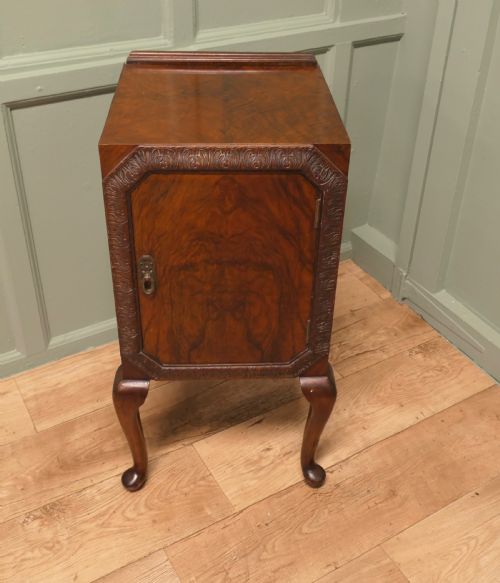
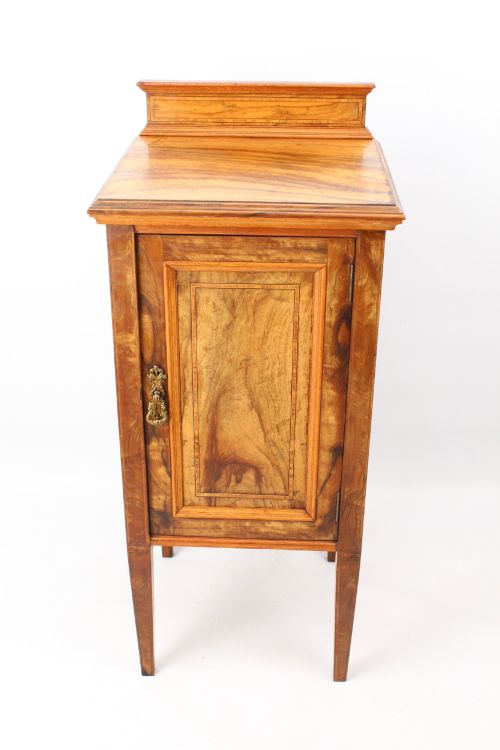
A walnut nightstand table encompasses a variety of compact bedside forms, including small cupboards, chests of drawers, and lamp tables designed to sit beside a bed. The selection spans distinct eras from the eighteenth century through the Victorian and Edwardian periods up to twentieth-century Art Deco designs.
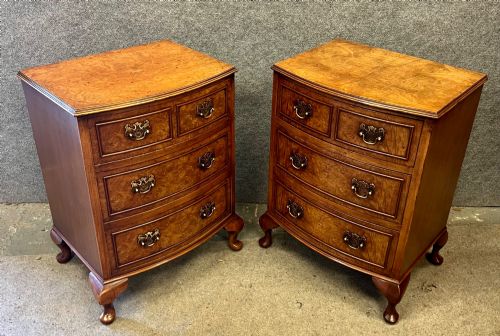
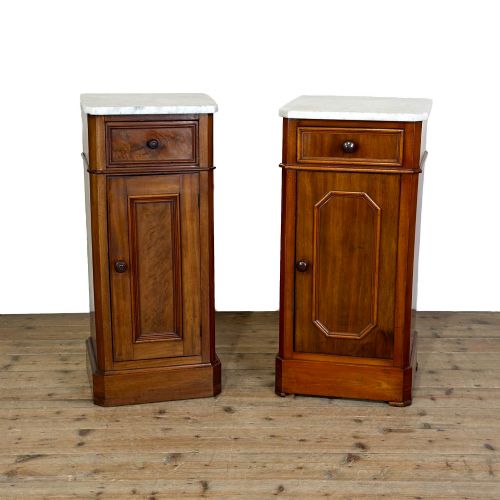
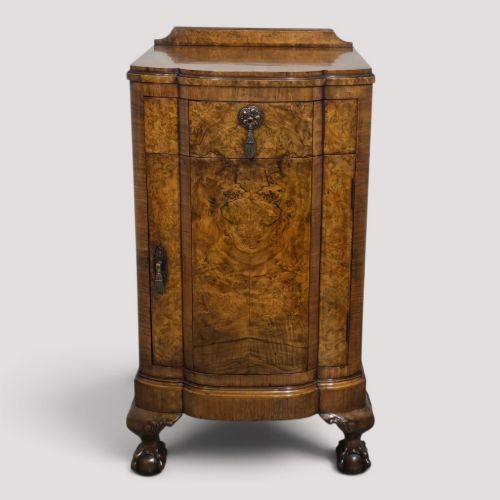
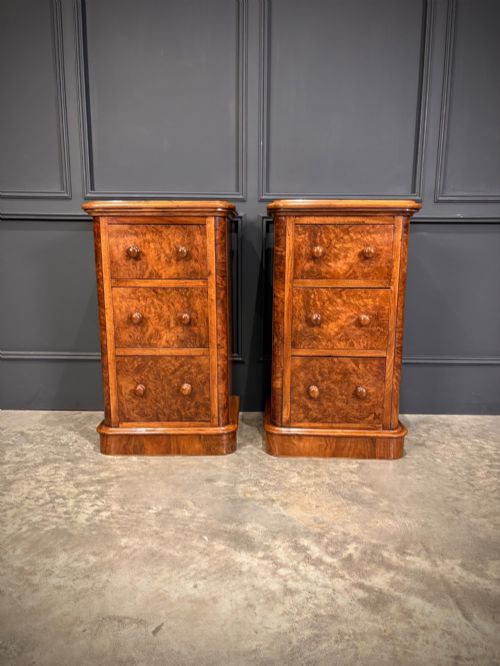
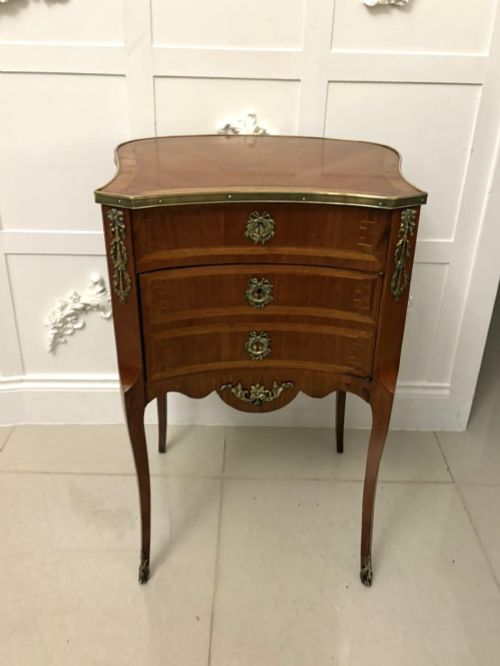
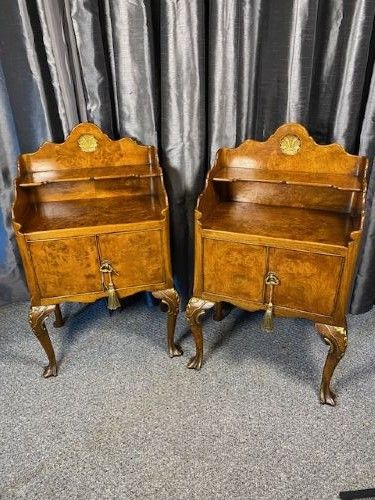
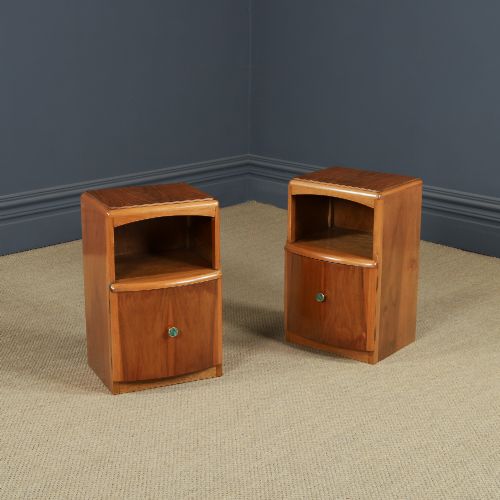
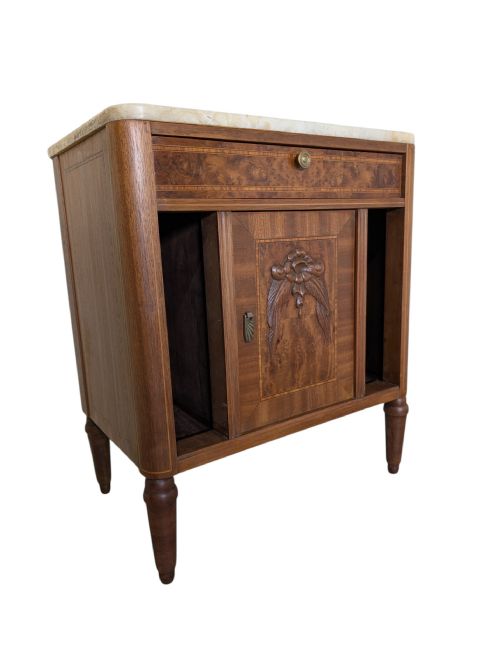
Buyers will frequently encounter pairs dating from the nineteen-thirties, often veneered in figured or burr walnut, alongside nineteenth-century French and English cabinets featuring marble tops or marquetry inlay. These smaller items served functional roles in bedrooms and boudoirs, ranging from enclosed bedside storage to open lamp tables.
The assortment also includes earlier regional pieces such as eighteenth-century Italian commodinos and Dutch marquetry tables. Whether chosen as a matched pair or a single statement side table, these pieces combine domestic utility with decorative wood figures.
Materials and technique
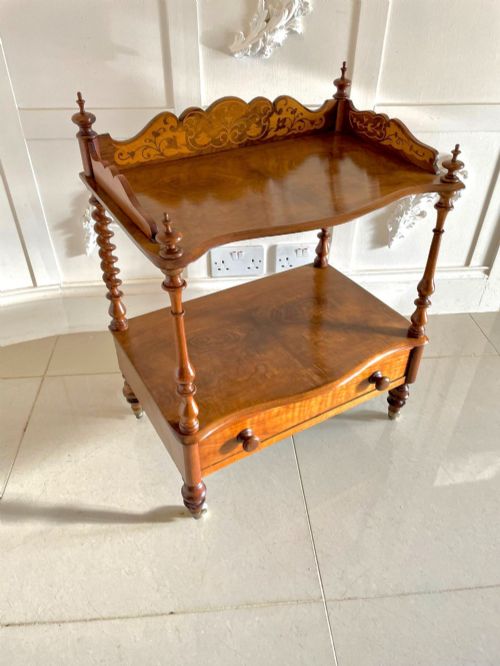
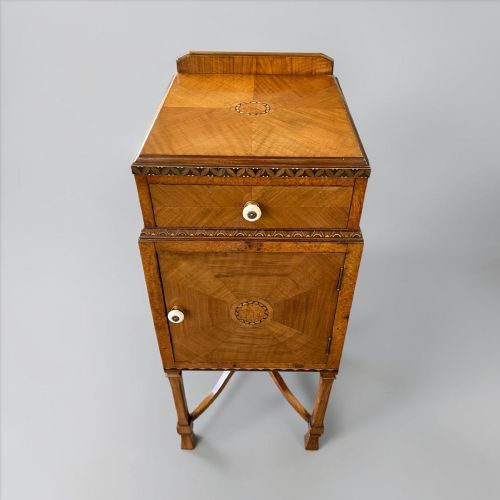
Cabinetmakers utilised solid walnut and decorative veneers like burr walnut and figured walnut over secondary timbers, often applying detailed marquetry or parquetry inlay to create geometric and floral patterns. French and English workshops employed skilled joining methods to build stable carcasses for bedside chests and cabinets.
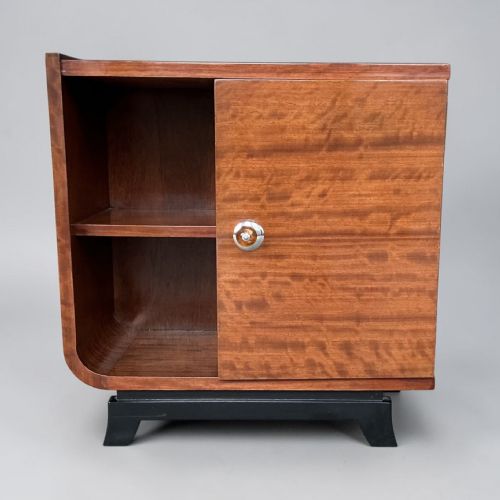
Surface detailing frequently incorporates contrasting materials such as marble tops, gilt bronze or ormolu mounts, and brass hardware. Chrome accents appear on later twentieth-century Art Deco interpretations, while nineteenth-century examples often feature turned legs and delicate inlay work.
Listings feature walnut nightstand tables spanning the eighteenth, nineteenth, and twentieth centuries, encompassing styles from Queen Anne Revival to Art Deco.
What varies in quality
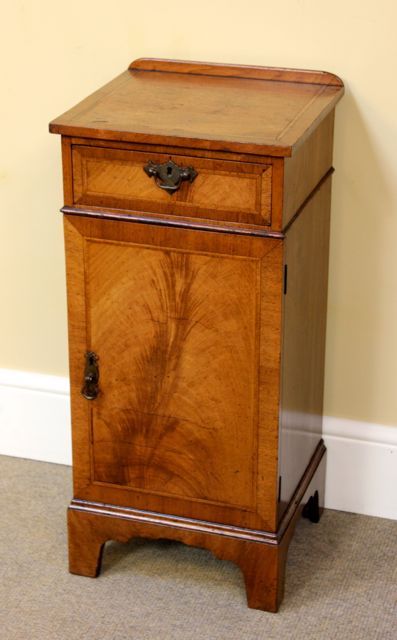
The distinction between tiers rests upon the choice of veneer, the crispness of the inlay, and the harmony of the proportions. Superior examples display carefully matched burr or figured walnut grains across drawer fronts and cabinet doors, whereas simpler pieces utilise plain timber.
Maple and Co·Walter Carter
The Walnut Nightstand Table Glossary
- Burr walnut
- A decorative wood cut from the abnormal growths of a walnut tree, yielding swirling grain patterns prized by cabinetmakers. It appears extensively on nineteenth and twentieth-century drawer fronts and tabletops.
- Marquetry
- The art of applying pieces of veneer to a structure to form decorative patterns and pictures. Craftsmen utilise various coloured woods to achieve floral or geometric designs on eighteenth and nineteenth-century furniture.
- Ormolu
- Gilt bronze mounts applied to furniture for decoration, commonly found on French cabinets and side tables. The technique involves coating bronze with a finely ground gold mercury amalgam.
- Etagere
- An open piece of furniture with shelves for displaying small objects or books. Walnut versions often feature turned legs and multiple tiers for bedside or salon use.
- Commodino
- An Italian term for a small bedside table or cabinet, frequently fitted with a cupboard door and a small drawer. Eighteenth and nineteenth-century examples often showcase intricate marquetry.
Walnut Nightstand Table: Frequently Asked Questions
How do I choose between a cupboard and a drawer nightstand?
Cupboard styles provide concealed vertical space behind a door, which works well for storing taller items beside the bed.
Drawer versions offer segmented organisation for smaller personal belongings, keeping the surface clear for lighting and books.
Are marble top bedside tables practical for daily use?
Marble surfaces offer a durable, heat-resistant top that easily withstands water jugs and bedside lamps without marking the wood beneath.
They introduce a classical texture that contrasts effectively with the surrounding walnut grain and polished brass hardware.
How do Art Deco walnut tables differ from Victorian ones?
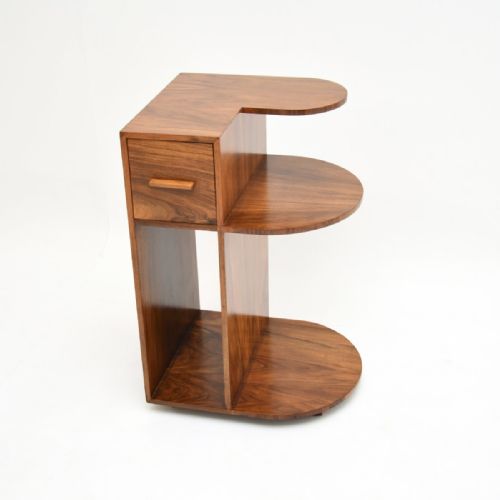
Art Deco pieces from the nineteen-thirties favour streamlined silhouettes, curved waterfall edges, and dramatic figured veneers without heavy carving.
Victorian and Edwardian examples lean toward turned legs, brass handles, inlaid stringing, and more traditional ornamental detailing.
Can I mix different periods of walnut bedside tables?
Combining pieces from different eras works well if the wood tones share a similar warmth and depth of finish.
Matching the overall height and scale matters more than securing identical decades, ensuring the bedside arrangement remains balanced.