


English Walnut Wine Table
An english walnut wine table brings compact utility and rich grain to a corner, most often seen in Victorian and Georgian forms.
English Walnut Wine Table
An english walnut wine table is a small occasional piece designed for holding glasses or lamps, frequently resting on a central tripod base. You will most often meet Victorian and Georgian examples on this page, alongside pieces from the early twentieth century.
The form spans circular tilt-top surfaces, pie crust edges, and occasional oval shapes suited for domestic use. Makers built these tables from the eighteenth century through to the art deco period, utilising native timbers and rich veneers.
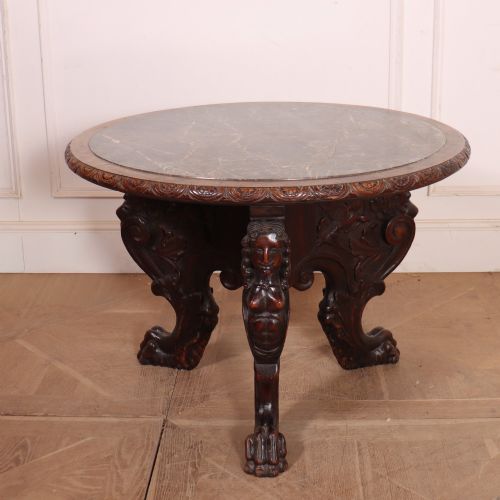
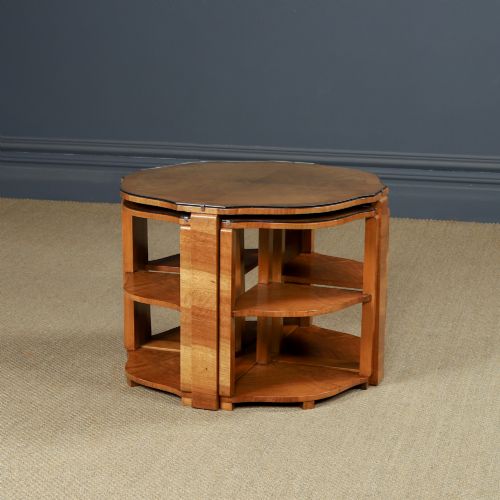
While search terms group several kinds of small support furniture together, the core english walnut wine table remains a distinctive compact form. Examples range from simple tripod stands to inlaid marquetry circular tops and occasional nesting sets.
How they were made
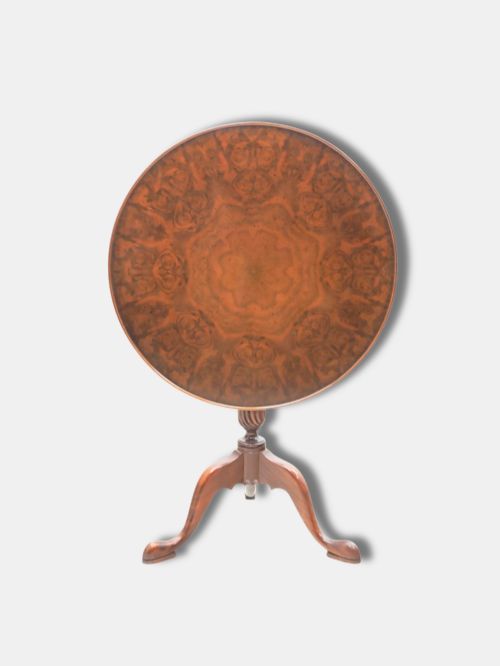
Makers constructed these tables primarily from solid walnut or applied burr walnut veneer over secondary timbers, often adding marquetry and wood inlay. Surfaces frequently feature decorative grain patterns that catch the light.
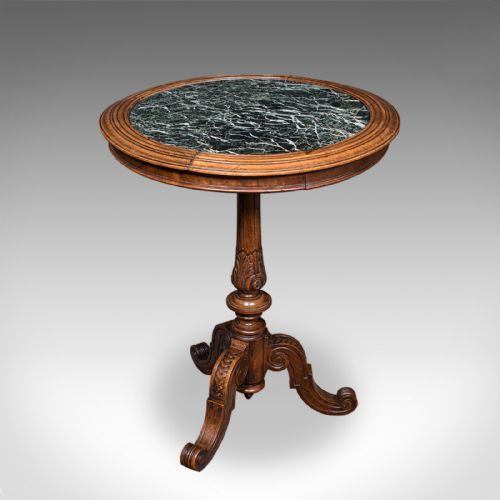
Tripod bases dominate the construction, supporting circular or oval tops that sometimes incorporate tilt mechanisms with brass catches. Carved wood details and pie crust rims appear across Victorian and Georgian workshops.
Materials across these listings concentrate on walnut, burr walnut veneer, brass, and occasional marble inserts.
What varies in quality
The depth of the burr walnut veneer and the crispness of the carved tripod legs set finer examples apart from simpler production. Superior pieces display thoughtful grain matching across the circular top.
Structural stability in the tilt mechanism and the joinery where the pillar meets the legs indicate the level of initial craftsmanship. Subtle wood inlay and well-preserved marquetry elevate the visual weight of the piece.
The English Walnut Wine Table Glossary
- Tripod base
- A three-legged support structure commonly found beneath the central pillar of these small tables. This configuration ensures stability on uneven floors.
- Tilt top
- A hinged table surface that tips vertically when not in use, allowing the piece to sit flat against a wall. This mechanism often involves a catch or release block.
- Pie crust edge
- A raised, decorative rim carved into the perimeter of a circular table top with scalloped indentations. It resembles the crust of a traditional baked pie.
- Burr walnut veneer
- Thin slices of decorative timber cut from walnut tree growths, displaying complex swirling grain patterns. Cabinet makers applied these over stable underlying woods.
- Marquetry
- Elaborate patterns formed by fitting together contrasting pieces of wood veneer onto a surface. This technique creates detailed pictorial or geometric designs.
English Walnut Wine Table: Frequently Asked Questions
What is an english walnut wine table used for?
These pieces served historically for holding drinks, decanters, or small lamps beside seating areas in reception rooms.
Today, buyers use them as compact side tables, bedside surfaces, or decorative display stands in narrow hallways.
How do I date an english walnut wine table?
Dating relies on observing construction methods, leg profiles, and timber choices across the Georgian, Victorian, and Edwardian periods.
Georgian pieces often display simpler architectural lines or tilt mechanisms, while Victorian examples lean towards heavier burr veneers and carved tripod bases.
Are these tables sturdy enough for daily use?
The three-legged tripod design provides reliable balance for holding cups, books, or lamps during everyday domestic routines.
Care should be taken with tilt-top variants to ensure the locking mechanism remains secure when the surface is placed horizontally.