


Pie Crust Occasional Table
A pie crust occasional table brings a carved raised rim to compact furniture, offering a stable surface with distinct period character.
Pie Crust Occasional Table
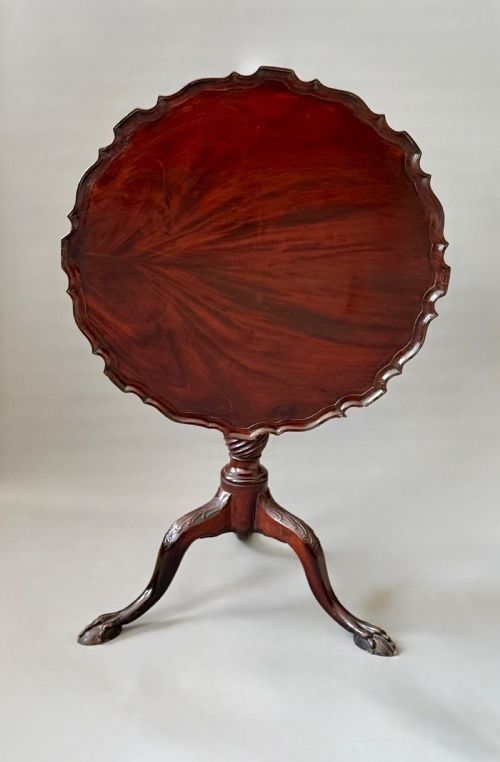
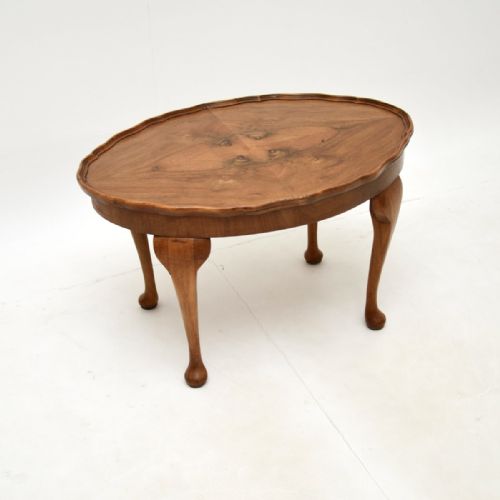
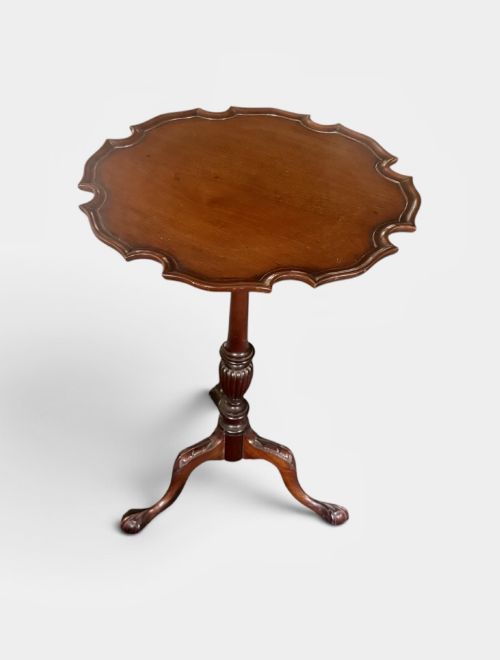
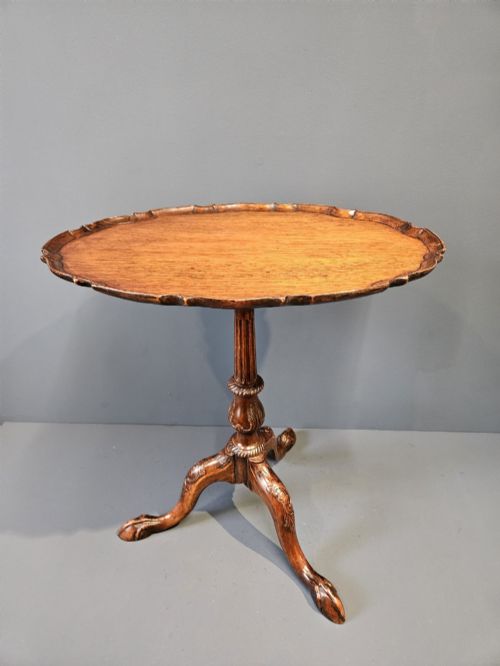
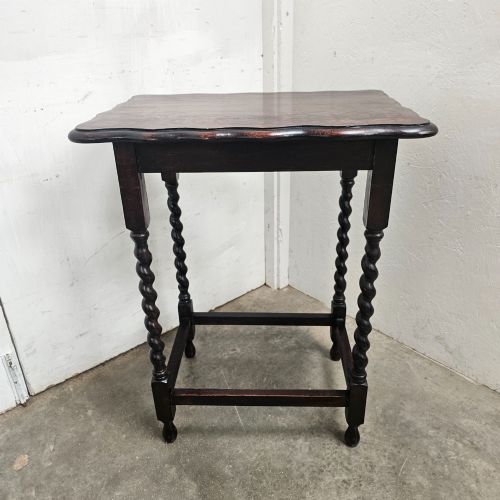
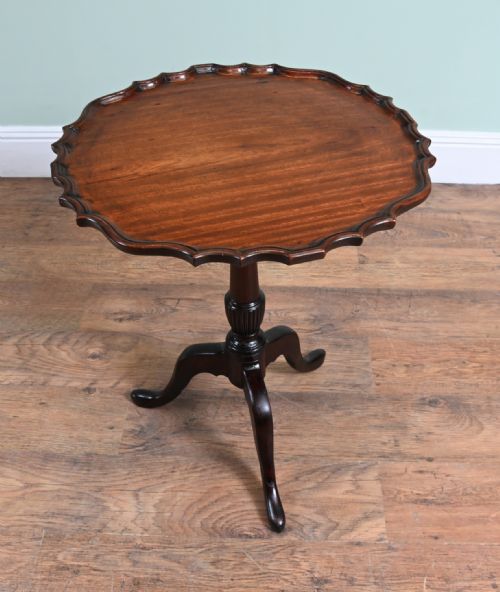
A pie crust occasional table is a compact surface defined by a raised, undulating rim shaped like pastry crust. The pieces seen here span the Georgian, Regency and Edwardian eras, along with later revivals.
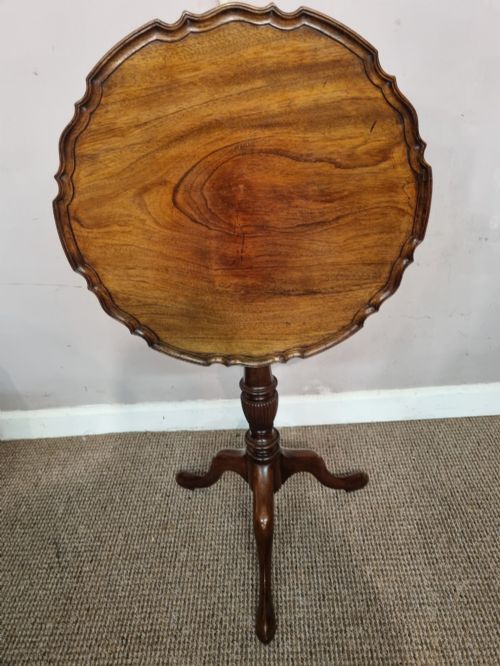
Most examples function as tripod wine tables, lamp tables or tilt-top tea tables. Mahogany and walnut appear frequently as the primary woods shaping these forms.
The format ranges from small circular tripod bases to oval occasional tables and nesting sets. Buyers encounter both original eighteenth-century examples and twentieth-century revival pieces.
How they were made
Cabinetmakers constructed the characteristic raised rim by carving it directly from a thick solid timber top rather than applying a separate moulding. Mahogany and figured walnut provided the dense grain necessary to sustain this intricate edge work.
Many early examples incorporate a tilt-top or birdcage mechanism allowing the surface to pivot and lock vertically. Turning and carving shape the central pedestals and tripod legs supporting these tops.
Some tilt-top mechanisms feature clever wooden birdcages that let the table spin like a compass before tipping.
What varies in quality
Quality rests in the crispness of the carved rim and the selection of timber. Solid mahogany with rich figuring or burr walnut veneer separates finer workshop output from standard production.
The proportion between the top and the tripod base dictates visual balance. Finer examples maintain crisp joinery in the tilt mechanism and precise turning along the pedestal.
Gillows
The Pie Crust Occasional Table Glossary
- Pie crust edge
- A raised, scalloped rim carved into the perimeter of a tabletop. This decorative border imitates the fluted pastry edge of traditional pies.
- Tilt-top
- A hinged tabletop mechanism allowing the surface to pivot into a vertical position. This design enables the table to store flat against a wall when not in use.
- Tripod base
- A support structure featuring three legs radiating from a central pillar. This configuration provides stability on uneven historic floors.
- Birdcage
- A rotating wooden framework beneath a tilt-top table that permits the surface to revolve as well as tilt. It connects the tabletop to the central column.
- Figured walnut
- Timber cut from walnut trees displaying distinctive grain patterns and swirls. Cabinetmakers selected these boards for decorative tabletops.
Pie Crust Occasional Table: Frequently Asked Questions
What is a pie crust table?
A pie crust table is a small occasional table featuring a raised, carved rim shaped with decorative curves.
These pieces typically serve as wine tables, lamp tables or small tea tables.
Why do some tops tilt?
Tilt-top mechanisms allowed tables to be stored upright against a wall to save floor space in smaller rooms.
This functional design remains common on tripod tea and wine tables from the Georgian period onward.
How do I tell Georgian from Edwardian?
Georgian pieces display eighteenth-century joinery methods and denser timber patination.
Edwardian and revival pieces often reflect twentieth-century manufacturing techniques while imitating earlier styles.
Where should I place one?
These tables function well beside seating as lamp or wine surfaces due to their compact footprint.
Their decorative rims and pedestals also allow them to stand freely against a wall.