
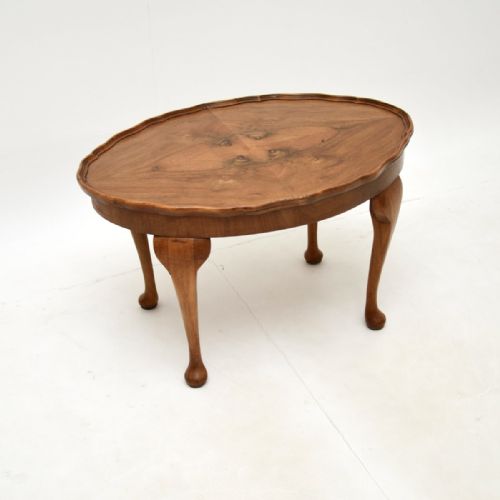


Walnut Pie Crust Table
A walnut pie crust table brings distinct curved timber edges and figured grain to a room, offering a traditional surface for lamps, drinks or coffee.
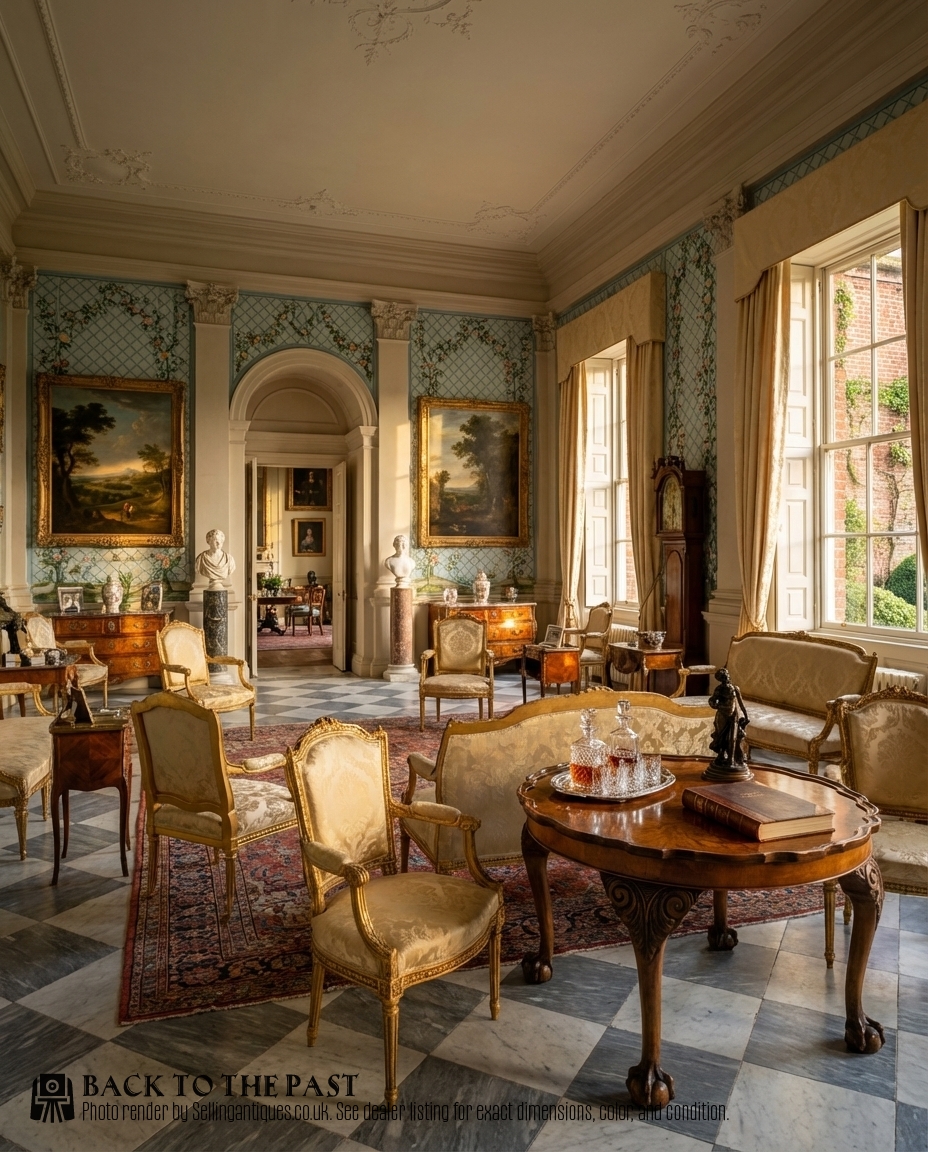
Walnut Pie Crust Table
A walnut pie crust table is a small occasional piece defined by its raised, scalloped rim, which resembles pastry crimping. These items appear across several eras, including the Georgian, Victorian, Edwardian and 1930 periods, taking the form of coffee tables, side tables, wine tables and nests of tables.
The version most commonly met on this page is the coffee table or occasional table made from burr walnut or figured walnut. Many examples adopt a Queen Anne style or revival aesthetic, often supported by tripod legs or cabriole supports.
How they were made
Cabinet makers utilised solid walnut, timber, and figured or burr walnut veneer over secondary woods to construct these pieces. The distinctive shaped edge was painstakingly carved from solid timber or moulded to create the signature raised rim.
Many examples feature tilt-top mechanisms allowing the surface to fold away when not in use. Tripod bases and cabriole legs provide the structural support for the circular or oval tops.
Materials across the inventory include solid walnut, timber, burr walnut and figured walnut veneer.
What varies in quality
The visual appeal depends largely on the choice of timber, with richly patterned burr walnut or figured grain marking out superior examples. Craftsmanship is visible in the precision of the carved edge moulding and the stability of the tripod or cabriole base.
Older pieces from the Georgian and Victorian eras often display hand-carved details and deeper patination compared to later Edwardian and 1930s revivals.
The Walnut Pie Crust Table Glossary
- Pie crust edge
- A raised, scalloped timber border carved or shaped around the perimeter of a tabletop. This decorative moulding echoes the fluted pastry edge of a pie.
- Cabriole leg
- A furniture support that curves outward at the knee and inward at the ankle, ending in a pad or foot. This design is characteristic of Queen Anne style pieces.
- Tilt-top mechanism
- A hinge and catch device beneath the tabletop that enables the surface to pivot vertically. This allowed tables to be stored flat against a wall when space was needed.
- Figured walnut
- Timber exhibiting natural decorative patterns in the grain caused by growth irregularities. It provides a striking visual texture on occasional tables.
Walnut Pie Crust Table: Frequently Asked Questions
What is a pie crust table used for?
These pieces function primarily as occasional furniture, serving as lamp tables, wine stands or low coffee tables in reception rooms.
The raised rim traditionally prevented items from sliding off the surface when the table was moved or tilted.
What is burr walnut?
Burr walnut is timber harvested from a tree growth or excrescence, producing dense, swirling patterns of grain. It appears on the top surfaces of finer tables.
This material was selected by makers to create decorative contrast against simpler walnut frames.
Are these tables solid walnut?
Construction methods vary, with some examples utilising solid timber while others employ figured walnut veneer over a secondary wood base. Both techniques were standard practice across different periods.
Revival pieces from the 1930s frequently combined veneers on the top surface with solid timber legs.