




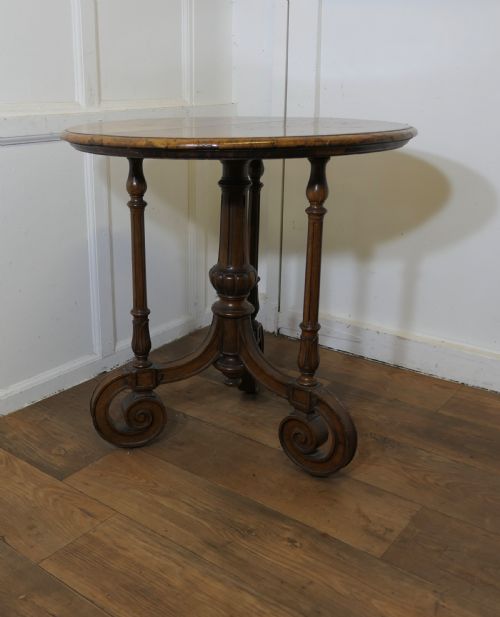
Small Walnut Candle Stand
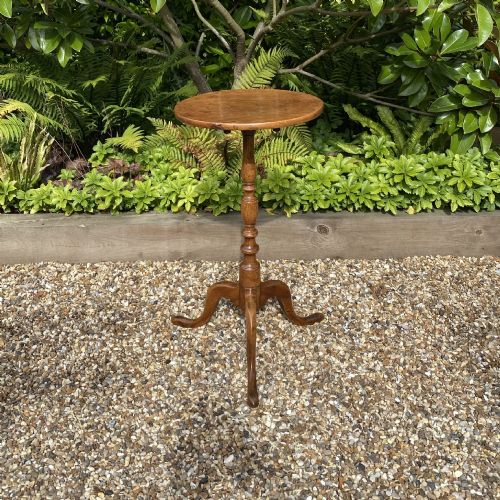
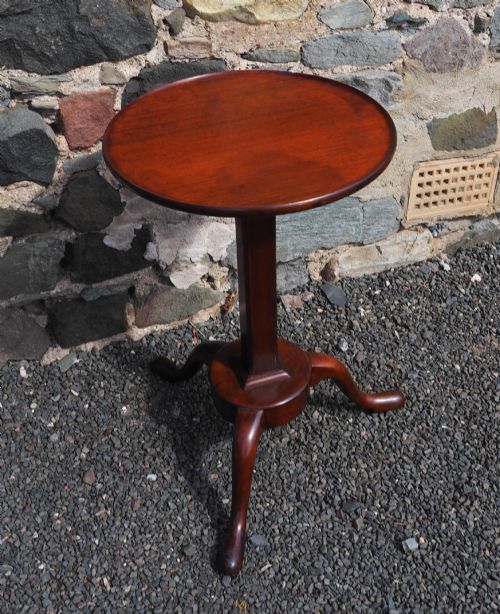
These small walnut candle stand pieces are compact occasional tables built to hold illumination, offering a rich timber surface for tight spaces.
Small Walnut Candle Stand
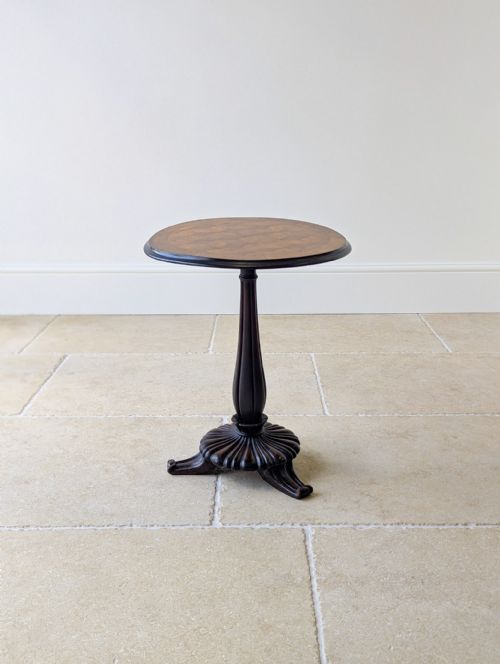
A small walnut candle stand serves as a compact surface for lamps and drinks, frequently appearing as tripod wine tables or occasional tables across this selection. These pieces trace their origins through Georgian, Victorian, and Edwardian periods, maintaining a portable footprint designed for domestic interiors.
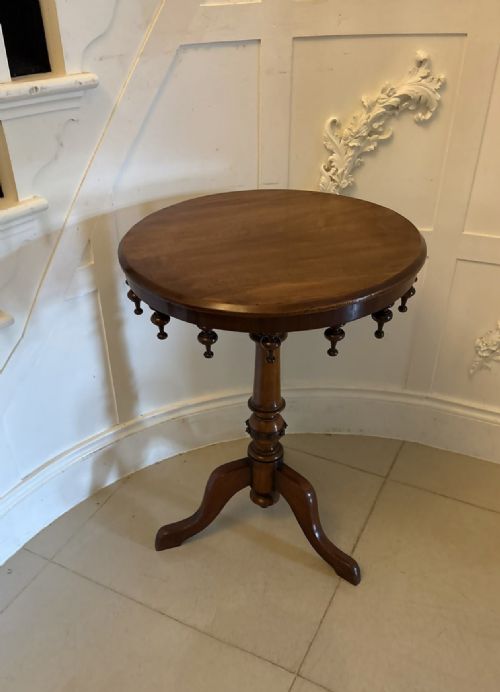
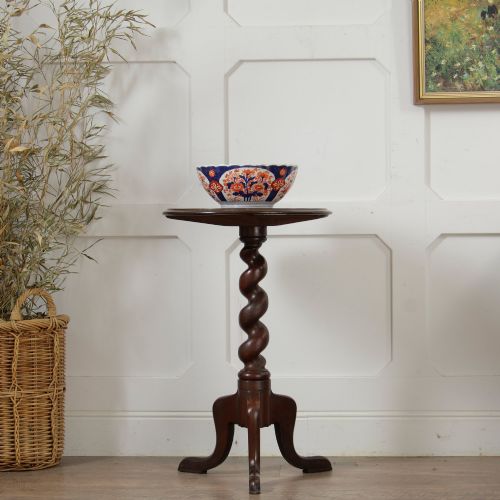
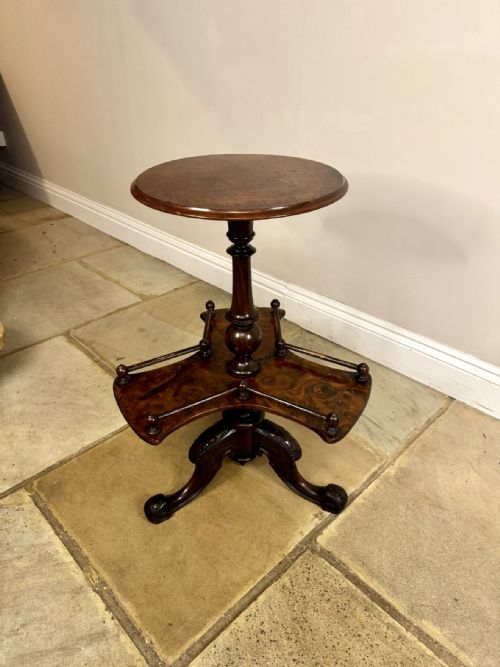
The materials centre on solid walnut and burr walnut veneer, occasionally complemented by mahogany, brass details, and marquetry inlay. Formats range from pie crust edges and bobbin galleries to barley twist pedestals and adjustable heights.
How they were made
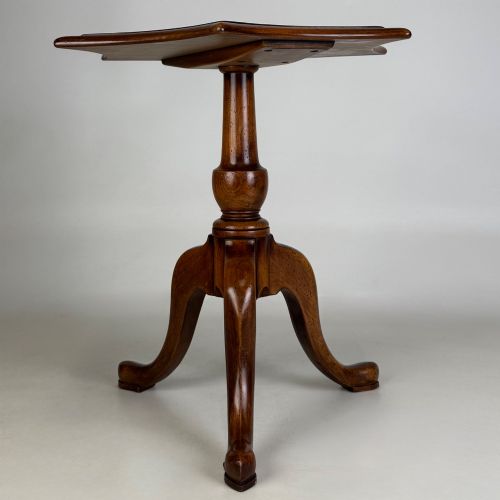
Cabinetmakers constructed these stands using solid walnut and burr walnut veneer laid over secondary timbers, frequently shaping the tops with pie crust rims or circular geometries. Turning lathes produced barley twist and bobbin pedestals, while tripod legs provided stable support for narrow columns.
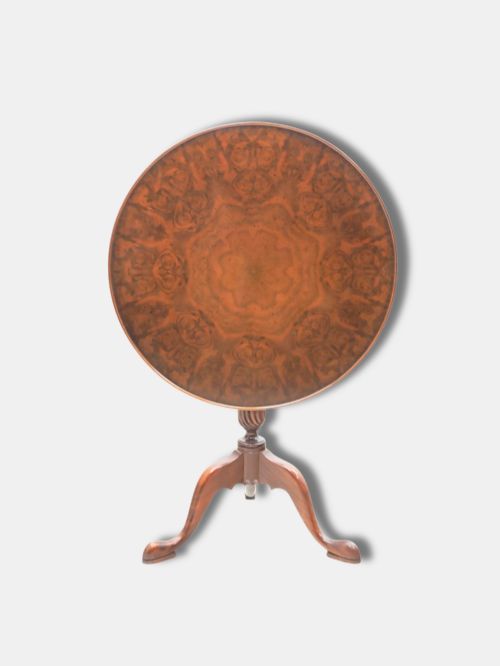
Surface decoration relies on natural grain figures in the burr walnut, alongside marquetry inlay and ebonised wood accents. Brass fittings appear on adjustable mechanisms, securing movable shafts on pieces designed for specific lighting heights.
Some nineteenth-century examples feature adjustable stems, allowing the tabletop to move up and down like a music stand.
What varies in quality
Quality rests in the selection of timber figures, where richly figured burr walnut and crisp marquetry inlay distinguish finer workshops from plain stock. The precision of the turning on pedestals and the integrity of tripod joints dictate the structural harmony of each stand.
Early examples from the eighteenth century demonstrate different proportions and joinery methods compared to later Victorian and Edwardian revivals. The crispness of carved details, such as pie crust edges, separates standard production from superior craftsmanship.
Holland & Son
The Small Walnut Candle Stand Glossary
- Burr walnut
- Timber taken from the wart or growth on a walnut tree, producing highly swirled and decorative grain patterns. It is sliced into thin veneers for tabletops.
- Tripod base
- A support structure featuring three legs radiating from a central pillar. This design offers stability on uneven floors for narrow stands.
- Marquetry inlay
- Decorative patterns formed by fitting contrasting pieces of wood veneer into a prepared background. It appears on circular tabletops.
- Pie crust edge
- A raised, scalloped rim carved around the perimeter of a circular tabletop. This detail resembles pastry work and prevents items from sliding off.
Small Walnut Candle Stand: Frequently Asked Questions
What is a small walnut candle stand?
A small walnut candle stand is a portable occasional table originally designed to hold a candle or lamp. These pieces feature a central pedestal and a small circular top.
They function today as compact side tables for drinks or small decorative objects in limited spaces.
How do I date a walnut stand?
Dating relies on examining construction methods, timber types, and style markers such as tripod leg shapes and pedestal turnings. Eighteenth-century pieces differ in structural joinery from Victorian revivals.
Secondary woods and finish characteristics also help determine the period of manufacture.
Where should I place a wine table?
These tables suit tight spaces beside armchairs, sofas, or in hallways where a full-sized table proves too large. Their modest footprint allows them to sit easily in corners.
Avoid placing them in direct sunlight or near heat sources to protect the walnut veneer and polished surfaces.
Are these stands stable?
Tripod bases provide a reliable three-point contact with the floor, making them reasonably stable despite their slender proportions. The weight of the central pillar helps keep the centre of gravity low.
Care should be taken on thick carpets to ensure the three feet rest evenly.