



English Walnut Accent Table
These English walnut accent table selections bring rich timber grain and period character into a room, offering both practical surface area and timeless form.
English Walnut Accent Table
When searching for an english walnut accent table, buyers encounter a variety of functional forms spanning multiple centuries of British cabinetmaking. The pieces available include occasional tables, wine tables, lowboys, display tables, and tilt-top designs.
Materials and construction
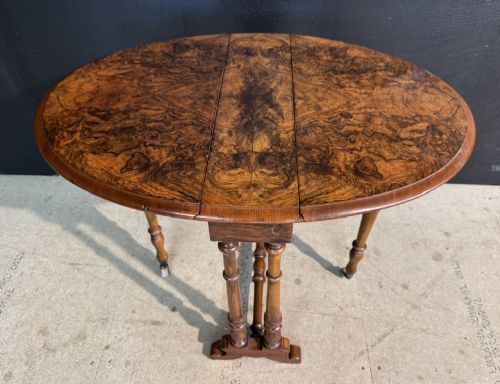
Cabinetmakers worked principally with walnut, utilising figured and burr walnut veneers to create striking surface patterns on table tops. Solid walnut was selected for structural frames, legs, and mouldings.
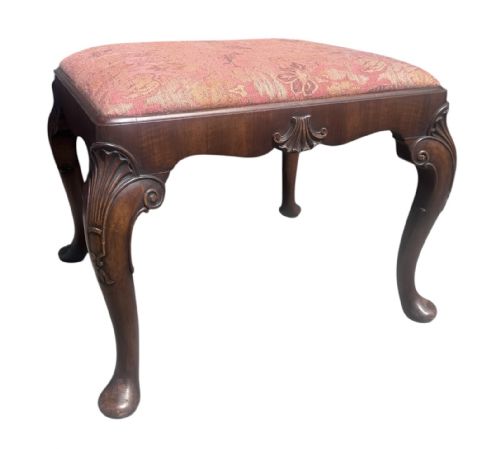
Construction techniques involved precise wood inlay, tilt-top mechanisms, and gate-leg framing. Details such as brass hardware and textile inserts occasionally complement the primary timber structure.
A tilt-top table lets a room reclaim its floor space instantly, doubling as a wall-hugging panel when the tea is cleared away.
Assessing quality and craftsmanship
Quality in these tables rests upon the selection of the walnut timber and the skill evident in the veneer work. Finer examples display richly figured or burr walnut surfaces that have been matched and laid with precision.
The integrity of the construction, from the smoothness of tilt-top actions to the crispness of carved details like pie crust edges, separates standard production from superior craftsmanship.
The English Walnut Accent Table Glossary
- Burr walnut
- A prized timber veneer taken from the growth excrescences of walnut trees, displaying intricate, swirling grain patterns. It was frequently used on the top surfaces of high-end tables.
- Lowboy
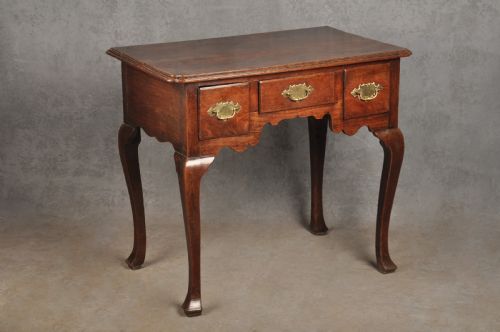
- A small side table or dressing table with one or more rows of drawers supported by relatively tall legs. Eighteenth-century examples often feature cabriole legs.
- Pie crust edge
- A raised, scalloped carved border along the rim of a round table top, resembling pastry work. This decorative technique appears on eighteenth-century and revival wine and occasional tables.
- Tilt-top table
- A table designed with a mechanism that allows the top to pivot to a vertical position when not in use. This allowed the piece to be stored compactly against a wall.
- Sutherland table
- A narrow drop-leaf table with exceptionally slim folding leaves supported by swinging gate legs. Victorian examples were easily moved around a drawing room as needed.
English Walnut Accent Table: Frequently Asked Questions
How do I date a walnut table?
Dating relies on examining construction methods, timber choice, and stylistic cues such as leg shapes and edge profiles. Earlier pieces show hand-cut joinery and native walnut timbers, while revival pieces from the Edwardian era or the 1920s adopt earlier idioms.
Changes in hardware and secondary woods also assist in placing a piece within its correct century, distinguishing eighteenth-century originals from later Georgian revivals.
Where should I place an accent table?
These compact tables suit living rooms, hallways, and studies where surface space is needed without dominating the room. Wine tables and lamp tables fit beside seating areas to hold small items.
Display tables and lowboys function well against empty walls or in entryways, providing both a surface and distinct period character.
What is the difference between figured and burr walnut?
Figured walnut refers to timber exhibiting natural irregularities and waves in the grain that catch the light. Burr walnut derives from specific tree growths, creating dense, swirling clusters of knots.
Both were utilised by cabinetmakers to create visually engaging table tops, though burr walnut generally commands greater decorative prominence.
How do I care for antique walnut furniture?
Maintenance involves keeping the timber away from direct heat sources and strong sunlight, which can dry out and fade the wood and delicate veneers. Regular dusting with a soft, dry cloth preserves the finish.
Application of appropriate wax polish periodically helps nourish the walnut and maintain its natural lustre without building up heavy residues.