


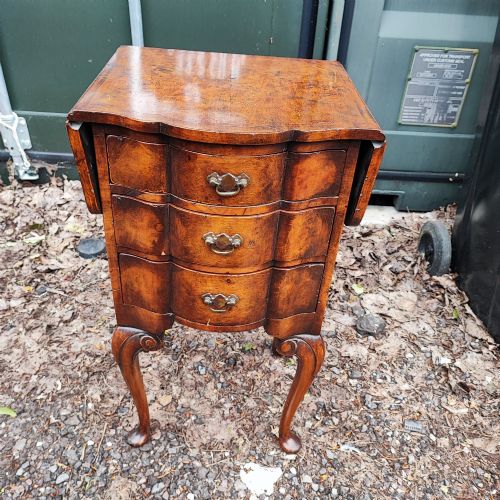


Shaped Walnut Cabinet
A shaped walnut cabinet brings rich timber figure and confident curves to a room, ranging from bedside tables to large display pieces.
Shaped Walnut Cabinet
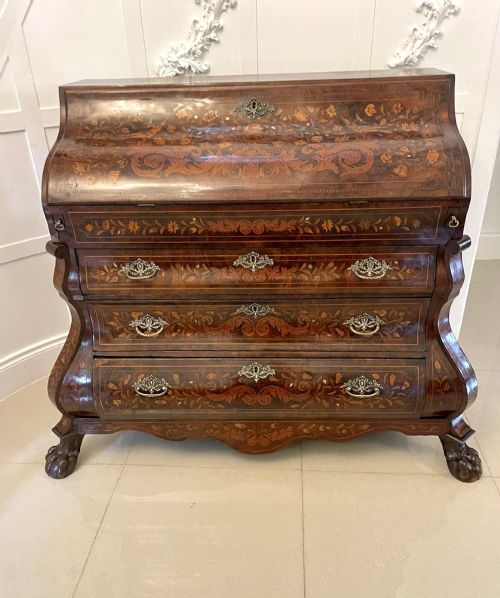
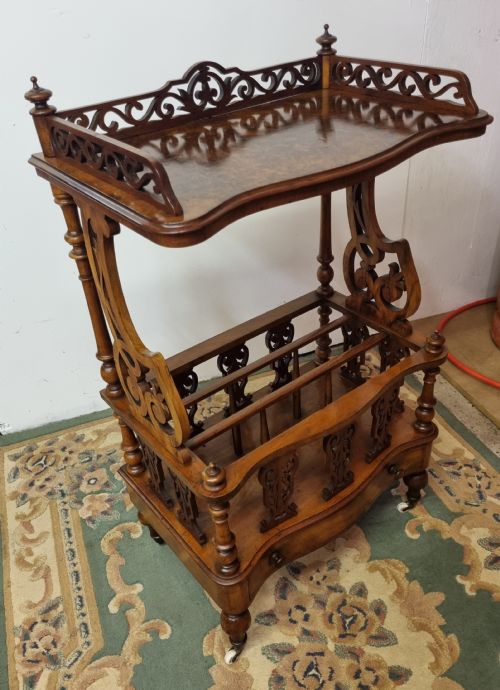
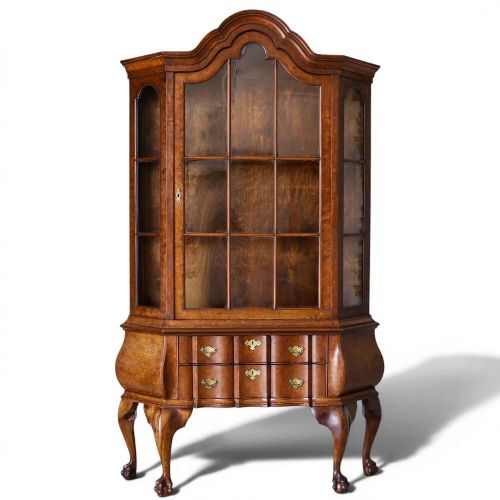
A shaped walnut cabinet covers a broad family of storage and display furniture built with curved, serpentine, bombe, or kidney outlines. These pieces emerge across the eighteenth, nineteenth, and twentieth centuries in styles spanning Queen Anne, Dutch Baroque, Victorian, and Art Deco.
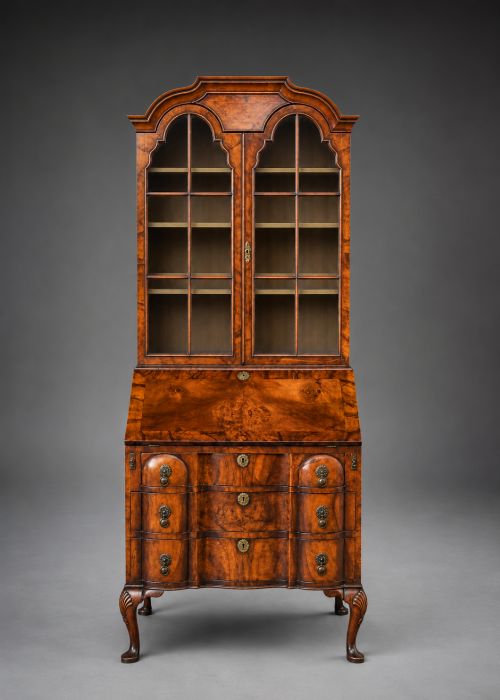
The forms on this page include display cabinets, bedside tables, bureau bookcases, cocktail cabinets, and credenzas. Pieces range from small bedside pairs to tall bookcases and substantial sideboards.
Continental European workshops, particularly Dutch and Italian makers, contribute heavily to the historical side of this group with marquetry and bombastic curves, while British Victorian and Art Deco pieces bring restrained serpentine lines and figural veneers.
Materials and construction
Makers construct these cabinets using solid walnut and fruitwood carcasses finished with figured walnut, burr walnut, or fruitwood marquetry veneers. Grain patterns are carefully matched across curved drawer fronts and door panels to create symmetry and visual depth.
Secondary woods provide structural stability behind the decorative veneers, while brass handles, glass doors, and gilt ormolu mounts add functional and decorative contrast. Marquetry panels incorporate lighter fruitwoods to render floral and pictorial inlay.
Shaped Walnut Cabinet Retail Price Guide 2026
Typical asking prices for shaped walnut cabinet among the pieces listed under this phrase on Sellingantiques today, from the lower quarter to the upper quarter. They describe what is for sale here now, not the wider market.
Some Art Deco cocktail cabinets embrace cloud shapes to ensure your evening gin is poured from within a weather pattern.
Judging quality and execution
Quality rests in the handling of the timber figure and the precision of the curves. Superior cabinets display continuous, matching burr walnut across complex serpentine or bombe shapes without awkward grain interruptions.
The intricacy of the marquetry and the integration of mounts dictate the tier of the piece. Hand-cut floral inlays, well-cast ormolu, and crisp dovetail joinery distinguish master workshops from standard commercial output.
Harry and Lou Epstein·Druce and Co·Maple and Co·Harrods
The Shaped Walnut Cabinet Glossary
- Bombe
- A swelling, outward-curving profile found on drawer fronts and sides, popular in Dutch and continental cabinetmaking. This shape demands expert veneer work to follow the compound curves.
- Serpentine
- A furniture front or top shaped with a concave centre flanked by convex ends, creating a gentle wave line. This profile appears frequently on Victorian and Edwardian side cabinets.
- Burr Walnut
- Timber taken from a growth on the walnut tree, showing highly figured, swirling grain patterns. It is sliced into thin veneers for decorative surfaces.
- Ormolu
- Gilded bronze mounts applied to furniture for decorative effect. It frames panels and highlights corners on finer nineteenth-century pieces.
- Marquetry
- Inlays of different woods, and occasionally other materials, assembled to create pictorial or floral designs on cabinet surfaces. It is seen extensively on Dutch and continental pieces.
Shaped Walnut Cabinet: Frequently Asked Questions
What rooms suit a shaped walnut cabinet?
These cabinets suit living spaces, bedrooms, and dining rooms depending on their scale. Bedside tables and small credenzas fit intimate spaces, while larger display cabinets and bureau bookcases anchor reception rooms.
The rich brown tones of walnut pair easily with both traditional and modern interiors. Glass-fronted display and cocktail cabinets bring light and reflection into darker corners.
How do I date a shaped walnut cabinet?
Dating relies on combining the overall style, secondary timbers, and hardware. Eighteenth-century pieces often feature heavy bombastic curves and extensive floral marquetry, whereas Victorian examples favour darker figured walnut with modest serpentine fronts.
Art Deco pieces from the nineteen-thirties introduce clean architectural lines combined with dramatic clove or cloud-shaped silhouettes. Examining the drawer construction and interior linings helps confirm the period of manufacture.
How were bureau bookcases used historically?
Bureau bookcases combined a sloping writing desk with enclosed shelving above for books and papers. The fall-front reveals pigeonholes and small drawers intended for correspondence and record keeping.
Upper glazed doors protected valuable libraries from dust while displaying the volumes inside. They served as administrative centres in period homes before the widespread use of standalone desks.
How do I care for walnut veneer?
Walnut veneer requires stable humidity levels to prevent timber movement and lifting. Keep cabinets away from direct heat sources and strong sunlight that can fade the natural warm tones of the wood.
Dust regularly with a soft cloth and apply quality beeswax sparingly to nourish the grain. Avoid silicone-based sprays which can build up and damage the polish over time.