



Vintage Dutch Bookcase
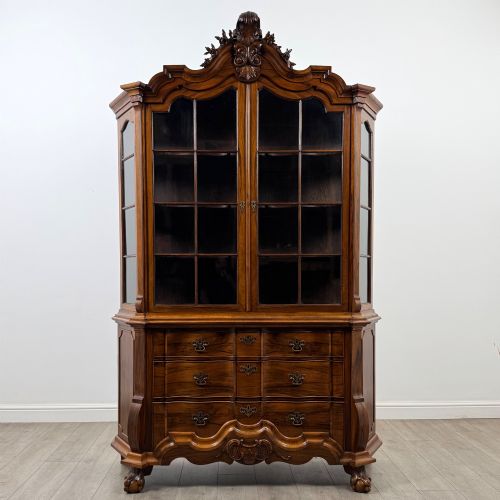
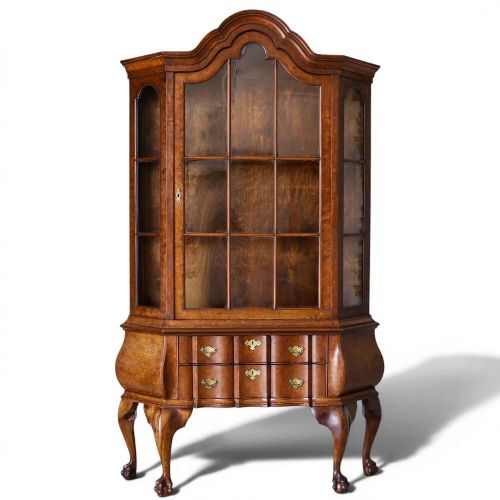
A vintage dutch bookcase brings substantial cabinetwork into a room, offering glazed display and architectural presence.
Vintage Dutch Bookcase
A vintage dutch bookcase or related display cabinet combines functional storage with distinct regional furniture traditions spanning the eighteenth to the twentieth centuries. These pieces appear in walnut, burr walnut, satinwood, and painted timber, often taking architectural or bombe forms with glazed upper sections.
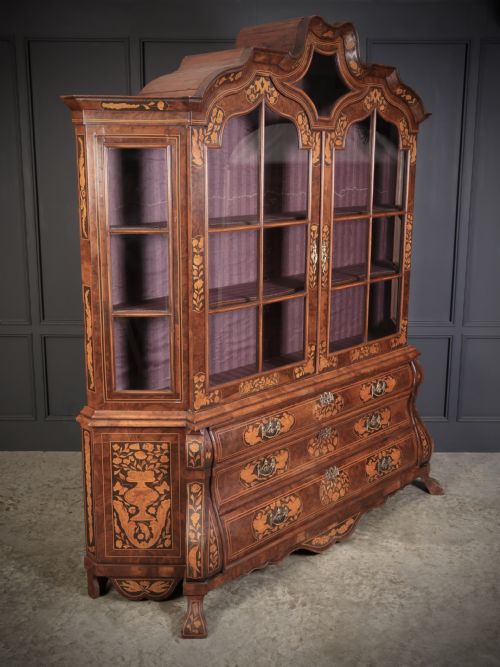
The selection ranges from eighteenth-century glazed display cabinets and painted vitrines to Edwardian walnut cabinets and nineteen-twenties marquetry inlaid pieces. Buyers frequently encounter Dutch Baroque and Rococo revival styles alongside simpler painted wood cupboards.
Display cabinets and bureaux dominate the available forms, serving as primary storage and display units for books, ceramics, and valued objects. Each piece reflects specific period characteristics, from canted sides to intricate floral marquetry.
Materials and construction
Cabinetmakers constructed these pieces primarily using solid oak, walnut, and fruitwood timbers as a foundation for decorative veneers. Burr walnut and satinwood veneers provide rich grain patterns across large surfaces.
Marquetry inlay work incorporates various contrasting woods to create detailed floral and botanical patterns on drawer fronts and cabinet doors. Brass mounts and handles frequently accent the timber framework.
Glazed upper compartments utilise individual glass panes held within slender timber glazing bars. Painted finishes on wood provide an alternative decorative surface to the natural grain veneers.
Vintage Dutch Bookcase Retail Price Guide 2026
Typical asking prices for vintage dutch bookcase among the pieces listed under this phrase on Sellingantiques today, from the lower quarter to the upper quarter. They describe what is for sale here now, not the wider market.
Some cabinet doors open to reveal hidden compartments designed for secret correspondence.
Assessing quality in cabinetwork
Quality rests upon the crispness of the marquetry inlay and the selection of figured veneer timbers such as burr walnut. Finer examples maintain balanced proportions across bombe profiles and canted sides.
The integrity of the original glass, the smoothness of drawer operations, and the preservation of the timber surface finish distinguish superior pieces. Structural joinery in the carcase and the refinement of brass hardware complete the assessment.
The Vintage Dutch Bookcase Glossary
- Bombe
- A swollen or bulging outward curve on the lower section of a cabinet or chest. This contour defines prominent eighteenth-century and revival storage forms.
- Vitrine
- A glass-fronted cabinet designed for the display of porcelain, curiosities, or books. These pieces feature glazed doors on one or more sides.
- Marquetry
- The art of applying small pieces of veneer to a structure to form decorative patterns. Craftsmen use various woods to achieve tonal contrast.
- Canted
- Cut off at an angle, typically referring to the vertical corners of a cabinet. This architectural detail softens the rectangular profile of the case.
Vintage Dutch Bookcase: Frequently Asked Questions
What periods do these bookcases cover?
The pieces span from the eighteenth century through the nineteenth century into Edwardian and nineteen-twenties productions. Earlier examples feature traditional proportions and classical joinery.
Later items often revive Baroque and Rococo styling while maintaining regional cabinetmaking techniques.
How do I care for walnut veneer?
Keep walnut and burr walnut surfaces away from direct sunlight to prevent the timber tones from fading. Maintain steady room humidity to protect the underlying veneer from lifting.
Dust gently with a dry cloth and avoid harsh chemical polishes.
Are these cabinets used for books?
Many examples function effectively as bookcases through their upper glazed shelving compartments. Others serve primarily as display cabinets for decorative objects and porcelain.
Adjustable or fixed shelves accommodate volumes of varying heights.
What is Dutch Baroque Revival?
Revival pieces draw inspiration from seventeenth and eighteenth-century Dutch furniture design. They incorporate characteristic shapes, heavy cornice mouldings, and rich veneer work.
Craftsmen produced these revival items during the nineteenth and early twentieth centuries.