


Shaped Top Writing Table
A shaped top writing table is a refined desk designed with sweeping curves, offering both elegance and practical workspace for the study or drawing room.
Shaped Top Writing Table
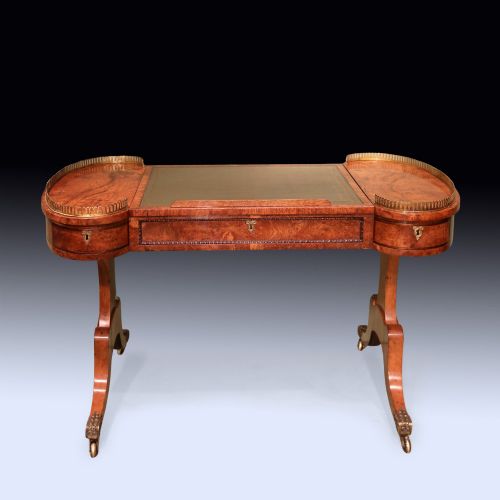
A shaped top writing table encompasses various forms of desks, centre tables, and side tables designed with curved or serpentine outlines. These pieces span periods from the Georgian era through the Victorian and Edwardian periods up to the 1930s.
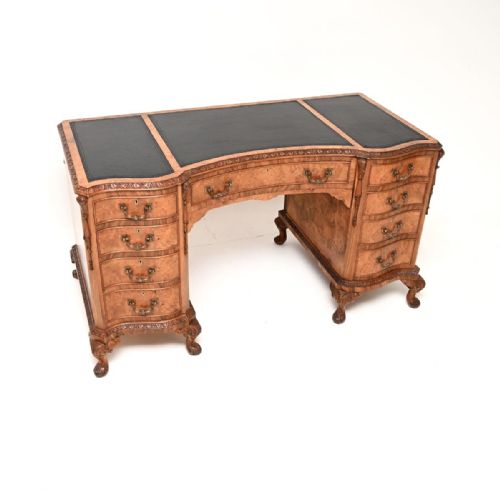
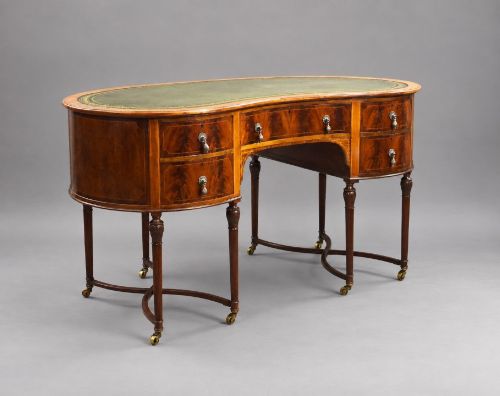
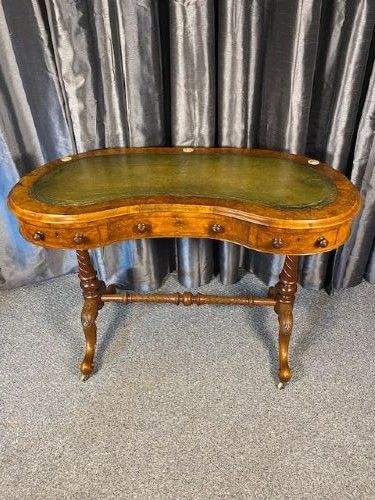
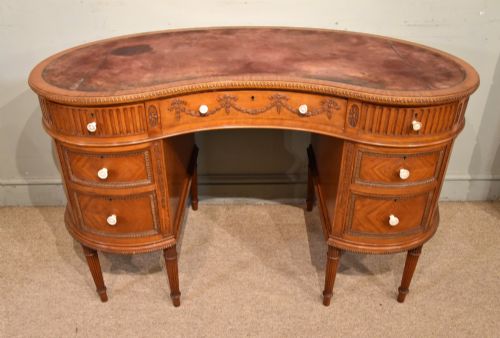
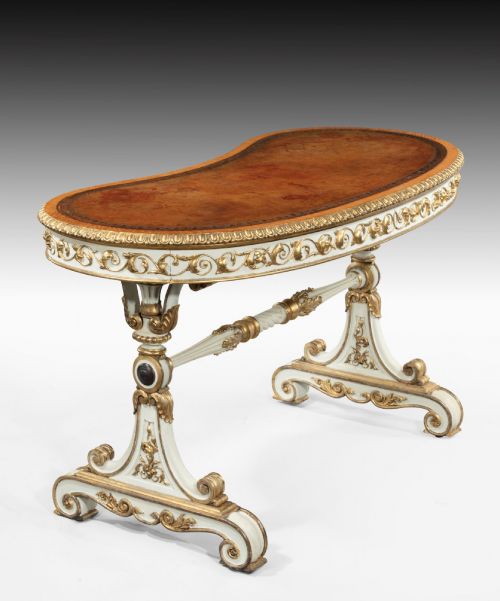
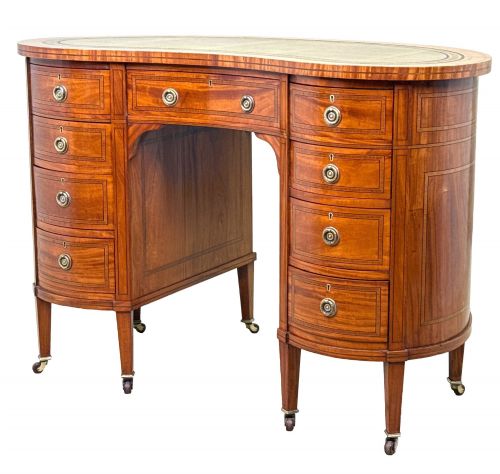
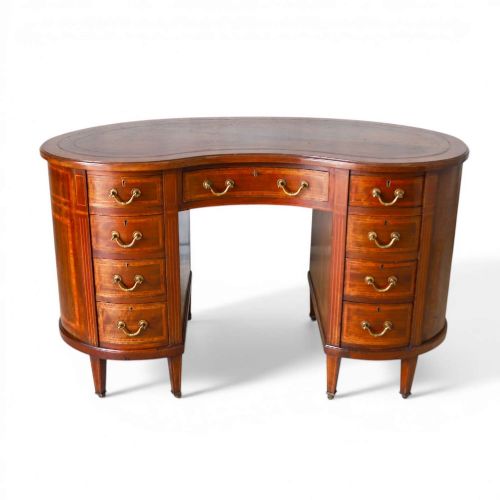
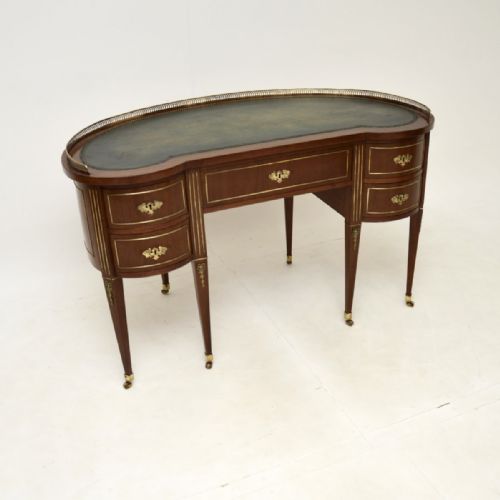
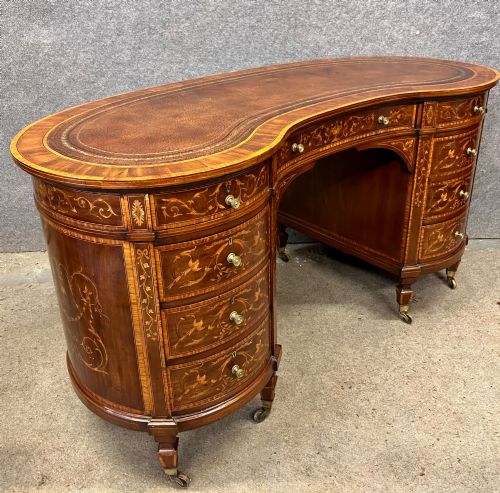
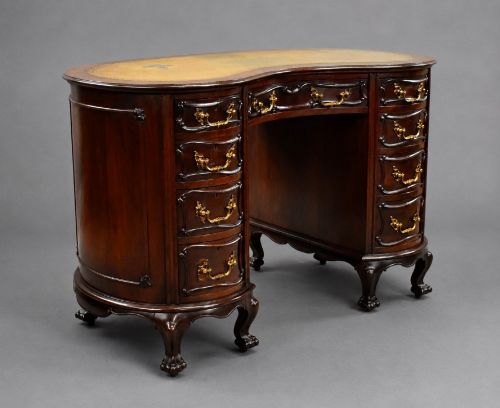
The kidney shape is the most frequent form encountered on this page, often featuring a fitted leather writing surface and delicate inlay. Examples range from compact ladies desks to large freestanding partners desks finished on all sides.
Origins include English workshops influenced by Sheraton Revival and French styles, as well as continental pieces utilising exotic timbers. Buyers choose them for their pleasing proportions and suitability as freestanding furniture within a room.
How they were made
Cabinet makers constructed the curved carcasses of a shaped top writing table using solid timbers like mahogany, oak, and walnut, frequently overlaid with figured veneers such as burr walnut, satinwood, and kingwood. Bending wood to form a continuous kidney profile required precise joinery and steam techniques.
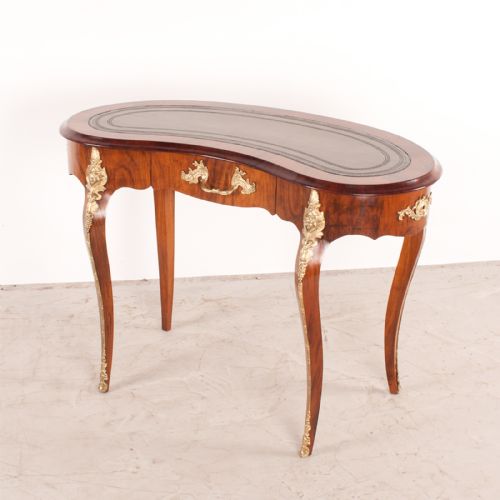
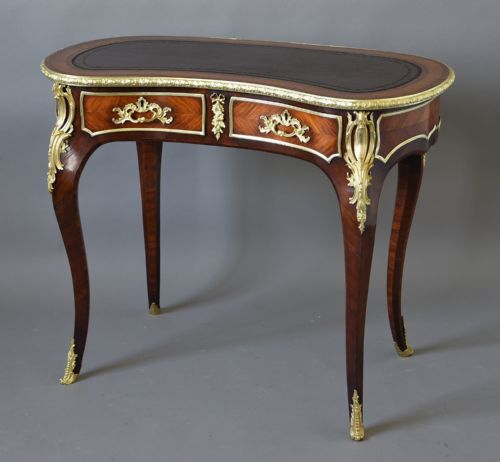
Surfaces were traditionally inset with tooled leather writing panels, while decorative details relied on brass or ormolu mounts, marquetry inlay, and hand-carved giltwood or ivory paintwork. Freestanding tables often incorporated polished backs and cabriole legs to maintain visual appeal from every angle.
Listings feature periods from the Georgian era through Victorian, Edwardian, and into the 1930s, using mahogany, walnut, satinwood, and leather.
What varies in quality
Quality rests in the selection of timber and the precision of the veneer work, particularly how neatly burr walnut or satinwood matches across complex curves. Finer pieces display elaborate marquetry inlay and well-cast ormolu mounts rather than mass-produced brasswork.
Construction standards differ between standard pedestal desks and bespoke tables made by notable makers, where internal drawer linings use solid secondary timbers with hand-cut dovetails. The grace of the serpentine sweep and the crispness of any carved details dictate the standing of the piece.
Maple & Co·Wolfe & Hollander·Shapland & Petter·Gillows
The Shaped Top Writing Table Glossary
- Kidney shaped
- A curved desk profile resembling a kidney bean, designed to wrap partially around the user. This form became exceptionally popular during the Victorian and Edwardian periods for ladies writing desks.
- Bureau-plat
- A French freestanding writing table, finished on all sides with a leather-lined top and drawers in the frieze. These often feature ormolu mounts and cabriole legs.
- Ormolu
- Gilded bronze mounts applied to furniture for decoration. High quality mounts are cast and chased by hand to achieve crisp detail.
- Marquetry
- Decorative patterns formed by fitting contrasting veneer pieces into a wooden ground. It appears frequently on satinwood and walnut surfaces.
- Partners desk
- A large desk designed to be used from both sides simultaneously, featuring cupboards or drawers facing each other. They provide substantial workspace and finished backs.
Shaped Top Writing Table: Frequently Asked Questions
What is a shaped top writing table used for?
These tables served primarily for correspondence, diary writing, and managing household accounts in nineteenth and early twentieth century homes. Their distinctive curved outlines allowed them to sit away from walls as decorative centrepieces.
Today they function effectively as home office desks or console tables. Their finished backs make them ideal for positioning in the middle of a room rather than pushed against a wall.
How do I identify a Victorian piece?
Victorian examples often feature rich mahogany or burr walnut timbers, sometimes combined with intricate marquetry inlay or ormolu mounts. The construction typically utilises solid mahogany drawer linings with hand-cut dovetails.
Cabinetmakers of this period frequently embraced French revival styles, producing kidney shaped tables with cabriole legs. Examining the secondary woods and construction methods helps confirm the mid to late nineteenth century origin.
Are Edwardian desks different from Victorian ones?
Edwardian writing tables tend to utilise lighter timbers such as satinwood and lighter mahogany framing, often reflecting the Sheraton Revival influence. They frequently feature delicate stringing and inlaid floral motifs rather than heavy carving.
While kidney shapes remain common, Edwardian pieces often appear more slender and graceful. The finish is usually brighter, reflecting changing interior tastes at the turn of the twentieth century.
Can I use a antique desk every day?
Most antique writing tables are robust enough for daily use provided they receive proper care. The leather writing surfaces benefit from occasional conditioning, and heavy items should not be placed on fragile veneer.
Placing the desk away from direct heat sources and sunlight protects the polished wood and inlay. With sensible treatment, these pieces handle modern laptop use quite comfortably.