

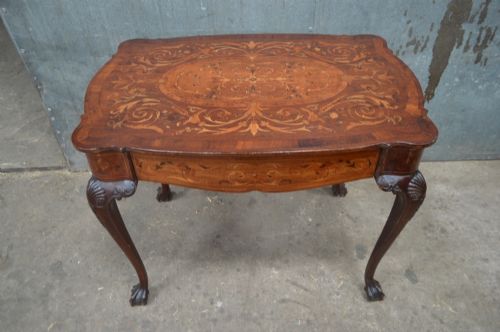


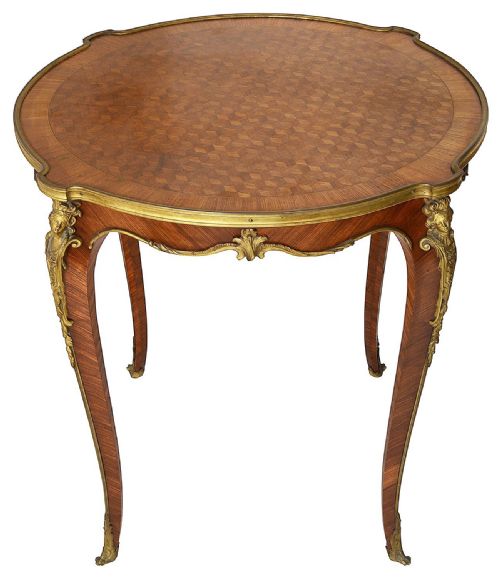


Shaped Top Marquetry Table
A shaped top marquetry table brings intricate floral veneers and graceful curved lines into a room, offering both practical surface area and decorative warmth.
Shaped Top Marquetry Table
When you search for a shaped top marquetry table, you find a variety of forms designed for writing, display, and occasional use. These pieces include centre tables, desks, side tables, and occasional tables originating from the eighteenth, nineteenth, and early twentieth centuries.
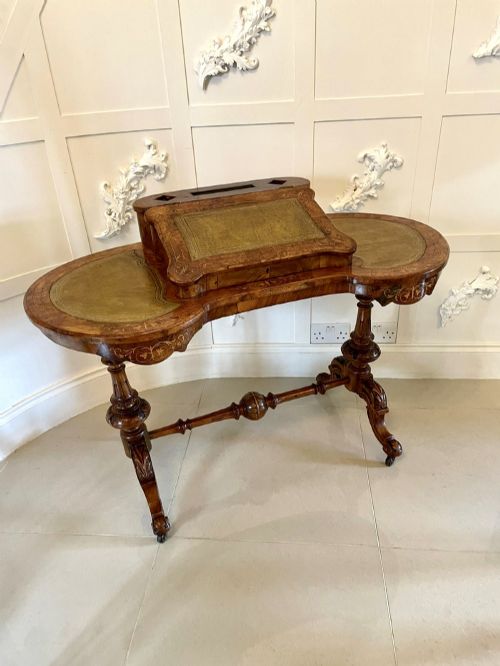
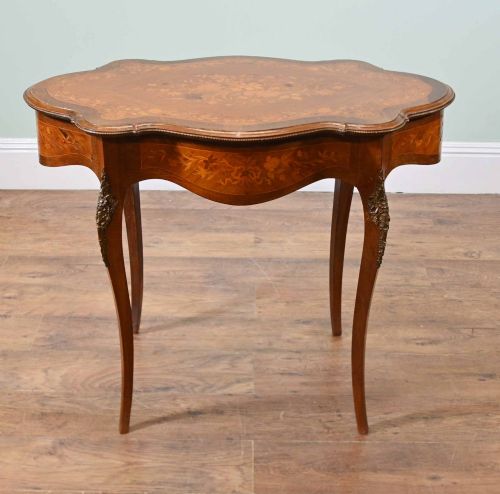
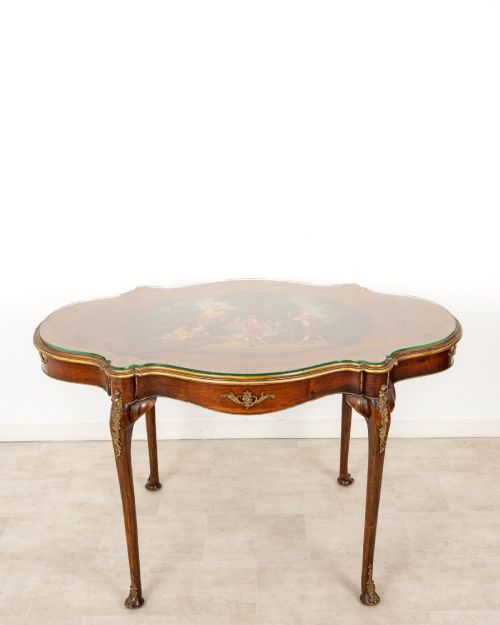
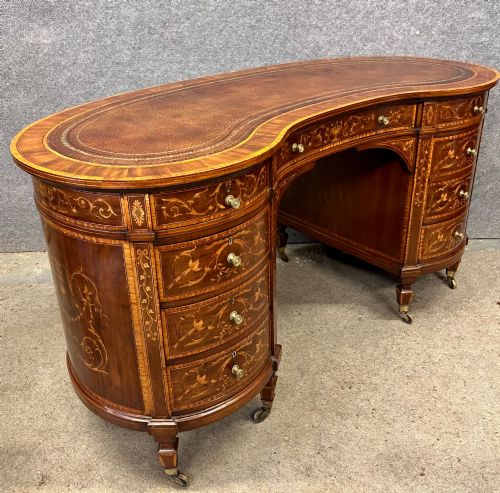
The most common examples on this page are kidney shaped writing tables and freestanding centre tables from the Victorian and Edwardian periods, alongside continental designs influenced by French Louis XV styles and Dutch rococo traditions.
Makers utilised various timber foundations to create these curved surfaces, applying detailed wood inlays that depict floral and geometric motifs across the top and sides.
How they were made
Craftsmen built these tables using solid timber carcases overlaid with decorative veneers such as burr walnut, rosewood, satinwood, and kingwood. They cut contrasting woods by hand to form intricate marquetry patterns, often enhanced with brass or ormolu mounts and leather writing inserts.
The distinctive curved outlines, including bombe profiles and kidney shapes, required specialist carpentry to bend wood and shape solid framing components precisely. Gilt bronze and ormolu mounts were cast and chased to finish corners, legs, and aprons on finer continental examples.
Shaped Top Marquetry Table Retail Price Guide 2026
Typical asking prices for shaped top marquetry table among the pieces listed under this phrase on Sellingantiques today, from the lower quarter to the upper quarter. They describe what is for sale here now, not the wider market.
Materials recorded across the current selection include burr walnut, mahogany, rosewood, satinwood, kingwood, ormolu, and leather.
What varies in quality
Quality in these tables depends heavily on the crispness of the marquetry cutting and the choice of timbers used for the contrasting inlays. Finer pieces display dense burr walnut or carefully selected satinwood with minimal shrinkage in the veneer work.
The sophistication of the bronze or ormolu mounts and the fluidity of the carved or shaped wooden framework separate standard production from exceptional examples. Structural integrity in freestanding tables, particularly around curved legs and joints, determines how well a piece survives decades of daily use.
The Shaped Top Marquetry Table Glossary
- Marquetry
- Decorative veneer work assembled in patterns using different coloured woods, ivories, or metals to create pictorial or geometric designs on furniture surfaces. This technique forms the primary visual appeal of the tops.
- Ormolu
- Gilded bronze mounts applied to the corners, legs, and aprons of furniture, particularly popular in French revival pieces. These metal ornaments add weight and decorative contrast to the timber.
- Kidney shape
- A curved desk or table top indented on one side to fit comfortably against the user. This form appears frequently in nineteenth century writing tables.
- Bombe
- A swelling, convex outward curve found on the sides and fronts of drawers and commodes. It creates a bulbous, undulating silhouette typical of rococo inspired furniture.
- Bureau plat
- A flat topped writing desk, often freestanding with multiple drawers and an inset leather writing surface. These tables usually feature elaborate mounts and veneered borders.
Shaped Top Marquetry Table: Frequently Asked Questions
Where should I place a centre table?
A centre table works best positioned in the middle of a room where its decorated top and finished sides remain visible from all angles. Because these pieces are designed to be freestanding rather than pushed against a wall, they anchor large spaces effectively.
Ensure there is enough walkaround space around the edges to appreciate the curved silhouette and inlaid veneer work without blocking doorways or main thoroughfares.
How do I care for marquetry surfaces?
Protect antique veneers by keeping tables away from direct sunlight and heat sources, which cause timber to dry out and veneers to lift. Use soft, dry cloths for dusting and avoid silicone polishes that build up residue over time.
Applying a traditional beeswax occasionally helps nourish the wood and maintain a soft sheen without harming the historic polish beneath.
What is the difference between an occasional table and a centre table?
Occasional tables are generally smaller, lighter pieces intended to be moved around a room as needed for drinks, lamps, or books. Centre tables are usually larger, heavier, and built as principal decorative furnishings for the middle of a room.
While both feature shaped tops and decorative inlays, centre tables often include more substantial underframing and elaborate mounts.