




Sevres Style Porcelain Plaque
These sevres style porcelain plaque items bring painted ceramic panels into nineteenth-century furniture and decor, offering rich colour and historic character for a traditional room.
Sevres Style Porcelain Plaque
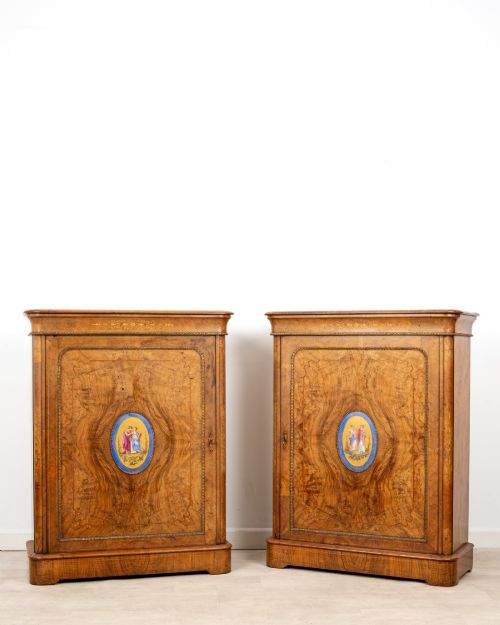
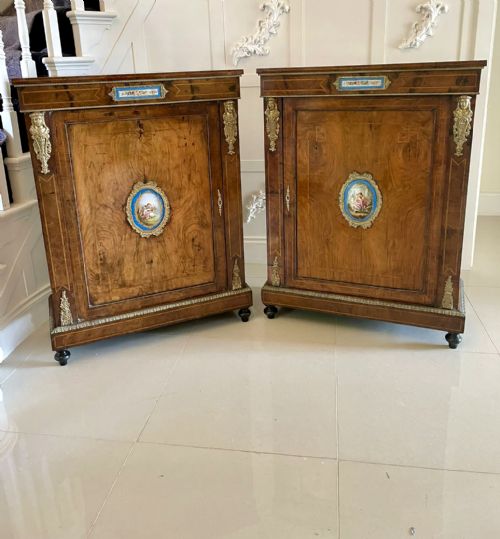
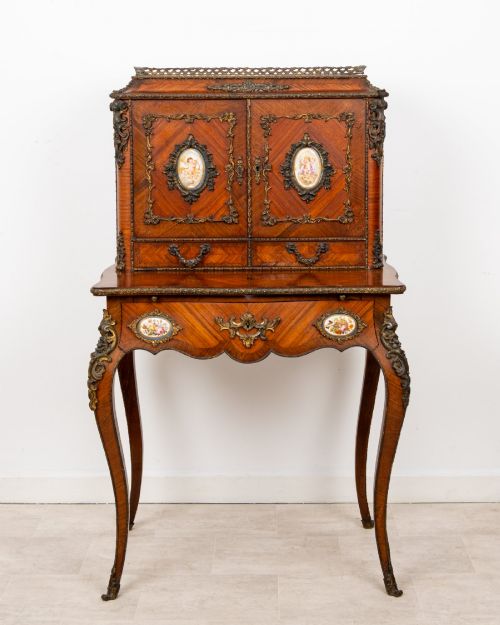
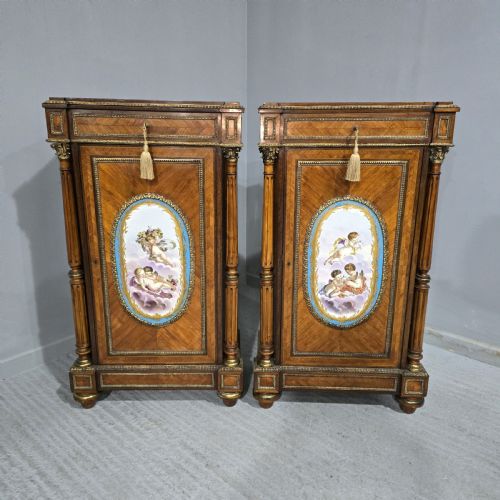
A sevres style porcelain plaque typically appears inset into nineteenth-century walnut, kingwood, or ebonised furniture such as side cabinets, desks, and credenzas. These painted ceramic panels transform functional wooden storage and display pieces into decorative focal points.
Most examples originate from the nineteenth century, spanning Victorian and Napoleon III periods influenced by Louis XV and Louis XVI revival styles. Buyers frequently encounter side cabinets, occasional tables, and writing desks mounted with these ceramic plaques alongside ormolu details.
Materials and Construction
Craftsmen mounted painted porcelain plaques into timber frames constructed from hardwoods like burr walnut, rosewood, and kingwood. These woods often feature marquetry inlay and grain patterns selected to complement the inserted ceramic panels.
Ormolu mounts cast in gilt bronze frequently frame the porcelain plaques and edge the furniture pieces. Ebonised wood or glass elements occasionally appear alongside the porcelain and ormolu to complete the decorative ensemble.
Object forms span large credenzas and side cabinets down to small table-top accessories and dishes.
Judging Quality and Execution
Quality rests in the precision of the hand-painting upon the porcelain plaque and the crispness of the surrounding ormolu mountings. Finely rendered figures or landscapes on the ceramic surface distinguish superior examples from simpler decorative work.
The choice of cabinet wood also defines the tier of the piece, with richly figured burr walnut, kingwood, or amboyna elevating the status of the furniture housing the plaques.
The Sevres Style Porcelain Plaque Glossary
- Sevres style
- A term describing ceramics decorated in the manner of the historic Sevres factory in France. These pieces often feature hand-painted subjects set against deep blue or turquoise grounds.
- Ormolu
- Gilt bronze mounts applied to furniture and decorative objects. This technique provides metallic contrast against wood surfaces and porcelain plaques.
- Credenza
- A low cabinet used for storage and display, frequently fitted with doors mounted with painted porcelain plaques. Originating in Italy, the form became popular in nineteenth-century French revival interiors.
- Bonheur du jour
- A small ladies writing desk featuring a raised superstructure with drawers, shelves, or cupboards. These desks often incorporate porcelain plaques within their writing surfaces or back panels.
- Cartonnier
- A desktop cabinet designed to hold papers and documents, sometimes decorated with porcelain mounts.
Sevres Style Porcelain Plaque: Frequently Asked Questions
How do I clean furniture with porcelain plaques?
Dust wood surfaces gently with a dry cloth and avoid harsh chemical cleaners near the porcelain or ormolu mounts. Moisture can damage both the historic timber finishes and the painted ceramic surfaces.
Keep these pieces out of direct sunlight to protect the painted colours on the plaques from fading over time.
What periods do these pieces come from?
The majority of items featuring these plaques date from the nineteenth century, specifically the Victorian and Napoleon III eras. Makers frequently drew inspiration from earlier Louis XV and Louis XVI royal French styles.
Earlier examples from the eighteenth century also appear occasionally as standalone dishes or panels rather than furniture mounts.
Where were these items originally placed?
Owners displayed cabinets, credenzas, and tables mounted with porcelain plaques in formal reception rooms and drawing rooms. They served to showcase wealth, taste, and an appreciation for historic French decorative arts.
Smaller items like jardiniere stands and writing desks added decorative colour to private studies and parlours.
Are all plaques signed by artists?
Most nineteenth-century decorative plaques remain unsigned by the painters who decorated them. Only select pieces bear artist signatures or specific studio marks on the ceramic surface.
Unsigned plaques still reflect the high standards of nineteenth-century revival craftsmanship and ceramic decoration.